
 91 -11 - 2336 3390
  director@caritasindia.org
 MP Smallholder farmers lead a pulse-powered nutrition shift
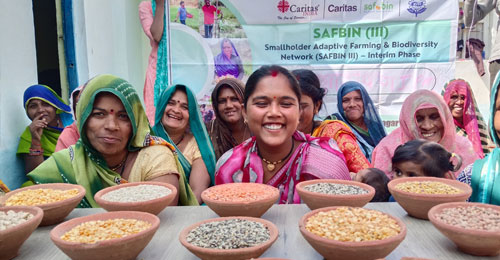
In the drought-prone districts of Madhya Pradesh, farmers are reclaiming control over their food systems. On 10 February 2026, World Pulses Day moved beyond symbolism and turned into collective action aimed at strengthening food and nutrition sovereignty at the grassroots.
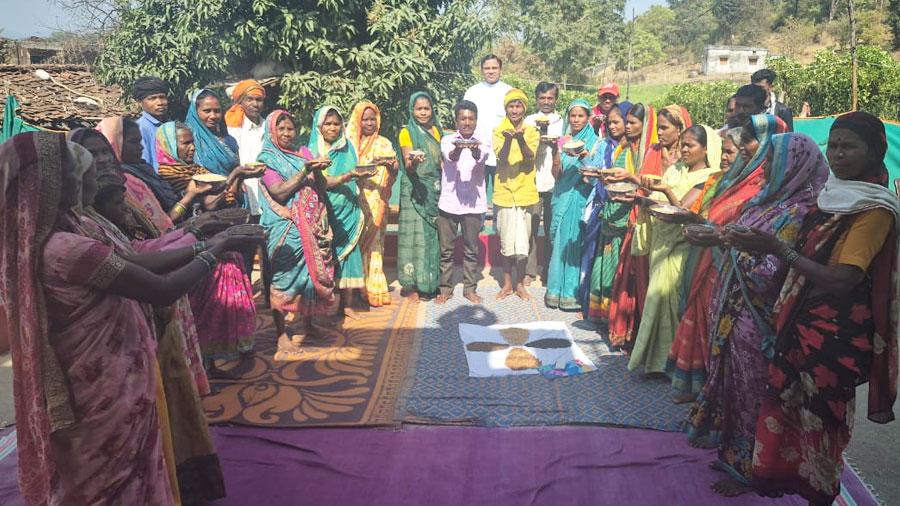
World Pulses Day, observed globally under the leadership of the Food and Agriculture Organization, highlights the importance of pulses in sustainable agriculture, healthy diets and environmental balance. In Sagar and Mandla districts, the day became a platform for advancing climate-resilient farming practices through the SAFBIN programme of Caritas India, with support from Caritas Austria.
Across the villages of Chakeri, Barkheda and Surajpura, 130 farmers participated in awareness sessions, thematic discussions and exhibitions. Of them, 105 were women, reflecting a decisive shift in who drives agricultural and nutrition decisions at the household level. The programme was implemented in partnership with Manav Vikas Seva Sangh and Madhya Pradesh Social Service Society.
The central message was direct. Pulses are not secondary crops. They are strategic assets for food security, soil health and rural livelihoods.
Farmers were sensitised to the nutritional value of pulses as rich sources of plant protein, fibre and essential minerals that help address hidden hunger and reduce the risk of chronic diseases. Discussions linked crop planning with family nutrition, reinforcing the idea that food security begins in the field.
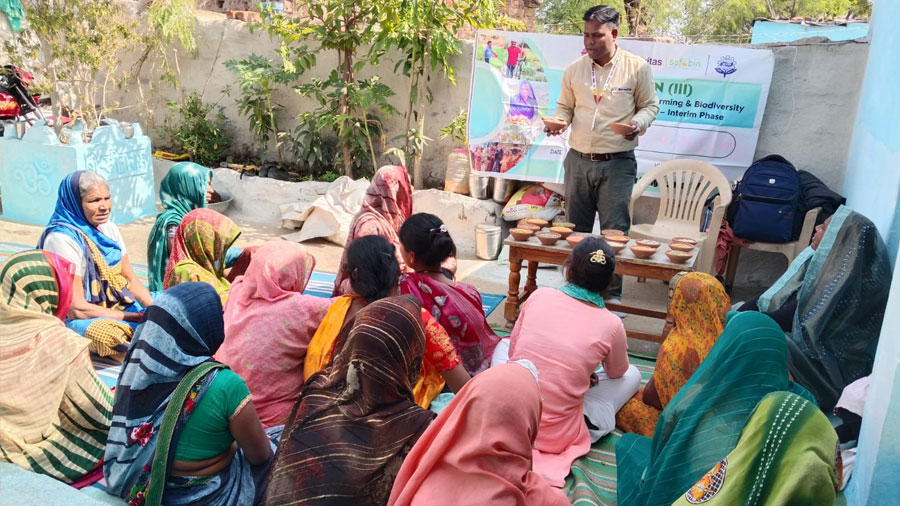
Environmental sustainability formed the second pillar of the initiative. Farmers explored the nitrogen-fixing ability of pulses and their role in restoring soil fertility while reducing dependence on chemical fertilisers. Given their low water requirement, pulses were promoted as climate-resilient crops suited for rainfed and drought-affected areas. Their integration into crop rotation and mixed cropping systems was encouraged to improve biodiversity and long-term productivity.
In Chakeri, the focus remained on women’s leadership in nutrition and agriculture. Educational videos demonstrated improved production practices and highlighted the environmental and health benefits of pulse cultivation. Women farmers committed to incorporating diverse pulses regularly into family meals.
Barkheda witnessed sessions on mixed cropping models under sustainable farming systems. Farmers examined how integrating pulses could stabilise yields, reduce input costs and diversify income sources.
In Surajpura, a participatory group discussion involving 48 villagers, including lead farmers and SHFC members, deepened engagement. Topics ranged from seasonal pulse varieties and organic crop health management using Dasparni Ark, Jeevamrit and neem oil to market access and value realisation. The dialogue strengthened both agronomic knowledge and economic planning.
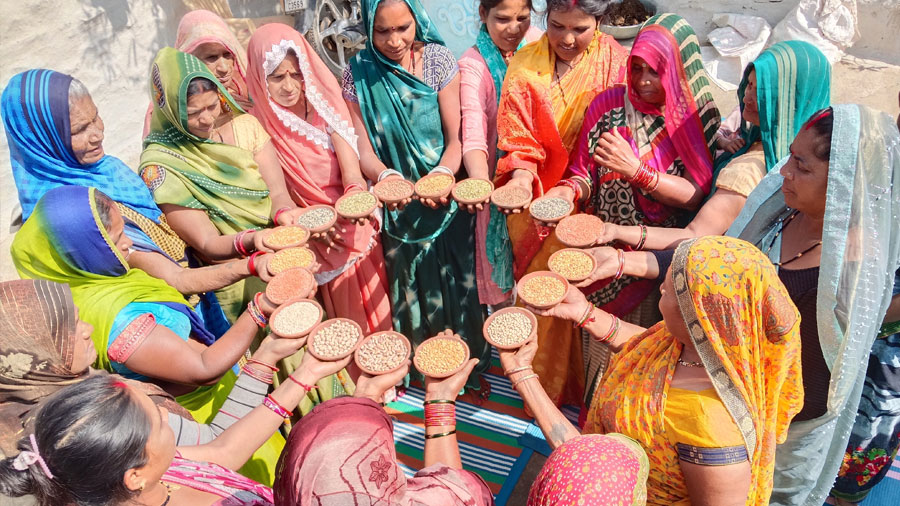
Exhibitions showcased locally cultivated varieties such as chickpea, pigeon pea, black gram, green peas and lentils. Demonstrations emphasised their nutritional importance and culinary diversity, encouraging greater household consumption.
The impact extends beyond awareness. With guidance from the SAFBIN programme, more than 400 acres have been brought under pulse cultivation. Farmers report reduced market dependence for protein-rich foods, improved dietary diversity and better resilience against climate variability.
For civil society, donors and government stakeholders, the initiative presents a grounded and scalable approach to strengthening food systems. By integrating nutrition awareness, agroecological practices and market linkages, Caritas India is supporting smallholder farmers to build resilient, self-reliant and nutrition-secure communities.
World Pulses Day 2026, in these villages, marked not just a celebration but a decisive step towards farmer-led food and nutrition sovereignty.
Upcoming News
What is the LAMPS programme in West Bengal?
Large Area Multipurpose Societies are being repositioned as frontline institutions for tribal women’s economic leadership...
LEARN MORE
Reinforcing community mental health care in post disaster Kerala
In disaster-affected Wayanad, rebuilding homes is only half the work. Healing invisible wounds is the...
LEARN MORE
Caritas India strengthens safeguarding culture across partner network
Safeguarding cannot remain confined to policy documents. It must shape behaviour, systems and leadership choices...
LEARN MORE 91 -11 - 2336 3390
  director@caritasindia.org


