
 91 -11 - 2336 3390
  director@caritasindia.org
 What is the LAMPS programme in West Bengal?
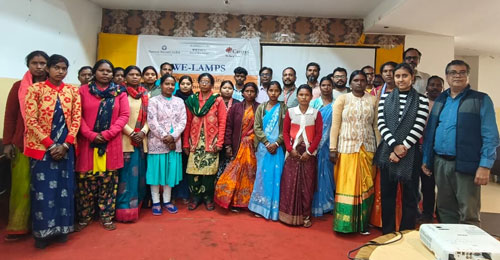
Large Area Multipurpose Societies are being repositioned as frontline institutions for tribal women’s economic leadership in West Bengal. The shift is deliberate. It is structural. It is already underway.
The initiative, led by Caritas India and supported by Pernod Ricard, is being implemented in Bankura and Purulia districts. It focuses on strengthening selected LAMPS as accountable, member driven cooperatives rooted in tribal communities. The goal is to transform these societies into active platforms for access to credit, market linkages, climate resilient livelihoods and government entitlements, with tribal women at the centre of governance and decision making.
Launched in January 2026, the programme targets four LAMPS located across tribal belts, with a sharp focus on women, Particularly Vulnerable Tribal Groups and smallholder farmers. The mandate is clear. Build transparent, efficient cooperatives that expand access to finance, stabilise incomes and strengthen institutional accountability.
What does the programme roadmap include?
The programme roadmap begins with context analysis and institutional assessment, moves into strategy validation and staff capacity building, and then advances to full scale implementation.
Institutional strengthening anchors the design. Elected members and staff will undergo structured training on cooperative governance, financial management, legal compliance and business planning. Clear standard operating procedures will be established for membership, procurement, pricing, bookkeeping and audits.

At the grassroots level, SHGs, SHG federations and farmers clubs will be equipped to engage with LAMPS as active stakeholders rather than beneficiaries. Women’s participation in governance and decision making is targeted between 30 and 50 percent. That is not symbolic representation. It is a governance shift.
Priority areas include institutional development, value chain strengthening and convergence facilitation with departments such as agriculture, forest, animal husbandry, tribal development and rural livelihoods missions.
How are livelihood risks being addressed?
In February 2026, Caritas India conducted a two day Training of Trainers programme in Purulia for SHG leaders and community volunteers from LAMPS in Balarampur and Baghmundi blocks.
The programme commenced with an introductory address by Mr Prabal Sen from Caritas India, who outlined the broader vision of strengthening LAMPS through inclusive participation, accountable leadership and improved service delivery to members. He stressed that revitalising cooperatives requires members to claim ownership rather than wait for external direction.
Dr Jaison presented the three year action plan and strategic approach for institutional strengthening. The session clarified phased priorities, defined the role of SHG members and underscored the importance of aligning local planning processes with cooperative objectives.

Mr Sasi Kumar Choudhury, WBCS, Regional Manager of the West Bengal Tribal Development Cooperative Corporation, addressed participants and emphasised active institutional engagement. He urged SHG leaders to see LAMPS not as a scheme platform but as a member driven cooperative capable of unlocking economic gains when participation is consistent and transparent.
Mr Bablu Sarkar facilitated an interactive session on women’s leadership development. Through discussion and a short video demonstration, participants examined barriers that limit women’s participation in decision making spaces. SHG leaders shared field experiences, noting that confidence grows when women are encouraged to speak in meetings and assume defined responsibilities. The session reinforced a central message. Leadership within LAMPS must be inclusive, visible and grounded in collective accountability.
Participatory tools were then introduced to connect livelihood cycles with migration patterns. Crop calendars mapped agricultural seasons and lean months. Migration calendars tracked labour outflows. When layered together, the pattern was stark. Income gaps drove migration peaks.
Strategy followed evidence. Short duration crops, intercropping models, the System of Rice Intensification method for paddy cultivation, livestock integration and Non Timber Forest Produce processing were identified as practical interventions. The shift is toward market oriented production backed by aggregation and value addition.
Value chain development is central. The project supports collective aggregation, processing, crop and livestock insurance and stronger buyer linkages. LAMPS are positioned as negotiating platforms between producers and markets, increasing bargaining power and price realisation.
How is sustainability built in?
An Asset Based Community Driven Development approach underpins the strategy. Planning, implementation and monitoring are community led from the outset. A dedicated local project team will anchor field operations, supported by continuous review and learning systems.
A pool of trained local leaders and resource persons will gradually take forward governance and livelihood strengthening efforts beyond external funding cycles. Sustainability rests on transparent systems, diversified market linkages and women led collective enterprises embedded within viable value chains.
The ambition is clear. If strengthened with integrity and accountability, LAMPS in Bankura and Purulia can evolve into durable engines of tribal women’s economic leadership. The next three years will determine whether institutional reform translates into sustained income security on the ground.
Upcoming News
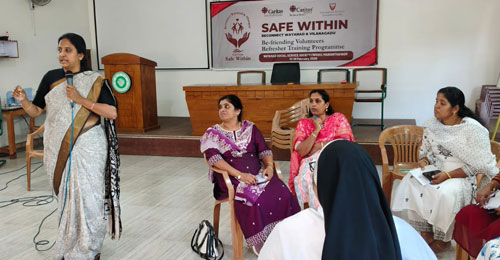
Reinforcing community mental health care in post disaster Kerala
In disaster-affected Wayanad, rebuilding homes is only half the work. Healing invisible wounds is the...
LEARN MORE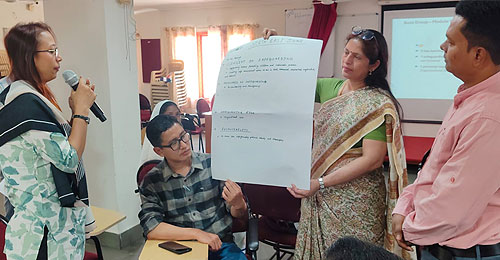
Caritas India strengthens safeguarding culture across partner network
Safeguarding cannot remain confined to policy documents. It must shape behaviour, systems and leadership choices...
LEARN MORE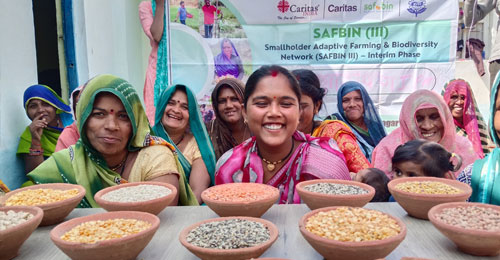
MP Smallholder farmers lead a pulse-powered nutrition shift
In the drought-prone districts of Madhya Pradesh, farmers are reclaiming control over their food systems....
LEARN MORE 91 -11 - 2336 3390
  director@caritasindia.org


