
 91 -11 - 2336 3390
  director@caritasindia.org
 When the Floods Come Again: How Livestock Became a Family’s Plan B
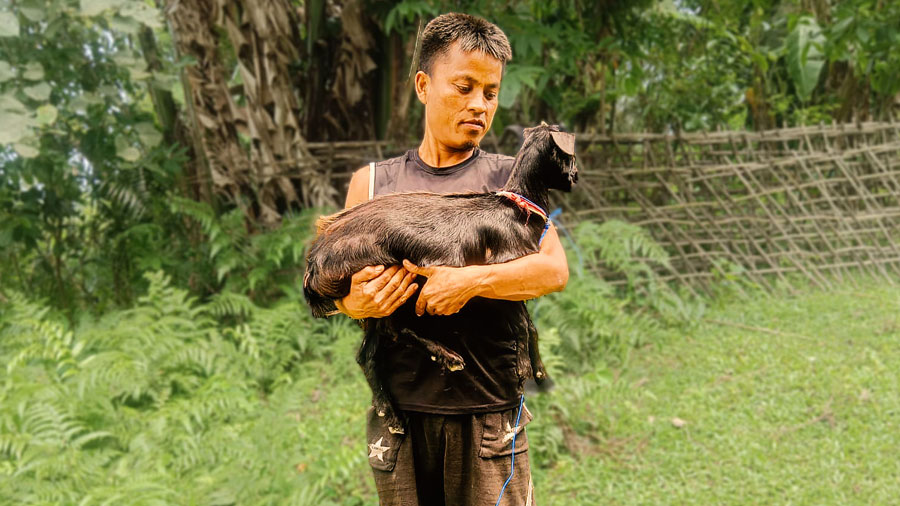
Every year, disaster wipes out what smallholder farmers in Assam, Tripura, and Bihar have built. Through the SARAL Project, Caritas India, with support from Caritas Italiana, is helping families build a second source of income that doesn’t wash away with the fields.
For most smallholder farmers in India’s disaster-prone northeast, there is really only one plan. The crop. When it fails, whether to flood, landslide or drought, there is nothing behind it. No savings, no second income, no cushion. The next season just starts from zero again.
Ms. Ratimala Tripura, from Kalyansingh Village in Tripura, knew that cycle well. Farming was all she had, and farming was exactly what disaster kept taking away from her.
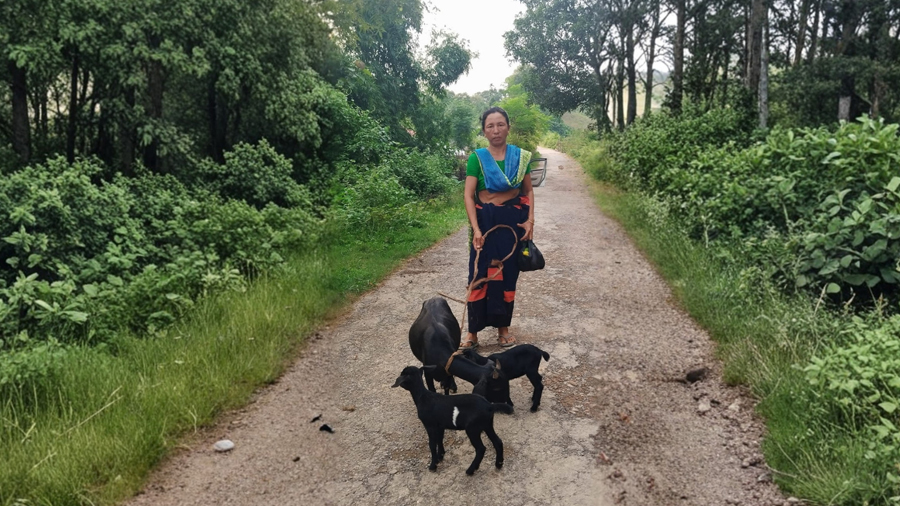
This spring, with support from Caritas Italiana channelled through Caritas India’s SARAL Project, Ratimala received Rs. 5,000 for livestock support. She put in another Rs. 2,500 of her own savings and bought a female goat. Within two months, the goat gave birth to two healthy kids. One animal had quietly become the start of something that didn’t depend on the weather at all.
“The support from Caritas India came at the right time,” Ratimala says. “With just Rs. 5,000, I was able to start something that is already multiplying. Today, I don’t just own one goat. I have the beginning of a growing livelihood.”
Her plan going forward is simple. Raise the female kid to grow her herd, sell the male kid once it matures, and put that income back into expanding further.
Ratimala’s story isn’t unusual here. It’s the pattern the project was designed around. Family after family has just one point of failure, the harvest, and is now being handed a second, independent asset that can survive even when the crop can’t.
In the same village, Ms. Umila Tripura had never been able to afford even a single goat. Like her neighbours, she had nothing to fall back on when farming alone wasn’t enough. With Rs. 5,000 in support, she started her own goat-rearing enterprise, and within two months her goat gave birth to a healthy kid, doubling what she owned almost overnight.
“Owning even one goat was beyond my reach,” Umila says. “Today, I have two goats and the confidence that I can slowly build my own goat farm. This support has given me the opportunity to dream again.”
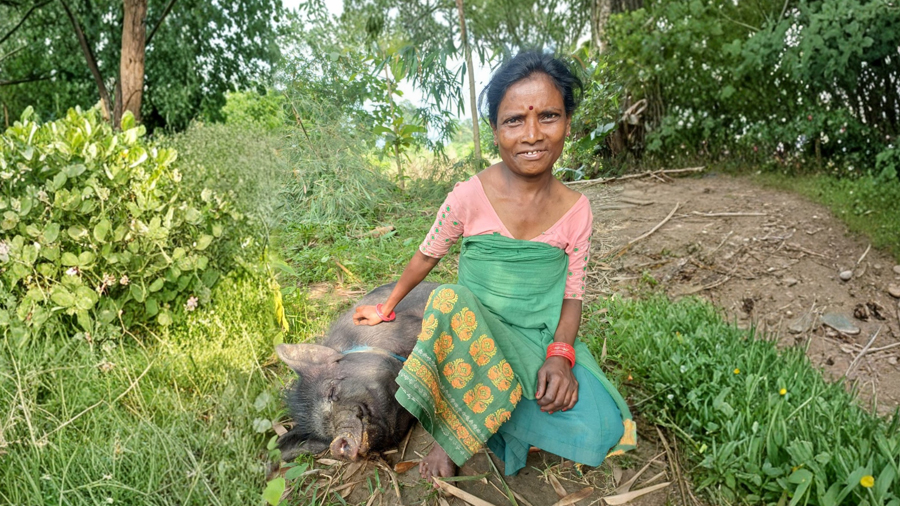
In 13/10 Grant Village, Assam, Ms. Rimni Toppo chose a different path into livestock: pig farming, which isn’t tied to the same flood-prone fields her family depends on. She combined the Rs. 5,000 support with Rs. 3,000 of her own savings to buy a mother pig. Within two months it gave birth to ten piglets.
“I never imagined that one pig could bring such a big change to my family’s future,” Rimni says. “The birth of ten piglets has encouraged me to expand pig farming as a reliable source of income.”
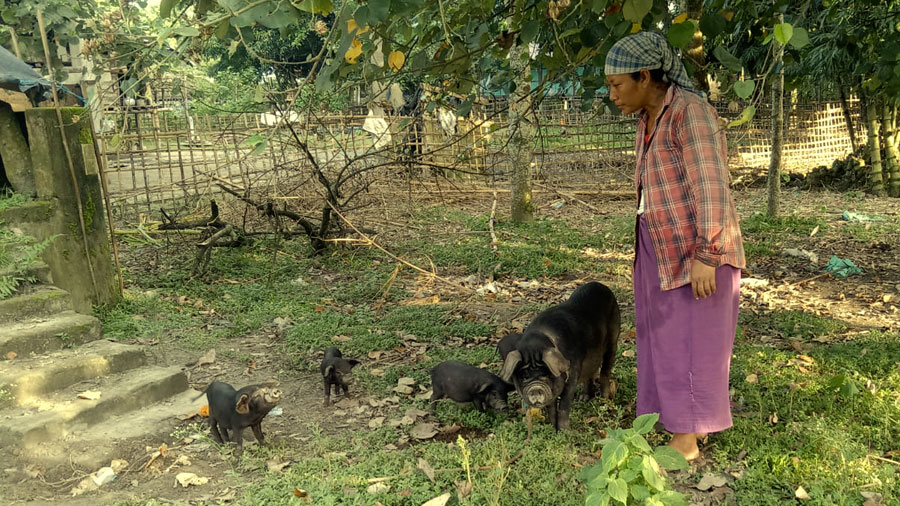
And in Sissisunoni Village, Assam, Ms. Pulon Missong added Rs. 700 of her own money to the Rs. 5,000 grant to buy a female pig. Within three months it had six piglets. Instead of selling them right away, she’s rearing them to build a proper pig farm, something to lean on so her family isn’t relying on agriculture alone.
“My pig has already given birth to six piglets, and I plan to rear them to build my own pig farm,” she says. “I believe this will significantly improve my family’s income and help us become financially secure.”
These four women are part of a much bigger effort. The SARAL Project aims to strengthen the resilience of 10,000 people across 3,485 households in disaster-prone villages across Assam, Tripura, and Bihar, through community-led disaster risk reduction, climate-resilient agriculture, and sustainable livelihoods.
Within that, 450 vulnerable farming households were chosen for livestock support. In May and June 2026 alone, 300 farmers received 221 goats and 79 pigs, assets that, as these stories show, often started multiplying within weeks.
Caritas India’s work doesn’t stop at giving a family an animal. A livelihood like this is only as secure as the animal’s health, so the project has also run livestock vaccination camps covering more than 200 animals and arranged insurance for over 150 animals, so families don’t lose the very asset that’s rebuilding their future.
For families in flood and landslide prone districts, disaster isn’t really a possibility. It’s something that shows up nearly every year. Relief after a disaster restores what was lost. It rarely changes what happens the next time.
What Ratimala, Umila, Rimni and Pulon have now is different. A livelihood that doesn’t sit in the same fields the floodwater reaches. If next season’s crop fails, it no longer means starting over from nothing. It means falling back on a goat pen or a pig sty that’s already grown, already multiplying, already theirs.
That’s really the idea behind the SARAL Project’s livestock support, made possible through Caritas Italiana’s partnership with Caritas India. Not to replace the farm, but to make sure that when climate disaster takes it away, which it does almost every year, a family still has something left standing.
Upcoming News
Caritas India Trains Partner Organisations in Evidence Based Project Proposal Writing
Some of the strongest community projects never get built, not for lack of need or...
LEARN MORE
A Grocery Shop, a Mother’s Resolve, and Three Daughters Who Stayed in School
Three young girls in this remote village are attending school regularly today because their mother...
LEARN MORE
When NGOs Grow, What Breaks First? Caritas India Tackles the Answer in Raipur
Three-day workshop arms executive leaders with governance tools, a 20-policy framework and practical fixes for...
LEARN MORE 91 -11 - 23362735
  director@caritasindia.org


