
 91 -11 - 2336 3390
  director@caritasindia.org
 From Anganwadi to Kitchen Garden, SAFBIN Brings Nutrition Month Home to Madhya Pradesh
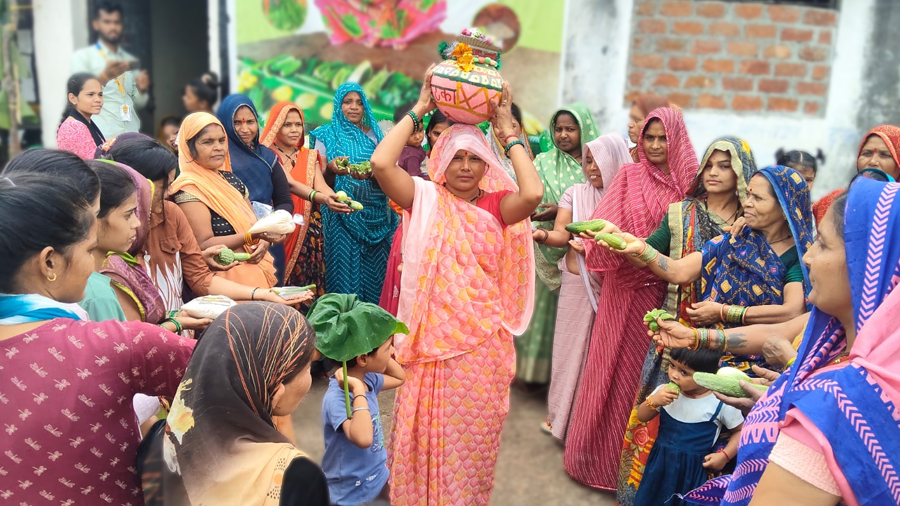
Nutrition is not only about having enough food. It is about the right food, in the right quantity, at the right time, especially for children, adolescent girls, and pregnant and lactating women. This September, six villages across Mandla and Sagar districts of Madhya Pradesh showed what that looks like in practice, as Caritas India’s SAFBIN programme marked National Nutrition Month (Rashtriya Poshan Maah) 2026 at local Anganwadi Centres. The effort carries extra weight because Madhya Pradesh is among the top five performing states in this year’s Nutrition Month campaign.
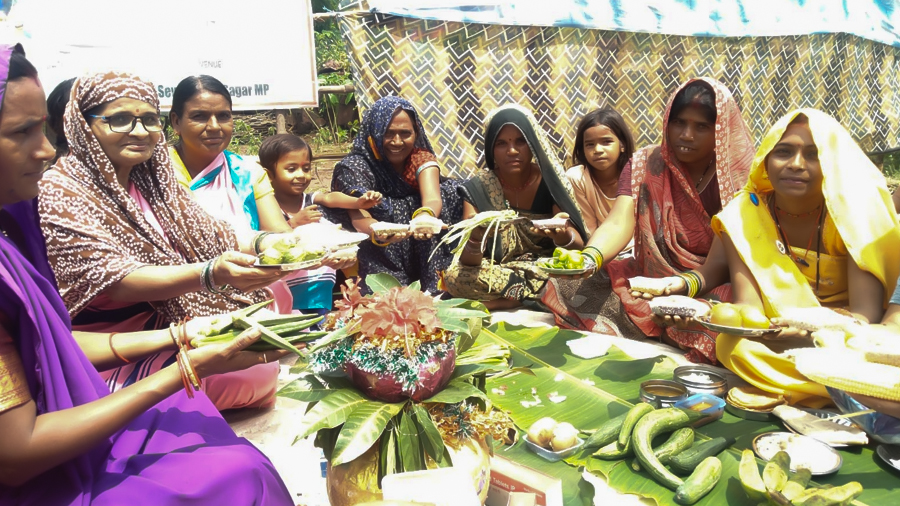
The month of activities reached 216 community members, including 135 women, 31 men and 50 children. Anganwadi Workers and helpers, ANMs, ASHAs, school teachers, students, SHFC members and local public representatives joined them. The celebrations took place in Surajpura, Silpura and Malimohgaon villages of Mandla, and Gondai, Mothi and Kolua villages of Sagar.
The Smallholder Adaptive Farming and Biodiversity Network (SAFBIN), funded by Caritas Austria, aims to secure local food and nutrition for smallholder farmers, in line with the second Sustainable Development Goal. Its premise is simple. Families who grow diverse food close to home eat better and depend less on the market. The programme is in its fourth phase and works in 20 villages across Mandla and Sagar through biodiversity based, sustainable farming practices. National Nutrition Month gave that work a public stage.
The results from earlier phases show why the approach works. SAFBIN’s learnings include local food security days rising from 6 to 10 months, and the local food basket growing from 12 to 21 items through low cost adaptive farming. At an earlier community event, the programme introduced a “My Balanced Diet” chart of 55 locally available food items, so that families could see how much nutrition already grows around them.
Anganwadi Centres held exhibitions of local grains, pulses, vegetables and fruits, showing how affordable ingredients combine into balanced meals. Anganwadi Workers explained the needs of children, adolescent girls and mothers, and women swapped recipes and experiences. The talk was about improving dietary diversity with what is already available, not about buying more from the market.
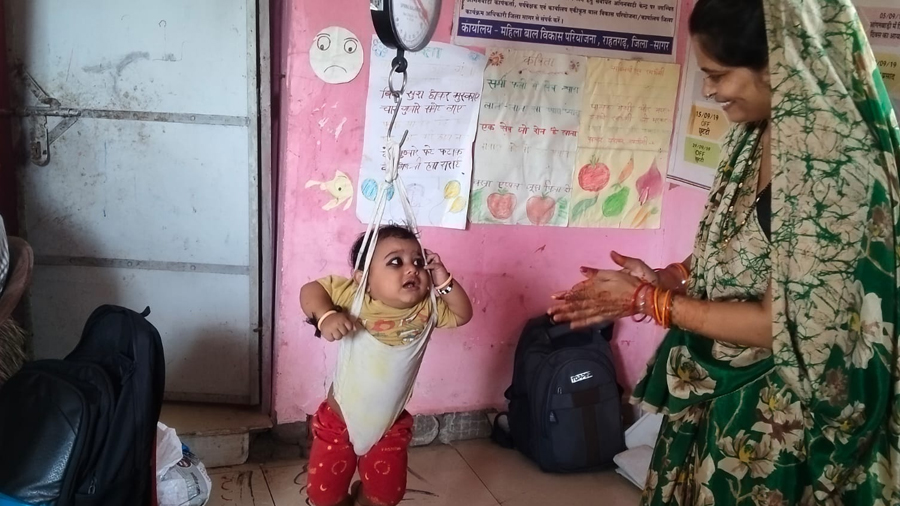
In Sagar, the CHO, ANM and Anganwadi Workers, supported by the MVSS Awareness Team, brought services to the doorstep. Children’s height and weight were measured, vaccinations were given and medicines were handed out. Pregnant women received Healthy Baby posters, and sanitary pads prepared by Manav Vikas were distributed, a reminder that nutrition, hygiene and health go together.
The most meaningful moment came during the discussion on backyard nutrition gardens. One SHFC member brought fresh vegetables from her own garden and explained that it now gives her family a regular supply of greens and lowers her spending at the market. Inspired, the women pledged to start gardens of their own.
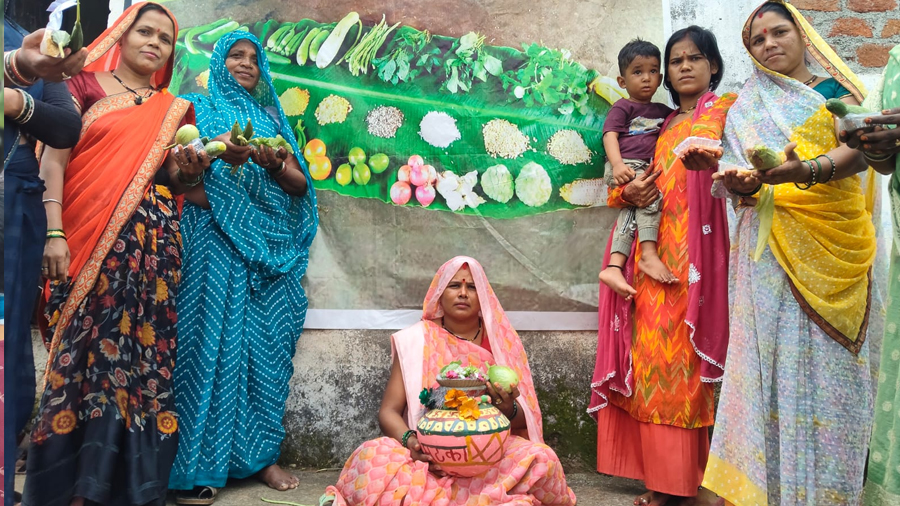
This is the heart of SAFBIN’s nutrition work. Homestead nutrition gardens were recommended during programme design as a way to reduce risks to food and nutrition security under climate change, with surplus produce sold locally. Community seed banks support the same goal. Seed banks have been set up in 25 villages, so families have dependable access to diverse, locally adapted seed.
“Good nutrition is important at every stage of life,” said Ms. Vandna Korram, SHFC Member from Silpura village, Mandla. “As an SHFC member, I now want to encourage other women to grow nutrition gardens and include a variety of locally available vegetables in their daily meals. If we improve nutrition at the household level, we can build healthier mothers, healthier children and a healthier future generation.”
The celebrations made one thing clear. Nutrition cannot be left to a single institution. Anganwadi Centres, health workers, schools, women’s groups, families and community leaders each have a part to play. Women and adolescent girls took an active role in discussions on balanced diets, protein rich foods and hygiene, while Anganwadi Centres showed they can be spaces for learning and action as well as service delivery.
The initiative also supports the aims of Mission Poshan 2.0 by helping communities move from awareness to sustained action against malnutrition. A handful of vegetables from a backyard, a recipe shared among mothers, a child’s growth checked regularly and a woman gaining the confidence to choose better food all add up to healthier families.
Upcoming News
Caritas India Marks 64 Years of Service with Gratitude and Renewed Commitment
"Christian love cannot remain only in our hearts. Love must become action." With these words,...
LEARN MORE
AutoShakti Opened a Door for Kalayarsi
In Mambakkam village near Sriperumbudur, the mornings begin early at Kalayarsi's home. Her mother prepares...
LEARN MORE
Government and NGOs agreed to set-up One Platform for Disaster Preparedness in Puri, Odisha
Government departments and more than 20 NGOs in Puri district agreed to set up a...
LEARN MORE 91 -11 - 23362735
  director@caritasindia.org


