
 91 -11 - 2336 3390
  director@caritasindia.org
 A switch to climate adaptive agriculture practices for health and environmental benefits
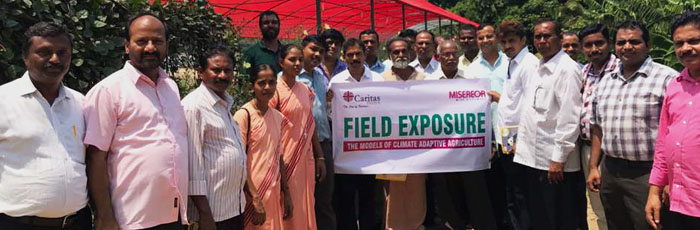
India is continuously affected by droughts and floods due to extreme weather conditions and frequent climate change posing serious threat to the well-being of growing population.
To address the issue and find solutions to climate-related challenges in agriculture, a training was organized for the Ujeevana and Ujwala project partners from May 23-25, 2017 at Palakkad, Kerala.
The programme is supported by Misereor for addressing rights and entitlements, livelihood and institutional building initiatives in Telengana and Karnataka.
Dr. V.R. Haridas, Climate Adaptive Sustainable Agriculture, Thematic Manager of Caritas India explained the seven ground rules to follow climate adaptive agriculture practices with the participants. Mulching for a natural farming, Multi cropping, intra-cropping, strip cropping, (soil erosion permitting & soil erosion preventing), Shallow planting, Distance between plants, Ensuring direct Sun light to the plants, Soil & water management and Afforestation were explained by Dr. Haridas as very essential key elements to adopt climate adaptive agriculture practices.
Different methods/practices of water conservation were explained through images to gain better clarity on the various types of climate adaptive agriculture practices. Dr. Haridas shared that through Water injection promotion, Ponds, Micro irrigation, Reduce the flow of running water, Gully plugs, Subsurface barriers, Household waste management and Pipe composting can helps in climate adaptive agriculture practices.
He also informed that there is huge amount reserved with National Bank for Agriculture and Rural Development (NABARD) for the activities of climate adaptive agriculture practices. He advised to contact District Officer of NABARD at the District level and at the State level, Chief General Manager (CGM) to avail those resources.
Explaining the salient features of ‘green revolution’, he said excessive and continuous usage of chemicals and pesticides create NO2 which is very harmful for human body and environment.
Dr. Haridas suggested Pest Preventing Planting Pattern (P4) to help plants to achieve climate adaptive agricultural practices.
The exposure visit to Mr. Skaria Pillai, the ‘KARSHAKASHRI’ award winner (in 2004 from Government of Kerala) for his dairy farm, goat farm, low cost feed for animals, fish pond, multi cropping, etc. helped the participants to understand the technical issues related to the subject.
Participants also visited Mr. Kalingarajan to get exposure of coconut field in which he grows coco also. Mr. Saju from Peoples Service Society, explained participants about the Jack fruit products along with the benefits of pollution free poultry farm (PFPF).
Upcoming News

Ropes and Sacks Become Lifesaving Tools as NDRF Trains Wayanad’s First Responders
Long before an ambulance can reach a flooded village or a landslide hit hillside, it...
LEARN MORE
Caritas India Trains Partner Organisations in Evidence Based Project Proposal Writing
Some of the strongest community projects never get built, not for lack of need or...
LEARN MORE
A Grocery Shop, a Mother’s Resolve, and Three Daughters Who Stayed in School
Three young girls in this remote village are attending school regularly today because their mother...
LEARN MORE 91 -11 - 23362735
  director@caritasindia.org


