
 91 -11 - 2336 3390
  director@caritasindia.org
 1200 Migrant Workers Living with HIV Now Access Government Support
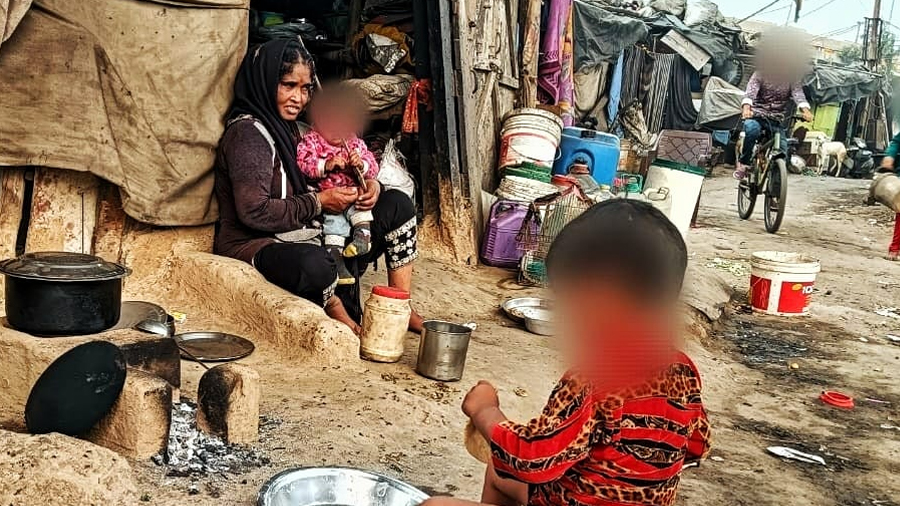
After her husband’s death, Surabhi was left to raise her children alone, while managing her own HIV treatment. There was no steady income. What little she had went toward daily household needs and the recurring cost of travelling to her treatment centre. “I often worried about how I would provide food for my family and continue my medicines,” she recalls.
She knew she was eligible for government support. She did not know how to access it. “The paperwork and procedures felt overwhelming,” she says. A barrier that keeps thousands of eligible families locked out of entitlements meant for them. Surabhi’s hesitation was not unusual. For a widow already navigating grief, a chronic health condition, and the daily pressure of feeding her children, the idea of tracking down the right office, the right form, and the right official felt like one more burden she could not carry alone.
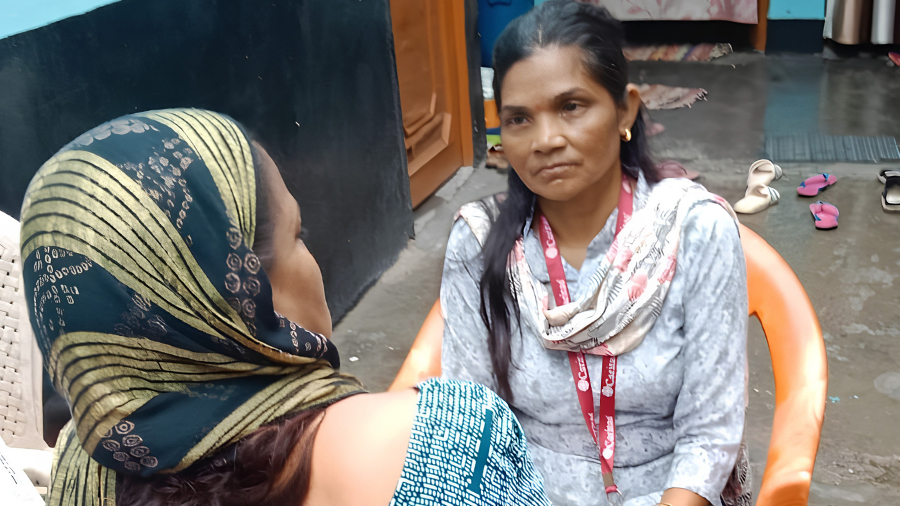
Surabhi is one of 1,537 people living with HIV supported by Caritas India’s Gram Nirman Programme, running since July 2021 with support from Caritas Australia across 18 urban slums and 65 sub-slums in East Delhi and the NCR. Nearly 95% of participants are migrant workers, drawn to the city for livelihood but living without the documentation, stability, or awareness needed to claim the welfare protections designed for them. Many work informal jobs with no fixed wage or leave, in settlements where housing is crowded and healthcare access is uncertain at the best of times.
For those also living with HIV, the stakes are higher still. Missing a single day’s wage to visit an ART centre can mean missing a meal. Fear of stigma often keeps people from disclosing their status even to neighbours, let alone government officials, which makes the already complex task of applying for a scheme feel riskier still. These are not isolated hardships — they compound. A missed application deadline, a lost document, or a single unanswered visit to a government office can quietly close the door on support a family is legally entitled to.
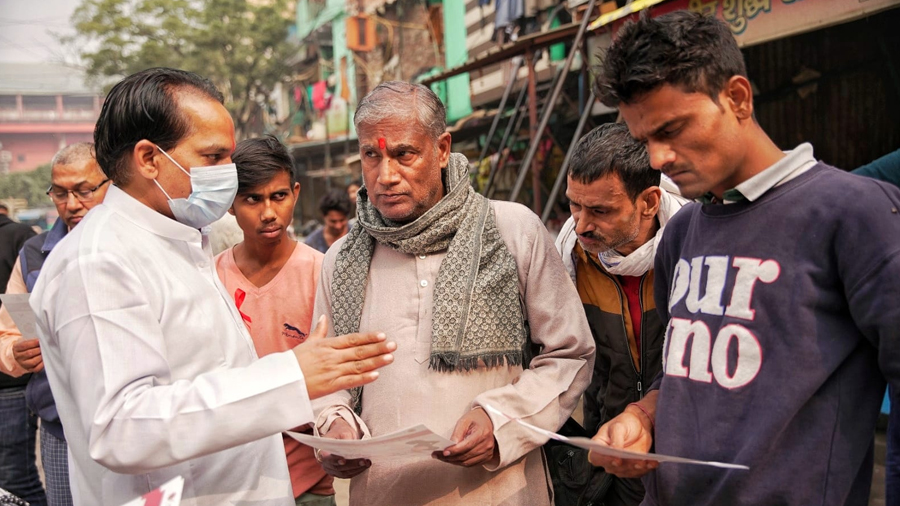 This is where the programme’s model does its quiet, unglamorous work. Gram Nirman’s community facilitators and peer counsellors don’t simply point participants toward a scheme and move on. They walk beside them through every step by securing identity documents and residency proofs, filling out applications correctly the first time, and following up, sometimes repeatedly with government departments until benefits actually arrive. Awareness sessions, home visits, and counselling sit alongside this administrative support, so that participants understand not only what they are entitled to, but why the process matters and how to navigate it the next time.
For Surabhi, that meant a Gram Nirman team member staying with her case from start to finish, helping her gather the paperwork she didn’t know she needed, and returning to government offices on her behalf when progress stalled. Today, she receives a widow pension of ₹2,500 every month, deposited reliably, without her having to choose between standing in a government queue and earning a day’s wage.
“This support has helped me meet basic household needs and continue my treatment without interruption. More importantly, it has given me hope and confidence that I can provide a better future for my children.” — Surabhi (name changed), widowed woman living with HIV, Gram Nirman participant
For Surabhi, the monthly pension gives her stability. It means groceries are bought without the constant mental arithmetic of what must be sacrificed. It means her ART treatment continues without interruption, because a clinic visit no longer has to compete with a day’s income. And it means her children’s future looks a little less uncertain than it did the day their father died.
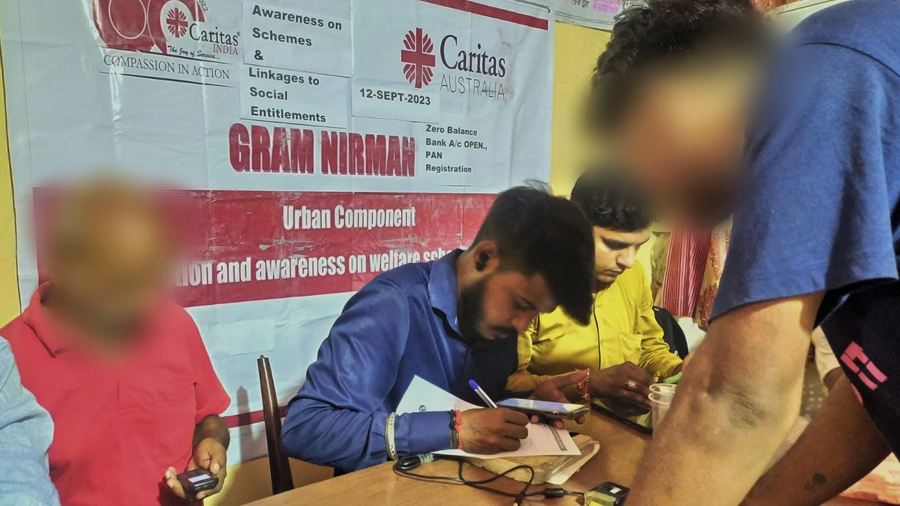
Her experience reflects a much larger pattern across the programme. Since Gram Nirman began, more than 1,200 participants have been linked to government welfare schemes — PLHIV pensions, disability and widow pensions, financial support for children living with HIV, travel allowances for ART visits, Labour Card benefits, and Ayushman Bharat health coverage. Some of these are modest monthly amounts; others, like the one-time education grants supporting girls in migrant households, arrive at a single, critical moment. Together, these connections are now channelling an estimated ₹2.36 crore a year in entitlements directly to families who, like Surabhi’s, had no idea how to claim them until someone showed them the way.
The impact goes beyond the financial support. It is treatment that continues uninterrupted. It is a mother who no longer has to choose between a wage and a hospital visit. It is a widow who no longer has to face a government office alone, uncertain whether she will be heard. As Surabhi puts it: “I feel respected and supported, knowing that I am not alone in this journey. The programme has shown me that even in the most difficult circumstances, help is available when someone is willing to guide and empower us.”
Caritas India lives by its slogan, “The Joy of Service,” not charity, but accompaniment. Not a handout, but a bridge to what was already owed. It is a model built on the understanding that entitlements on paper mean little without someone willing to help people claim them: peer counsellors who understand the community from the inside, sustained relationships with government departments, and the patience to see a single application through to approval, however long it takes.
As the programme continues to grow, its ambition remains grounded in the same principle that changed Surabhi’s circumstances: that no one should be left to navigate a life-altering system alone. For every family reached, the goal remains the same to facilitate access to a scheme, uphold dignity, ensure security, and hope that come with knowing someone stood beside them until help arrived.
Upcoming News
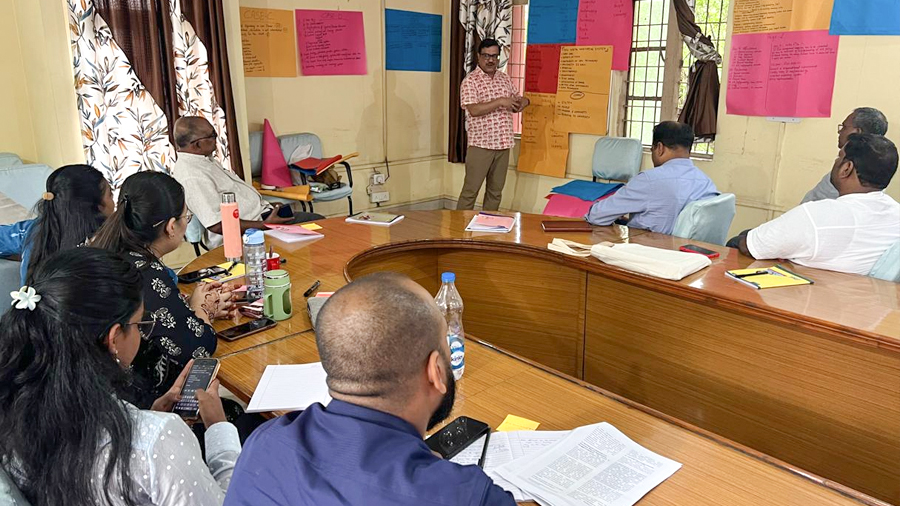
When NGOs Grow, What Breaks First? Caritas India Tackles the Answer in Raipur
Three-day workshop arms executive leaders with governance tools, a 20-policy framework and practical fixes for...
LEARN MORE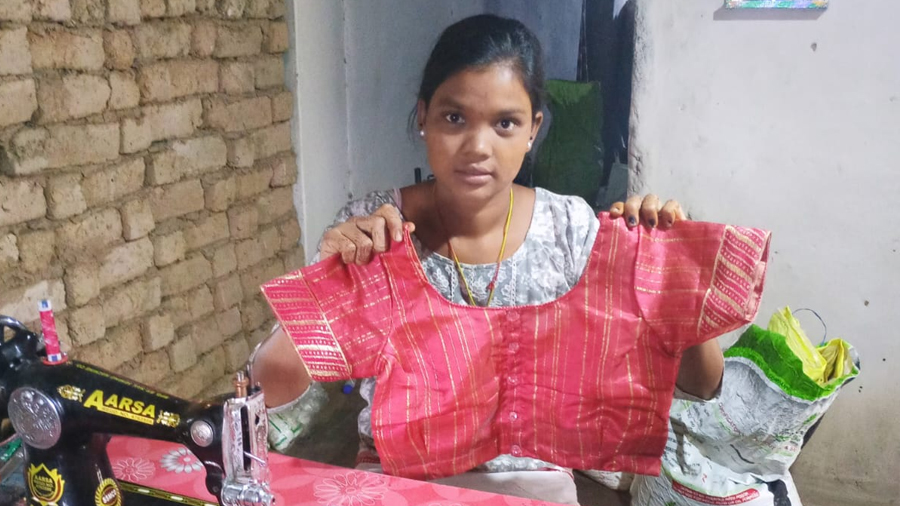
Nine Kilometres Through the Jungle: How Poornima Stitched Her Own Future
For 19 year old Poornima Rawat of Rajamma village in Lailunga block of Chhattisgarh's Raigarh...
LEARN MORE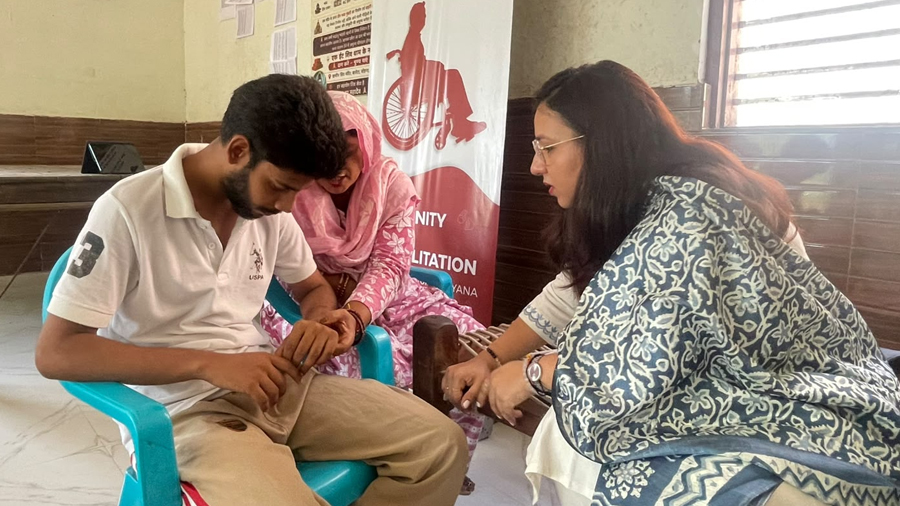
In a Nuh Village, People Living With Mental Illness Finally Got to Speak, and Be Heard
Nine people sat in that room in Barota village, Nuh district, Haryana, each carrying a...
LEARN MORE 91 -11 - 23362735
  director@caritasindia.org


