
 91 -11 - 2336 3390
 director@caritasindia.org
Bringing Water Closer to Home: An Inclusive Community Resilience Initiative in Assam
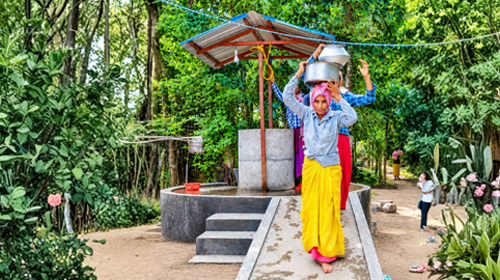
When floodwater enters 13/10 Grant Village in Assam, it also reaches the sources families depend on for drinking water. Ring wells and hand pumps built below the floodwater level become inundated, leaving residents to travel considerable distances to collect water from alternative sources.
For the village’s 59 households, annual flooding brings a recurring challenge: water all around, but fewer usable sources close to home.
Through Caritas India’s SARAL Project, the community identified a practical response, i.e., raise an existing ring well, restore its usability and make it easier for people to reach.
The need emerged during the We4Resilience Campaign organised under the SARAL Project. Residents identified access to drinking water as a major concern, while the Disaster Risk Reduction Committees (DRRCs) helped examine the problem and recommend improvements.
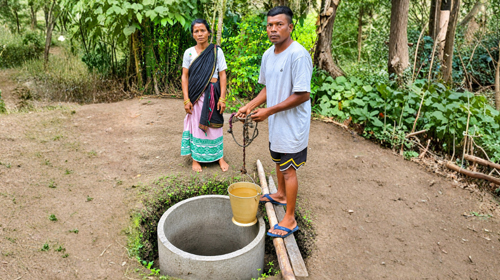
Attention turned to a ring well belonging to Jemach Tirkey, 43, and his wife, Hira Tirkey, 32. The well was already there, but concerns about its unhygienic condition had left it largely unused. Families continued travelling to more distant sources while a potential water source stood within their neighbourhood.
With facilitation and support from Caritas India’s SARAL Project, the well was raised and renovated to address its vulnerability to floodwater inundation and improve access for the surrounding households.
The intervention connected a community-identified need with a locally available resource to improve the existing well rather than leaving it unused.
The work went beyond raising the well. A ramp was incorporated to facilitate access for persons with disabilities and others with mobility challenges.
This feature made inclusion part of the intervention itself. The aim was not simply to bring a water source closer to households, but to make it easier to approach and use.
For a village comprising Scheduled Tribe and General community households, the effort brought together residents, DRRCs and project support around a shared concern: reducing the everyday difficulty of accessing water in a flood-prone area.
Residents have expressed happiness with the improvement and reported that they now travel less to collect water. They also say the water appears better in quality than before.
Its suitability for drinking, however, remains to be established. Water quality testing is planned in coordination with the DRRCs and the Public Health Engineering Department. Raising and renovating the well is an important improvement, but it does not, by itself, confirm drinking-water safety or uninterrupted access during future floods.
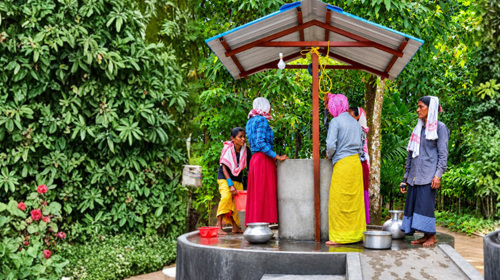
For the 59 households of 13/10 Grant Village, the initiative represents a practical step towards more dependable water access close to home.
Caritas India’s contribution through the SARAL Project is visible in that change: supporting residents to identify a recurring risk, improve an existing resource and include people who might otherwise face barriers to access. In a village where rising floodwater repeatedly disrupts daily life, the community has responded by raising something essential a well, and the possibility of less hardship around it.
Upcoming News
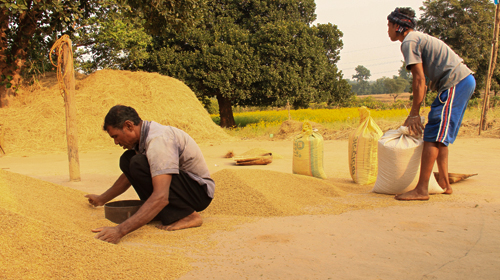
A Harvest Too Small for the Market? Study Points to the Power of Selling Together
A farmer may have a harvest to sell, yet too little produce to make the...
LEARN MORE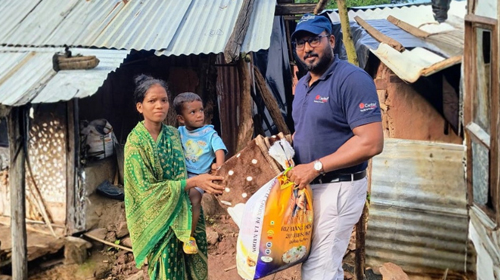
Caritas India Rushes Relief to Cyclone Arnab Hit Families in Odisha’s Gajapati
Caritas India has begun distributing emergency ration kits and blankets to families battered by Cyclone...
LEARN MORE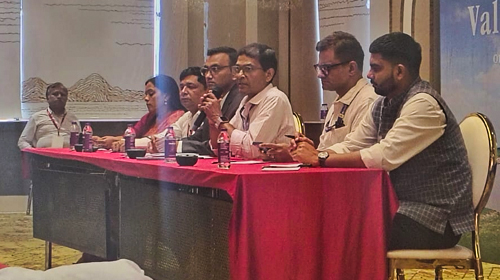
Experts call for last-mile flood early warning systems along Bihar’s ‘ghost river’
Experts, government representatives and community leaders participating in a two-day workshop here have called for...
LEARN MORE 91 -11 - 23362735
 director@caritasindia.org


