
 91 -11 - 2336 3390
  director@caritasindia.org
 Building bridges between smallholder farmers and market
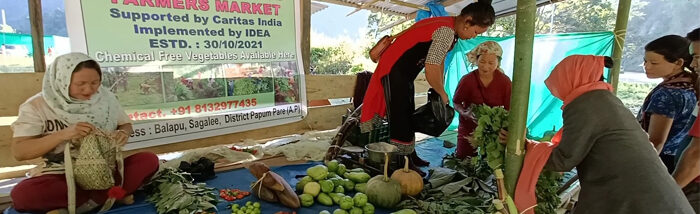
Smallholder farmers have the potential to alleviate poverty and hunger, but the poor farmers require access to improved seeds, knowledge, infrastructure, linkages, agricultural input, better market, and value addition for their agricultural support.
The Smallholder farmers contribute 51 per cent of agricultural output from their 46 per cent of the land but very meagre reforms have been sanctioned to support this section of farmers. In a country like India, the rural market is the farmers’ first contact point with the marketing channel. Rural markets are considered the nerve-centres of the economic, social, and cultural activities of rural life. The producer farmers not only depend on these markets for the disposal of their produce for cash, but also for the procurement of agricultural inputs as well as for social contact.
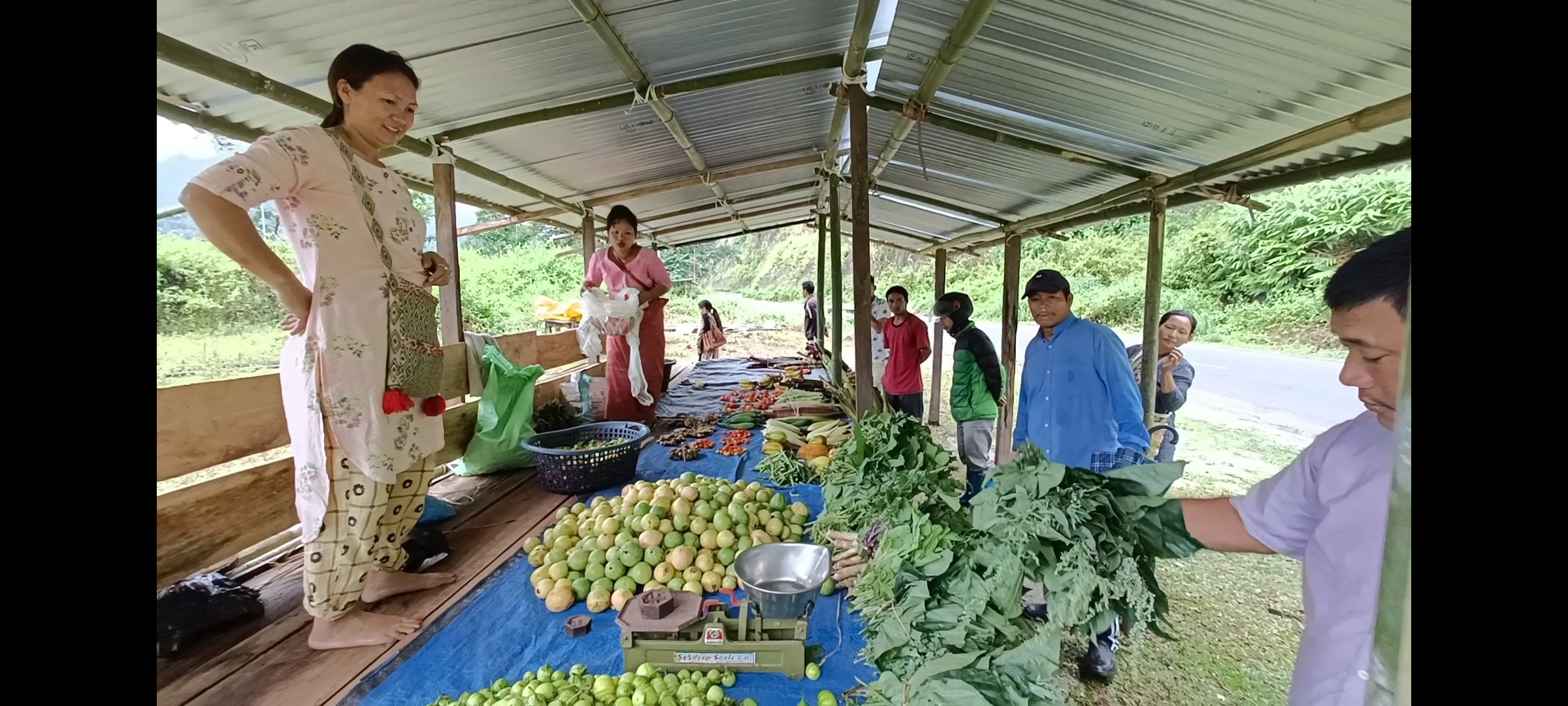
“We produce a lot of fresh vegetables in our agricultural field. But selling is a challenge as we have to travel to the nearest town which requires money at least Rs. 500 on one side and a total of Rs. 1,000, says Gita Nana, a smallholder farmer from Papum Pare District of Arunachal Pradesh.
Gita and two other women from Balapu village under Sagalee Block in the district of Papum Pare, Arunachal Pradesh used to collect agricultural products (cultivated vegetables and NTFPs) from the village for selling. The idea was to provide an outlet for this surplus cultivation, NTFP and handicrafts to the outer world and to get additional income for the families.
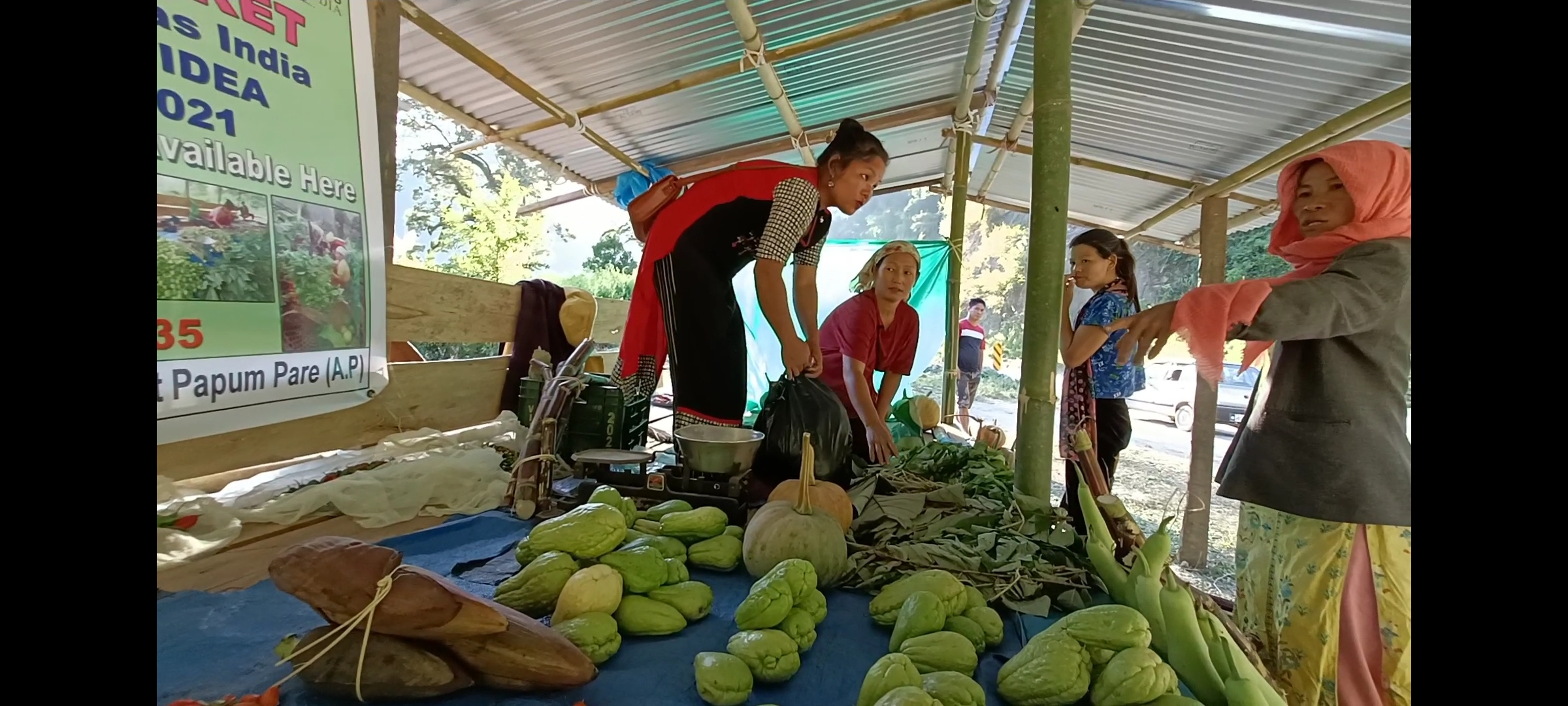
The initial challenge was to sell out chemical-free agri-products and create a sustainable demand-supply chain and provide the best prices for the farmers and consumers and earn a livelihood. The elders in the village supported the initiative and provided a space at the national highway roadside. Itanagar Diocesan Empowerment Association (IDEA), Arunachal Pradesh with support from Caritas India and Misereor Germany have established a rural market in the programme area under the FARM programme.
“We came to know about IDEA and with their support, we are able to set up this shop. Many farmers in have a lot of agricultural produce but do not have a market to sell. We go to 4-5 villages and collect the produces on wholesale rates and sell in this market which eventually helps them,” adds Gita Nana. The market was initiated in October 2021 and has been able to benefit 50 families with an income of Rs 4,000 per month.
IDEA plans to cover more farmers under such markets in other project areas in the days to come and support the smallholder farmers to live sustainable lives. The initiative not only stimulates economic growth but also reduces poverty by opening new avenues of income generation.
Upcoming News
How Musangu’s Barren Slopes Became a Living Harvest
The dense forests of Ranchi’s Angara Block once cast long, somber shadows over the 382...
LEARN MORE
Four Madhya Pradesh Villages Lead Collective Action for World Water Day 2026
The morning of March 22nd at Kolua village didn’t start with policy speeches or ribbon-cutting....
LEARN MORE
Now Our Playground is Full of Life
"Earlier, we had the desire to play, but we did not have the proper sports...
LEARN MORE 91 -11 - 2336 3390
  director@caritasindia.org


