
 91 -11 - 2336 3390
  director@caritasindia.org
 Caritas India Brings IAGs and Community Organizations Together in Assam
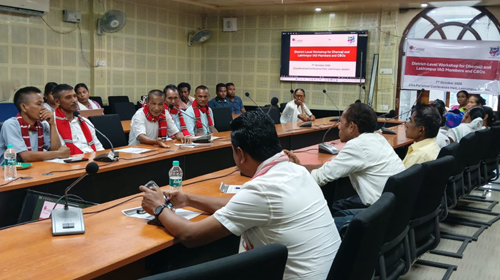
As climate change reshapes weather patterns and intensifies disaster risks across Assam, strengthening community preparedness, resilient livelihoods, and coordinated humanitarian action has become increasingly important.
Recognizing this need, a district-level workshop for members of the Dhemaji and Lakhimpur Inter-Agency Groups (IAGs) and representatives of Community-Based Organizations (CBOs) was organized on 7 October 2026 at the Zilla Parishad Conference Hall, Lakhimpur, Assam. The workshop was funded by Caritas India under the SARAL (Strengthening Adaptation, Resilience, and Livelihoods) Project.
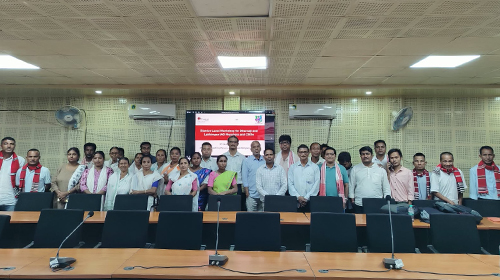
The workshop brought together 40 participants, comprising 28 men and 12 women, representing local, national, and international NGOs and community-based organizations. It provided a platform for knowledge-sharing and collective reflection on the changing climate and disaster scenario in Assam, with particular emphasis on disaster risk reduction (DRR), climate resilience, livelihood diversification, and inter-agency coordination.
Understanding Changing Climate and Disaster Risks
The programme commenced with a welcome address by Mr. Wilfred Topno, Chairperson of Lakhimpur District IAG, who facilitated participant introductions and highlighted the role of IAGs in strengthening coordination among humanitarian agencies, NGOs, and CBOs. He emphasized the importance of collaboration in addressing disaster-related challenges, supporting vulnerable communities, and promoting sustainable development.
Mr. Luit Goswami, Convenor of Dhemaji District IAG, presented the changing climate scenario in Assam, highlighting shifts in weather patterns, rising temperatures, and the increasing unpredictability of climate-related events. The session explored the implications of these changes for agriculture, livelihoods, health, infrastructure, and community well-being, emphasizing the need for locally relevant climate adaptation and preparedness measures.
Building on this discussion, Mr. Dharani Payang examined the changing landscape of disasters in Assam, particularly floods and riverbank erosion. He highlighted their interconnected impacts on human lives, livelihoods, displacement, and infrastructure. The session emphasized strengthening early warning systems, improving timely information dissemination, and adopting integrated approaches to flood and erosion risk reduction. Climate-resilient agriculture, crop diversification, alternative livelihood opportunities, and flood-resilient infrastructure were identified as important measures for reducing disaster risks and strengthening long-term resilience.
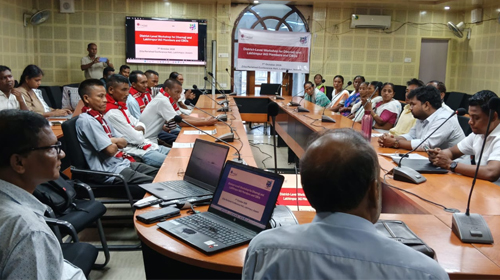
Showcasing Community-Based DRR Good Practices under SARAL
A key highlight of the workshop was the presentation by the Caritas India Disaster Risk Reduction Committee, which showcased practical good practices promoted under the SARAL Project to strengthen community preparedness and resilience against floods and other climate-related hazards.
The presentation highlighted the use of Ranjit Sub-1, a flood-tolerant rice variety, to support agricultural recovery and reduce crop losses in flood-prone areas. It also featured raised handpumps and ring wells as community-level infrastructure measures to improve access to water and strengthen water security in vulnerable settings.
Another important practice was the preparation of community contingency plans, which help communities identify potential hazards, establish preparedness measures, clarify responsibilities, and coordinate action before, during, and after disasters.
These examples demonstrated how locally appropriate agricultural practices, resilient infrastructure, and community-led planning can translate disaster risk reduction principles into practical interventions. The presentation also provided an opportunity for participating organizations to learn from field experiences and explore approaches that could be adapted to other disaster-prone communities.
Promoting Women’s Entrepreneurship and Livelihood Resilience
Recognizing that resilient communities depend on secure and diversified livelihoods, Mr. Manoj Tanti presented initiatives supporting women’s entrepreneurship and enterprise development across six blocks of Lakhimpur district.
The session highlighted food-processing training for approximately 25 selected women, access to personal loans, and handloom training supported by the provision of handloom machines. Opportunities to strengthen Farmer Producer Companies (FPCs) and local agricultural enterprises, particularly those associated with mustard cultivation, were also discussed.
The session emphasized that improving women’s access to skills, financial resources, and enterprise opportunities can strengthen household income, economic independence, and resilience to climate- and disaster-related shocks.
Strengthening Disaster Preparedness and Community Resilience
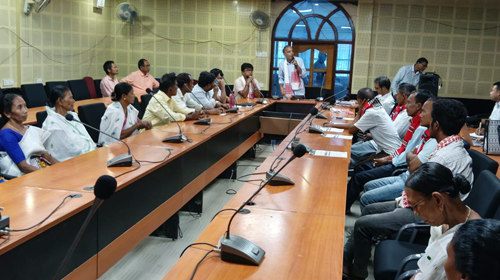
Mr. Pran Krishana Gogoi, District Disaster Management Authority Lakhimpur, facilitated a session on disaster preparedness, emphasizing that timely planning and preventive action can significantly reduce the loss of lives, property, and livelihoods. Participants discussed practical measures such as identifying local hazards, preparing household and community disaster plans, maintaining essential emergency supplies, ensuring timely communication, and strengthening community-level coordination.
The final session, facilitated by the President of Dhemaji IAG, focused on community resilience and climate-resilient approaches. It highlighted the importance of integrating climate considerations into community development and disaster management, while encouraging collective action among IAG members, NGOs, CBOs, and other stakeholders.
The discussions reinforced the need to move beyond response-focused interventions towards proactive preparedness, prevention, and long-term risk reduction. Effective early warning systems, community participation, climate-resilient infrastructure, agricultural adaptation, and diversified livelihoods were identified as essential components of resilient communities.
From Coordination to Collective Action
The workshop reinforced several key messages: climate change is increasing risks to agriculture and livelihoods; floods and riverbank erosion require integrated risk reduction measures; timely early warnings and communication are essential; and disaster preparedness must begin before emergencies occur.
Participants identified priority action areas, including strengthening coordination between the Dhemaji and Lakhimpur IAGs, NGOs, and CBOs; improving community-level early warning dissemination; promoting household and community preparedness plans; encouraging climate-resilient agriculture and livelihood diversification; supporting women’s entrepreneurship; and promoting resilient infrastructure.
Greater community participation was recognized as essential to ensuring that disaster preparedness, response, and recovery initiatives address local needs and build on community capacities.
The SARAL Project good practices presented during the workshop further demonstrated the value of combining climate-resilient agricultural practices, appropriate infrastructure, and community contingency planning to reduce disaster risks and strengthen local preparedness.
Building a More Resilient Assam
The workshop enhanced participants’ understanding of emerging climate and disaster risks while reinforcing the importance of collaboration among humanitarian organizations and community stakeholders. It also highlighted opportunities to link disaster risk reduction with sustainable livelihood development, women’s economic empowerment, and practical community-based resilience measures.
Through the SARAL Project, funded by Caritas India, the organization continues to promote community engagement, institutional coordination, climate adaptation, and sustainable livelihoods as important pathways to resilience.
The workshop reaffirmed that building disaster-resilient communities requires more than timely emergency response. It demands preparedness, prevention, locally appropriate solutions, coordinated action, and sustained investment in community capacities.
Upcoming News
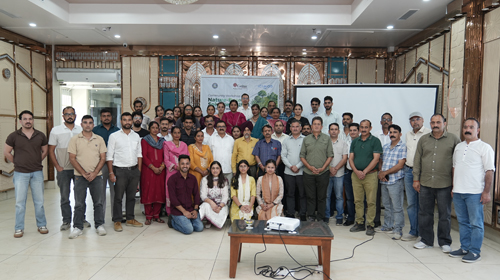
Dharampur Workshop Hands Flood Protection Works to the Community
Sixty three people gathered in Jahu with one question to settle. Who will look after...
LEARN MORE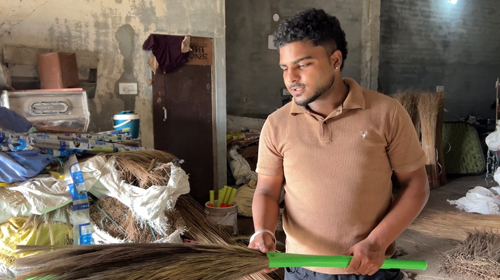
Sumit’s Reintegration Journey Back to Kaithal
When Sumit finished his 12th standard in Kaithal, Haryana, the world beyond his village seemed...
LEARN MORE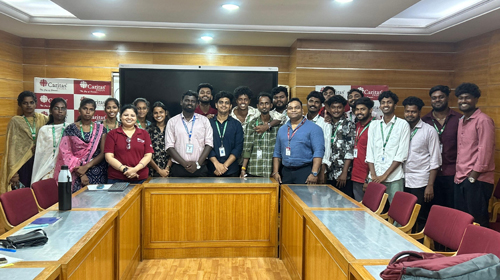
Learning Social Work Beyond the Classroom at Caritas India
It is one thing to read about social work in a textbook and another to...
LEARN MORE 91 -11 - 23362735
  director@caritasindia.org


