
 91 -11 - 2336 3390
 director@caritasindia.org
Farmers replacing chemicals with biological fertilizers and organic manure

Munni was able to break the trap of cash crops and chemical farming that was causing harm to the soil, production, and livelihood of her village.
With a family of eight members relying on the five-acre land at Indrakheda village of Dongaliya panchayat in Madhya Pradesh, Munni Dhannlal exhibited a steadfast determination to achieve a complete transformation from chemical to organic.
Munni says, “Earlier, I used to practice cash crop and chemical farming on my field, due to the lack of employment opportunities in the village, my elder son had to seek work elsewhere. Moreover, I was unable to avail the benefits of government schemes due to a lack of information.”
This shift started with the advent of Lakshmi Minj, a KDSS worker in Munni’s life. Lakshmi enlightened Munni about the wonders of organic farming and invited her to attend training sessions that unveiled a new, sustainable way of cultivating the land.

Lakshi introduced her to Caritas India’s Sabal Farmer group to learn about sustainable agriculture practices and traditional crops like foxtail millet, finger millet, little millet, and Indian barnyard millet. She also gains knowledge of pest management, and nutrition management solutions. The first-hand experience of preparing Vermicompost and Organic DAP has given her the confidence to embrace the principles of organic farming on her two acres of land.
The impact of this transition was far-reaching, extending beyond the boundaries of her farm. “In my family, my daughter and daughter-in-law were suffering from anaemia,” Munni shares. “But after incorporating these traditional grains into our daily diet, their health improved significantly.”

Munni’s commitment to organic farming did not stop there. She dedicated half an acre to mixed farming, cultivating a diverse array of food crops. This not only provided her family with a year-round supply of grains but also freed them from the burden of taking loans from moneylenders.
The Sabal project’s support extended even further, teaching Munni the technique of making barrages on the rivulets using bags filled with sands, for irrigating crops during the Rabi season. From her Rabi crop alone, Munni harvested an impressive 24 quintals of wheat, 8 quintals of gram, 50 kilograms of lentils, and 45 kilograms of peas.
“I feel very good by following the method of organic farming,” Munni beams. “Through organic harvest, I saw a significant improvement in my livelihood and income.”
Munni’s journey is a testament to the transformative power of knowledge and sustainable practices. Through the Sabal project, she learned invaluable lessons that not only enriched her farming but also improved the well-being of her entire family.
Munni extends her gratitude to Sabal KDSS, acknowledging the pivotal role they played in her success story. Her transition from chemical farming to organic abundance serves as an inspiration to countless others, proving that embracing sustainable practices can pave the way for a healthier, more prosperous future.
Upcoming News
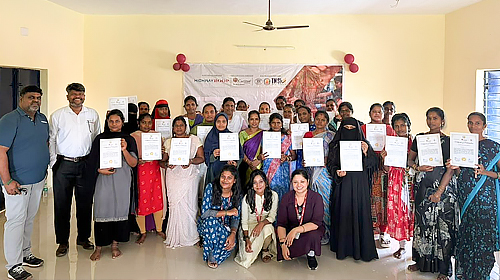
94 Women Certified in Auto Shakti’s EV Training, 10 Already Placed in Jobs
Ninety-four women have completed the EV Training under the Auto Shakti project and been certified,...
LEARN MORE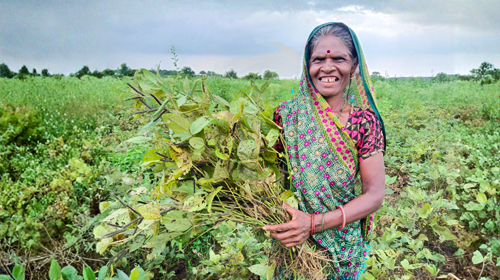
For the First Time, Her Crop Survived the Weather. Now Rooprani Shares What She Learned
"Earlier, our family depended mainly on one Kharif crop. After harvesting, we often faced financial...
LEARN MORE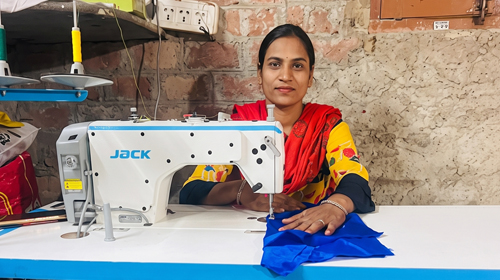
She Had No Income of Her Own. Now She Teaches Other Women to Earn Theirs.
"When my work was irregular, there were times when meeting household expenses and planning for...
LEARN MORE 91 -11 - 23362735
 director@caritasindia.org


