
 91 -11 - 2336 3390
  director@caritasindia.org
 Four Madhya Pradesh Villages Lead Collective Action for World Water Day 2026
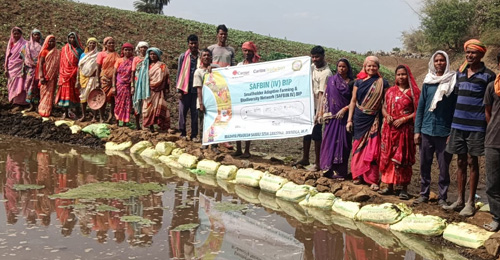
The morning of March 22nd at Kolua village didn’t start with policy speeches or ribbon-cutting. Instead, it began with the sound of shovels hitting earth and the collective chanting of “Save Water, Use Wisely.” As the world marked World Water Day 2026, the real story of conservation was being written by the calloused hands of smallholder farmers in the Sagar and Mandla districts of Madhya Pradesh.
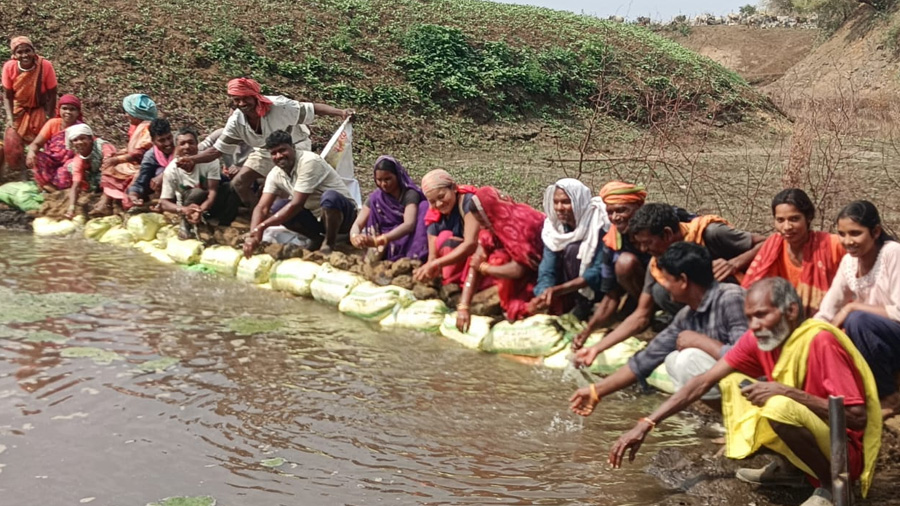
Under the SAFBIN (Smallholder Adaptive Farming and Biodiversity Network) project supported by Caritas Austria, nearly 250 men, women, and a surprisingly vocal group of children transformed a global observance of World Water Day 2026 into a day of “Shramdaan” or voluntary labor. Their goal was simple but urgent: to ensure that when the scorching central Indian summer arrives, their wells and livestock don’t go dry.
The highlight of the day was the rapid-response construction of a temporary sack-bag check dam in the Mandla district. Using nothing more than local soil, recycled bags, and sheer physical effort, the residents of Malimohgaon, Surajpura, and Silpura erected a barrier to catch the last of the seasonal runoff.
While the men worked on the dam, others focused on the “health” of existing water bodies. Local ponds that had become choked with silt and plastic were scrubbed clean, increasing their storage capacity just in time for the pre-monsoon shifts.
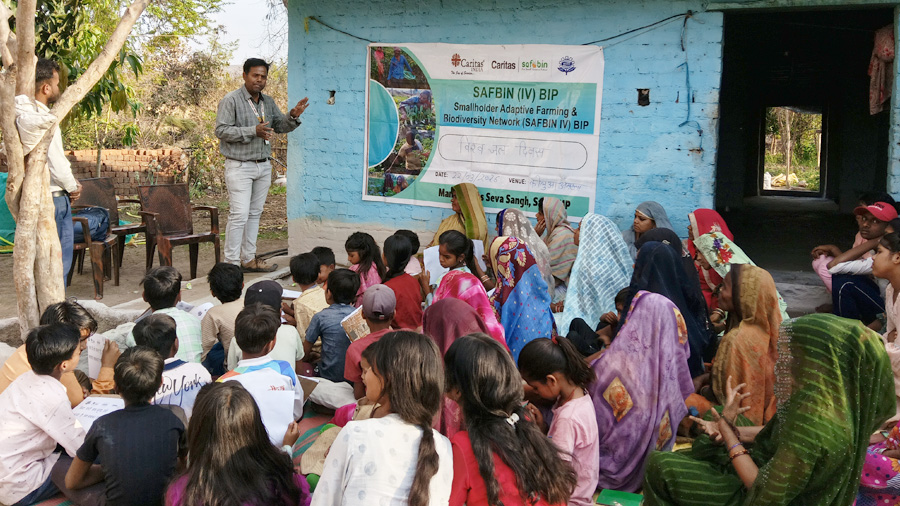
The program also emphasized community-managed water practices, including rainwater harvesting, soil moisture conservation, and efficient irrigation. Participants were encouraged to adopt low-cost methods such as mulching and crop planning, which can reduce farm-level water consumption by 20–30%—a critical margin in a region where 70% of freshwater resources are under extreme stress.
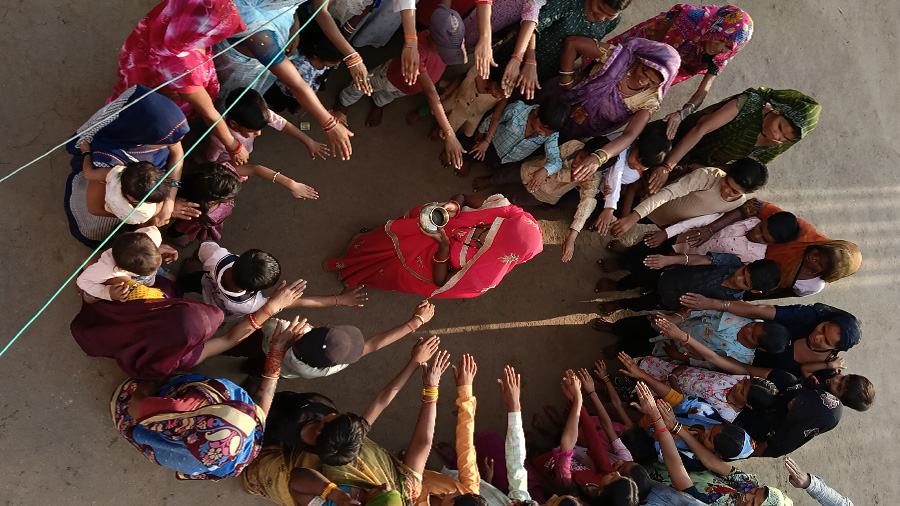
This year’s global theme, “Water and Gender,” found a literal home in the kitchen gardens of Kolua. Ms. Lalita Ahirwar, a member of the Satna Self-Help Group, has become a local celebrity of sorts for her “zero-waste” nutrition garden.
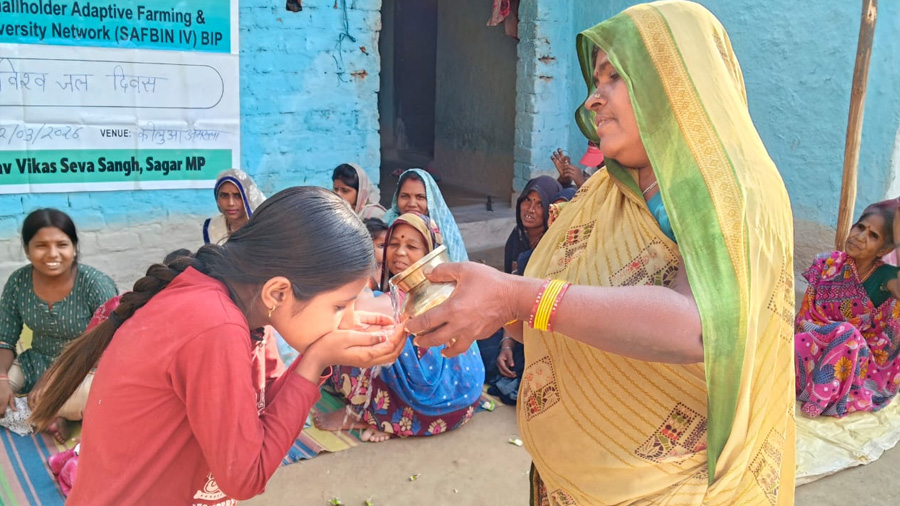
“For years, we threw away the water used for washing dishes and clothes,” Lalita explained to a group of onlookers during the village orientation. “Now, that ‘waste’ water grows my family’s spinach and chilies. It’s not just about saving water; it’s about making water work twice.”
Her leadership reflects a broader shift within the SAFBIN project, where women are moving from being the primary “water haulers” to being the primary “water managers.” By adopting low-cost techniques like mulching and smart crop planning, these farmers are successfully cutting their agricultural water use by nearly 30%—a critical margin in a region where 70% of freshwater resources are under extreme stress.
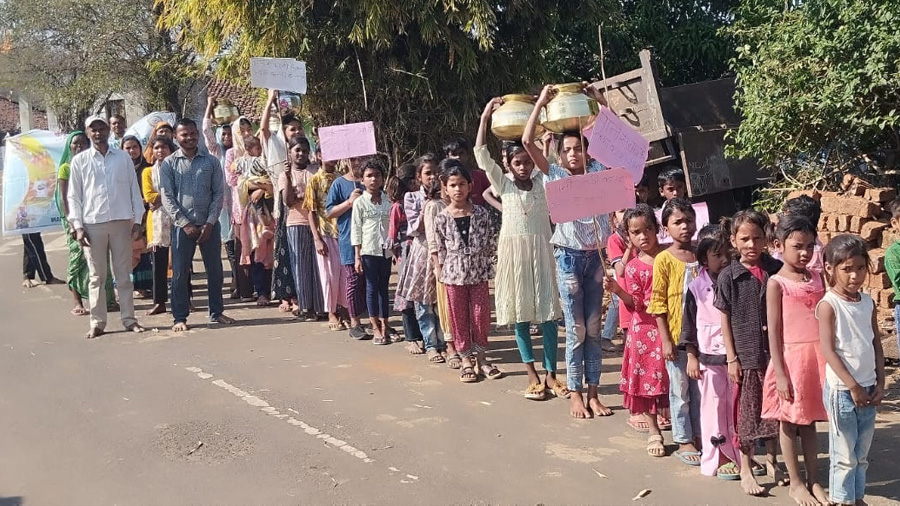
The energy of the day was fueled by the “Nature Club”, a group of village children who led a vibrant rally through the dusty lanes of Sagar. With hand-painted banners and high-pitched slogans, they reminded the elders that the water being saved today is, quite literally, their inheritance.
As the sun set over the newly cleaned ponds, the message from Madhya Pradesh was clear: while global climate charts look grim, the solution often lies in the power of a village to stand together, take a pledge, and pick up a shovel. In Kolua and Mandla, water for tomorrow isn’t a hope; it’s a project currently under construction.
Upcoming News
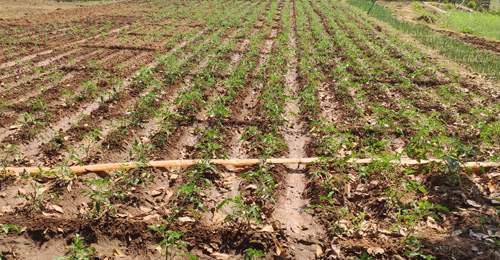
How Musangu’s Barren Slopes Became a Living Harvest
The dense forests of Ranchi’s Angara Block once cast long, somber shadows over the 382...
LEARN MORE
Now Our Playground is Full of Life
"Earlier, we had the desire to play, but we did not have the proper sports...
LEARN MORE
National Conclave Redefines the Migrant Journey in India
“Migrants are not numbers, they are persons. Each one has a name, each one has...
LEARN MORE 91 -11 - 2336 3390
  director@caritasindia.org


