
 91 -11 - 2336 3390
  director@caritasindia.org
 Growing Nutrition in Small Spaces
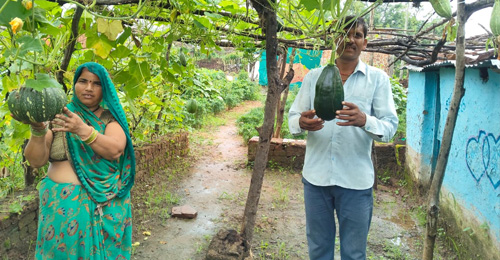
In Salhedanda, hunger rarely arrived with drama or headlines. For generations, small and marginal tribal farmers depended almost entirely on rain fed fields, and when the monsoon wavered, so did their food, their health, and their sense of security.
Markets offered vegetables, but often at prices families could not afford. What was available was irregular, seasonal, and distant from daily life. Nutrition was not just missing from diets, it was slowly slipping out of reach of entire households.
Caritas India’s SAFBIN project entered this reality with a different kind of thinking. Instead of large infrastructure or costly interventions, the solution began in the smallest possible space, i.e., the backyard. The idea was simple yet transformative. If land is limited, then farming must become smarter, layered, and more creative.
In April 2024, farmer field schools were established in five villages: Salhedanda, Thoda, Surajpura, Surangdevri, and Silpura. Each week, fifteen to twenty farmers gathered not in formal classrooms, but in fields, under trees, and beside wells. Nutrition gardening was not treated as a side activity, it became central to every conversation, every lesson, and every experiment.
At first, many farmers hesitated. Water was scarce, land was tiny, and survival already felt like a daily struggle. Instead of persuading them with speeches, SAFBIN chose to show results through action.
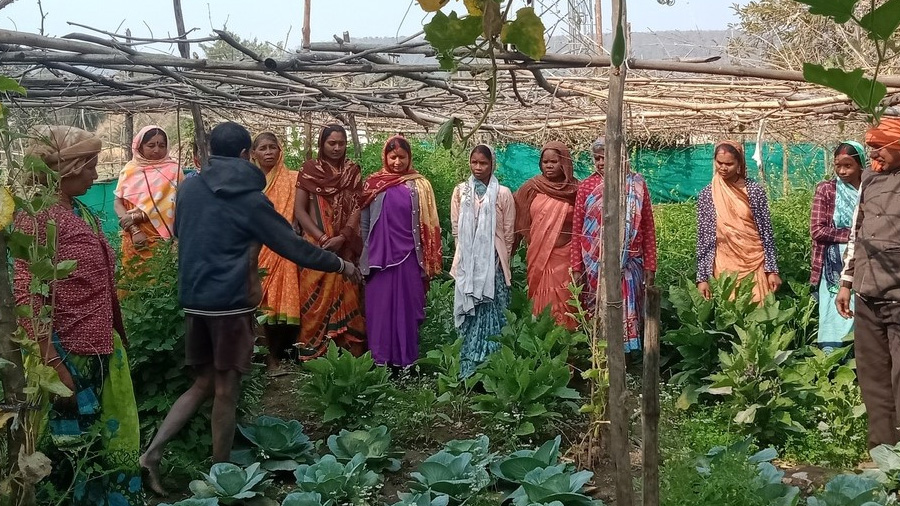
Ten lead farmers in each village agreed to try multilayer nutrition gardens on plots measuring roughly 12 by 16 feet. Their backyards slowly transformed into living systems of food. Tall fruit trees like papaya and drumstick formed the upper layer, climbers such as beans and gourds spread across supports, leafy vegetables filled the ground level, and ginger and turmeric grew beneath the soil. One small space began producing food continuously throughout the year.
As neighbours watched tomatoes ripen and greens reappear week after week, doubt gradually softened into curiosity. What had seemed impossible started to feel achievable.
Young women like Manila Bhavediya emerged as local leaders in this process. She walked from house to house, drawing garden designs in the dust, advising families on crop selection, and checking compost pits with quiet confidence. Her leadership grew alongside the plants she helped nurture.
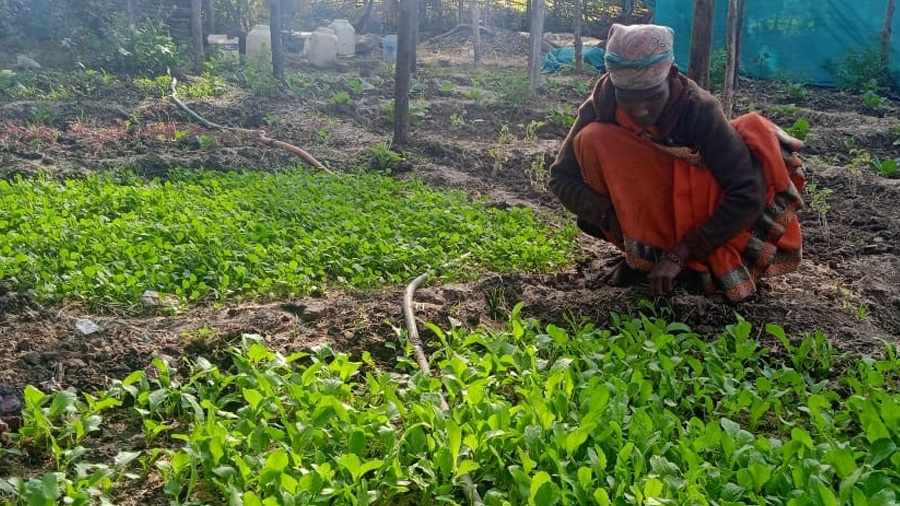
Within six months, the difference was visible in kitchens and on plates. Families that once consumed only four or five vegetable varieties in a year were now harvesting fifteen to eighteen different crops from their own backyards. Meals became more colourful, children began eating leafy greens regularly, and homes carried the fresh scent of vegetables instead of the silence of scarcity.
Surplus produce found its way to village markets, allowing women to earn between ₹2,000 and ₹3,000 per month. What started as a nutrition initiative evolved into a livelihood source, and with income came a renewed sense of dignity.
Farming practices also shifted toward sustainability. Chemical inputs reduced sharply as farmers adopted natural methods such as jeevamrit, cow dung compost, neem oil sprays, dashparni extract, and other organic solutions. Dependence on chemical fertilizers dropped by more than sixty percent, improving soil health, water retention, and crop resilience.
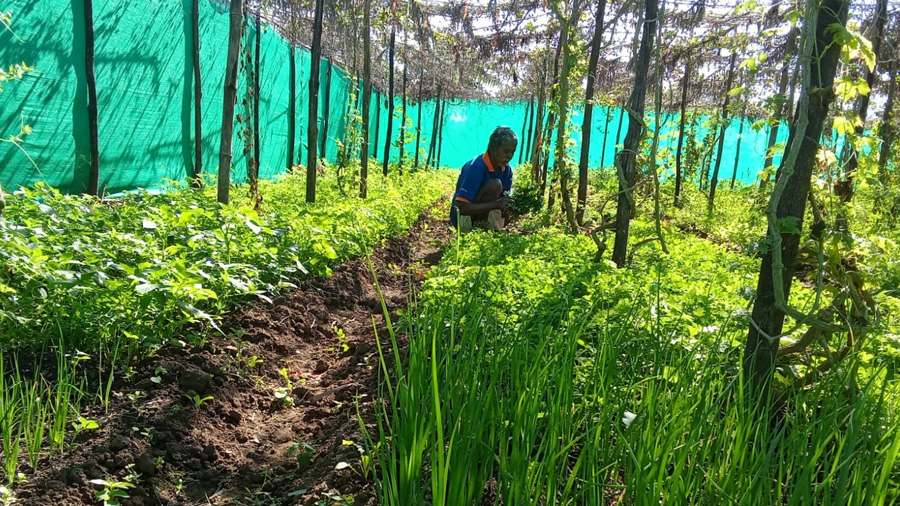
For Hazari Sayam of Surangdevri, the change was deeply personal. He now grows most of what his family eats and no longer feels controlled by market prices. In Silpura, Siyaram Patta noticed fewer illnesses among his children after they began eating fresh vegetables daily.
Manila describes the shift in simple terms. She believes that even small landholdings can sustain families if farmers learn together and support one another.
Today, these multilayer nutrition gardens represent more than just better farming. They are pathways toward food sovereignty, improved nutrition, women’s leadership, and environmental sustainability. Most importantly, the farmer field schools have created spaces where knowledge is shared, confidence is built, and collective learning drives change.
Across these villages, humble backyards have become sources of nourishment, income, and hope, proving that transformation does not always require vast land or massive investment, only patience, collaboration, and belief in local potential.
Upcoming News
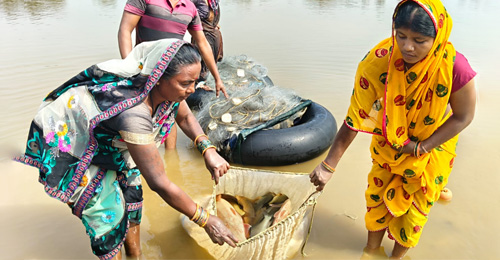
How Gond women turned a common water body into food security and collective prosperity
It might not seem obvious why a small, muddy village pond could matter in a...
LEARN MORE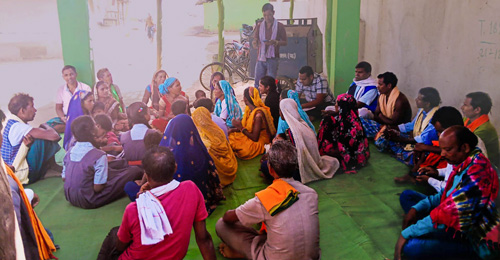
Assertive Women and Children Transform Grassroots Governance
Women and children of Kataipali village in Raigarh district came forward not only to demand...
LEARN MORE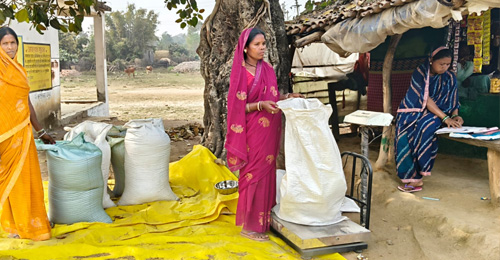
Sangam women producers group turns local trade into economic resilience
Kusumkasa village in Rajnandgaon district is quietly reshaping how rural women earn, trade, and lead....
LEARN MORE 91 -11 - 2336 3390
  director@caritasindia.org


