
 91 -11 - 2336 3390
  director@caritasindia.org
 How diversification has changed the lives of three farmers
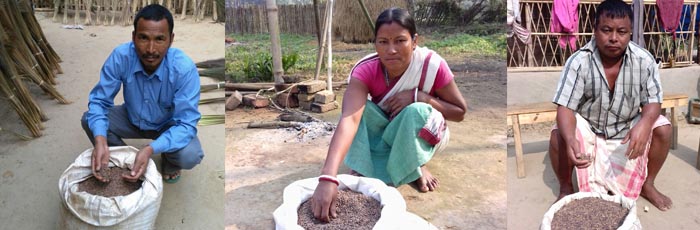
Ratneshwar Injal, Lalu Teron, and Mina Kathar can be three names for people who don’t know them but if you ever get a chance to visit their house you will be amazed to see the variety of traditional seeds, forest produces and different kind of exotic plant roots, shoots, and herb preserved in the house. This site is very uncommon in the current village community.
Belonging to three different villages of Taloni, Namgaon & Bhodaikuchi under Dhupguri, Tetelia and Khetri Panchayats of the Kamrup Metro District in Assam but they share the same dedication, passion, and quest for learning.
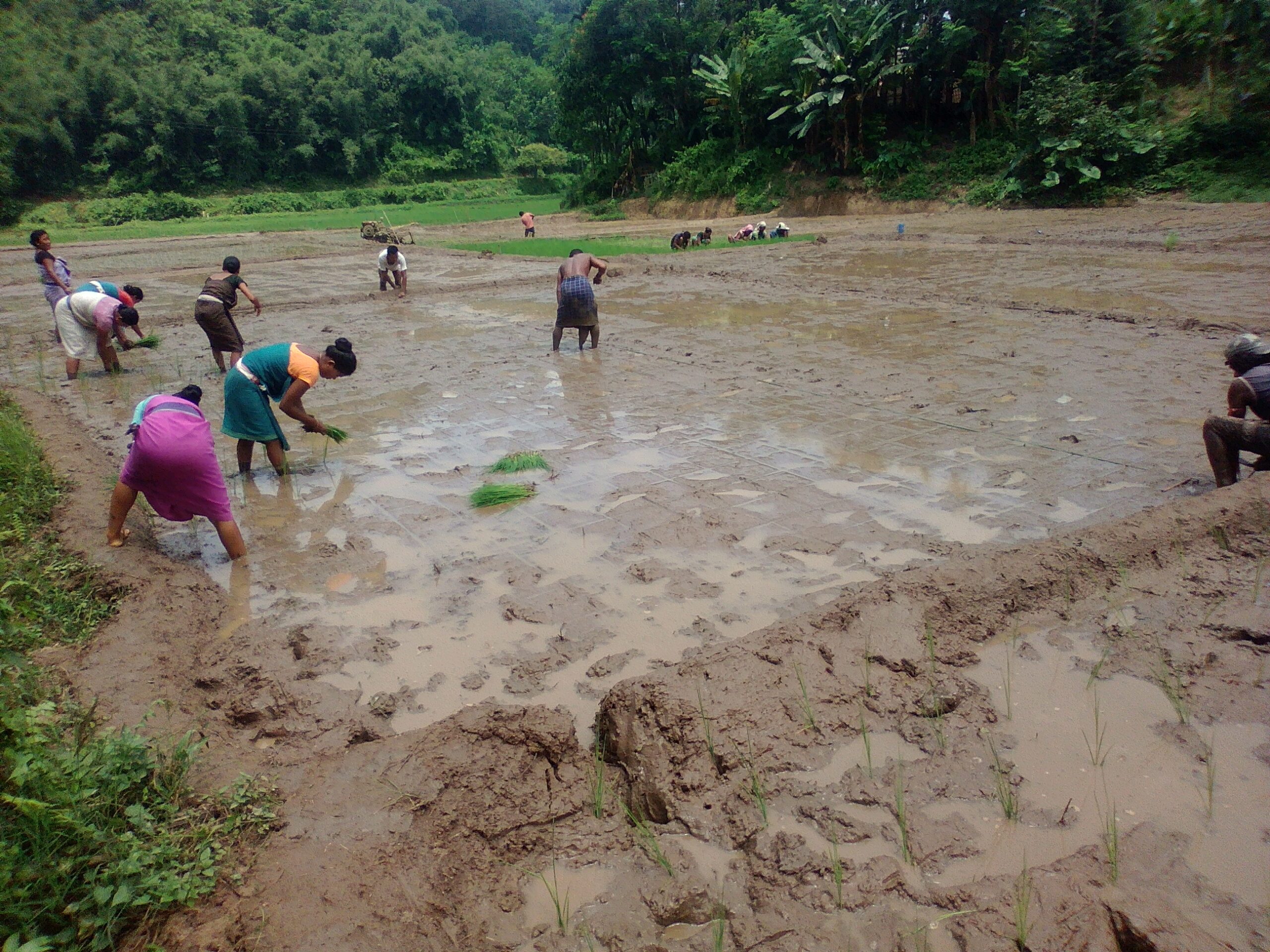
The livelihood of these villages was mainly confined to paddy cultivation with some vegetables in the kitchen garden and livestock which results in limited productivity and lesser income. Whereas, Ratneshwar, Lalu, and Mina have diversified their source of livelihood by not only cultivating paddy but also engaging themselves in kitchen garden & livestock management, beekeeping, lemon grass cultivation, silkworm rearing, developing seedlings and selling them in the market for additional income.
They not only diversified but also inspired other farmers in their respective villages and motivated them for collective working in the groups to achieve tremendous growth during the last one year.
The impact of climate change on agriculture has pressed people to move towards diversified agricultural production systems. It has also been recognized to increase agriculture income and thereby improving agricultural conditions which is beneficial for farmers.
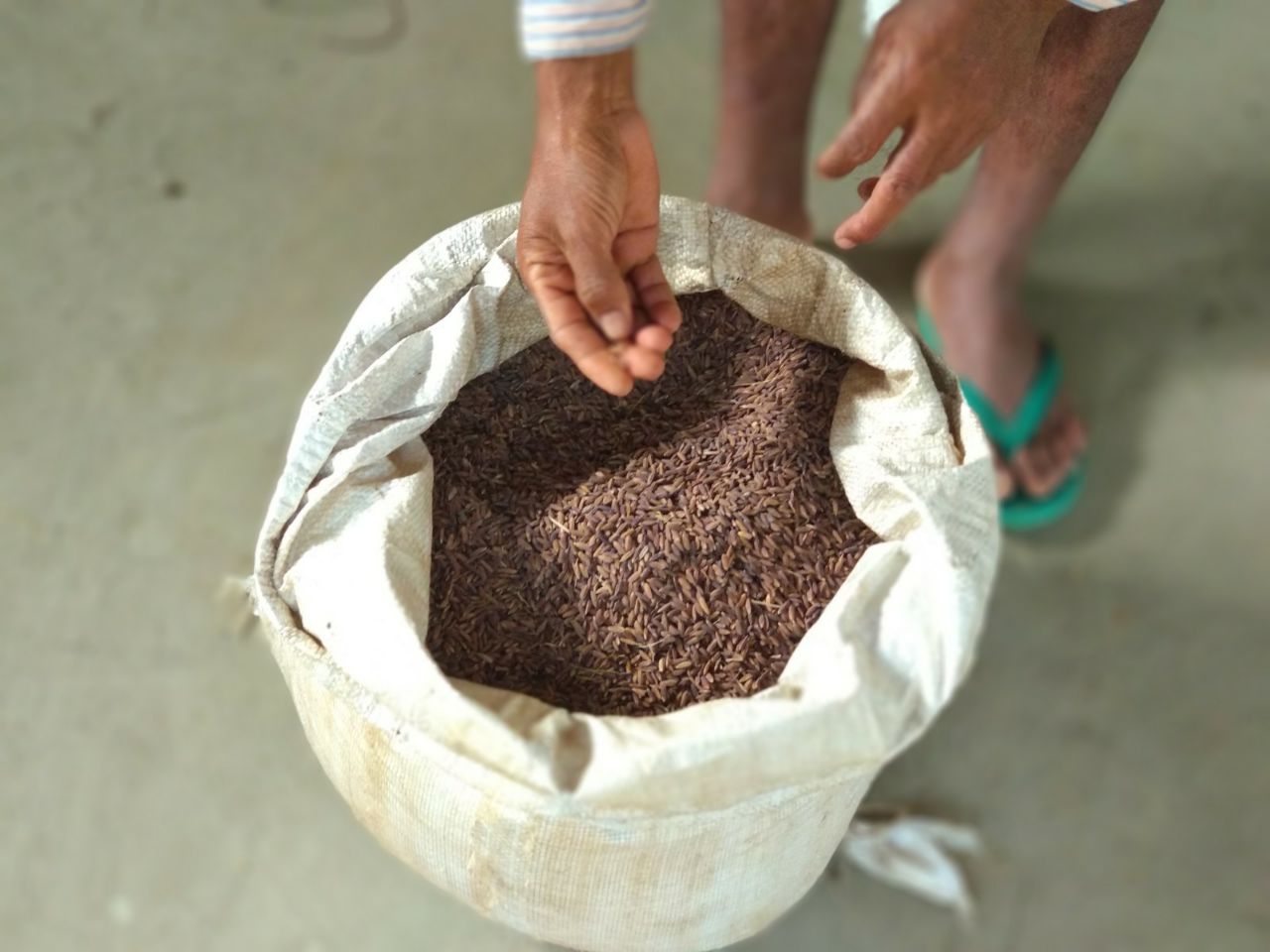
In March 2017, Black Rice was introduced to the farmers through hands-on training cum demonstration sessions for promoting sustainable agriculture practices. Due to the ignorance, farmers were not very keen on taking the risk, but Ratneshwar, Lalu, and Mina showed their interest and went ahead with the cultivation. They cultivated 800 gm of black rice seed in their 2, 1 & 1.5 Kattha (less than 1 Bigha) of land respectively.
Black rice contains high amounts of antioxidants, dietary fiber, minerals and other anti-inflammatory nutrients and it also has a great demand in the market. Black rice was cultivated using System of Rice Intensification (SRI), one of the Sustainable Agriculture Practices promoted in the village to increase the productivity of irrigated rice by changing the management of plants, soil, water, and nutrients.
Mira Rahang from Bhodaikuchi village was astonished to see the results and expressed, “To be honest I had no faith in SRI method at all and that too with a new variety of seeds, planting a single seedling in a gap of 10 inches that will grow into a bunch was something very hard to believe, but seeing the end result with so much difference in production has made me happily surprised”.
The harvest of black rice was calculated 1.6 quintal (160 Kg) which is around Rs. 19200/- to Rs. 24000/- in the market as compared to normal paddy which cost Rs. 5000/- to Rs. 6000/-.
Lalu shares, “A gentleman had approached me and wanted to buy all the harvested black rice and he was even willing to pay a very good amount. At that moment I felt that it is not an ordinary paddy it has a great demand in the market”, he added, “with more seeds in stock for next season we will definitely go for large scale production”.
The farmers are happy and satisfied with the production and plans for large-scale cultivation in the next season. 20 kg of seeds has also been preserved and taken care by the farmers’ group.
Upcoming News
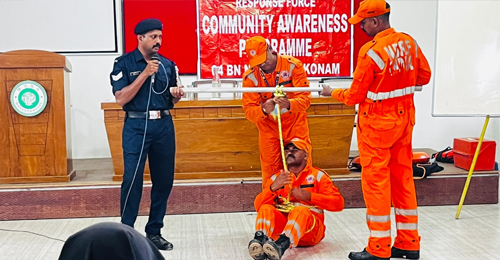
Ropes and Sacks Become Lifesaving Tools as NDRF Trains Wayanad’s First Responders
Long before an ambulance can reach a flooded village or a landslide hit hillside, it...
LEARN MORE
Caritas India Trains Partner Organisations in Evidence Based Project Proposal Writing
Some of the strongest community projects never get built, not for lack of need or...
LEARN MORE
A Grocery Shop, a Mother’s Resolve, and Three Daughters Who Stayed in School
Three young girls in this remote village are attending school regularly today because their mother...
LEARN MORE 91 -11 - 23362735
  director@caritasindia.org


