
 91 -11 - 2336 3390
  director@caritasindia.org
 How Gond women turned a common water body into food security and collective prosperity
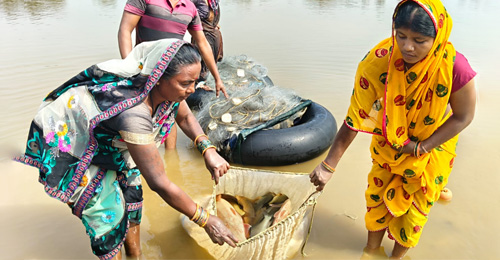
It might not seem obvious why a small, muddy village pond could matter in a landscape shaped by forests, fields, and monsoon rains. In Kumhali, Chhattisgarh, it changed everything.
For years the 7 acre water body sat on the village edge, used only for bathing, washing clothes, and watering cattle. It was everyone’s resource and no one’s responsibility. Over time it turned stagnant, neglected, and undervalued. In many ways it mirrored the lives of the Gond women around it: visible, hardworking, but excluded from real economic power.
The Gond community here is recognised as a primitive tribal group. Their relationship with land and water is ancient, yet their livelihoods have been fragile. Most families survived on seasonal farming and daily wage labour. One failed crop meant hunger. One missed workday meant debt. Food security was uncertain. Dignity even more so.
Caritas India, through its Gram Nirman Programme supported by Caritas Australia, entered Kumhali without prescriptions. The work began with listening, mapping, and collective reflection under the Asset Based Community Development (ABCD) approach. What do you already have. What can you govern together. What can you transform into lasting value.
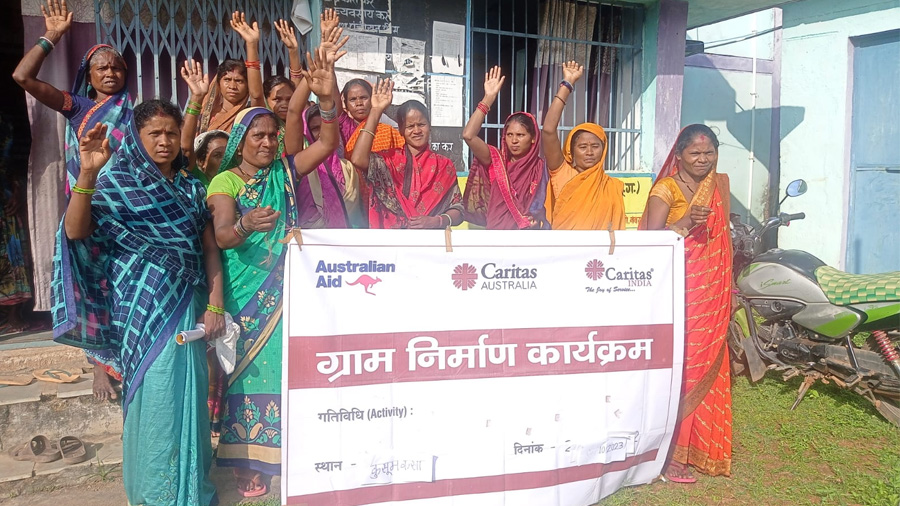
During the community mapping exercise, women from the Jai Sheetla Self-Help Group (SHG) walked their village with new intent. They named skills, trees, fields, wells, and finally the pond. For the first time, they saw it not as a shared utility but as a potential engine of collective prosperity. Here common property resource management shifted the story.
Instead of leaving the pond open and unmanaged, the women chose to govern it. With facilitation from the Gram Nirman team, the Jai Sheetla SHG secured a formal 10-year lease from the fisheries department. The pond moved from an informal commons to a legally recognised, community managed asset.
Rules were set. Roles were assigned. Benefits were planned collectively. CPRM replaced neglect with stewardship.
Training in fish farming followed. Fishing nets arrived. Accountability took root. Women decided who would monitor water levels, guard the pond, maintain records, and manage profits. Governance became as important as fishing.
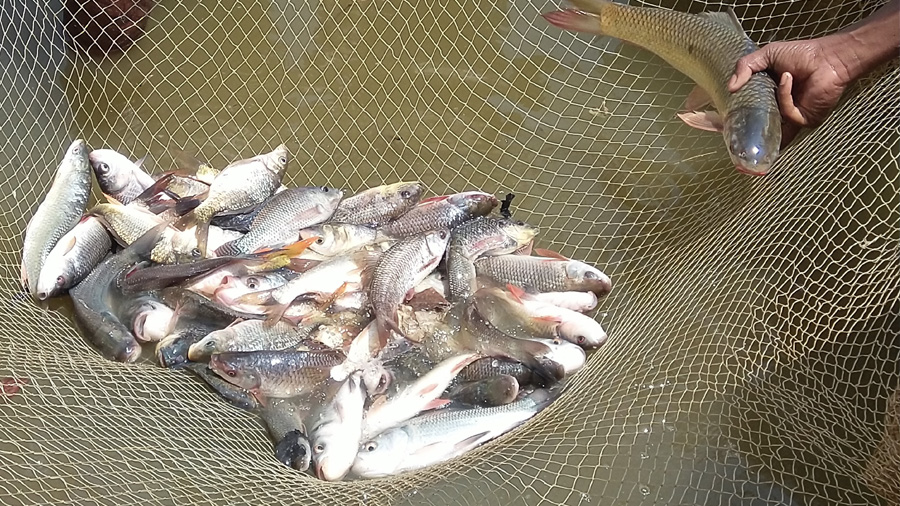
In June 2025 the group pooled ₹12,000. A modest sum. A radical assertion of ownership. They stocked the pond with fingerlings and managed it through regular meetings, transparent bookkeeping, and collective decisions. They did not abandon farming or wage work. They diversified beyond it.
By January 2026, the first harvest brought ₹29,000. But the breakthrough was stability. Fish farming created a reliable income stream during agricultural lean months. Risk spread across activities instead of resting on a single fragile livelihood. Protein intake improved. Cash flow steadied. Confidence soared.
The initiative now directly advances multiple sustainable development goals. It drives SDG 1 no poverty by diversifying incomes for a highly marginalised tribal group. It delivers SDG 2 zero hunger through better nutrition and local food production. It strengthens SDG 5 gender equality as women control a productive resource and lead decision making. It supports SDG 8 decent work and economic growth via a community owned enterprise. It tackles SDG 10 reduced inequalities by giving a historically excluded group formal access to a public asset. And it advances SDG 15 life on land through sustainable management of a shared ecosystem.
CPRM also reshaped power relations. Women who once hesitated to speak now negotiate with officials, manage finances, and plan reinvestment. Environmental stewardship improved as the group regulated water use and harvesting cycles.
Neighbouring villages now visit Kumhali to learn how a neglected pond can become a model of resilience.
The water still ripples in the sun. But beneath it lies something stronger: collective ownership, food sovereignty, and a future the women now shape themselves.
Upcoming News
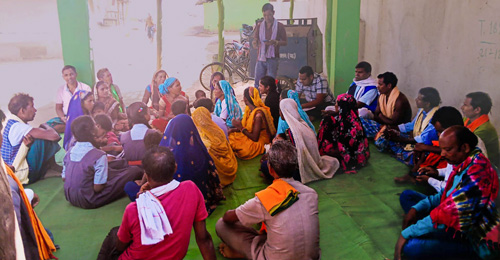
Assertive Women and Children Transform Grassroots Governance
Women and children of Kataipali village in Raigarh district came forward not only to demand...
LEARN MORE
Growing Nutrition in Small Spaces
In Salhedanda, hunger rarely arrived with drama or headlines. For generations, small and marginal tribal...
LEARN MORE
Sangam women producers group turns local trade into economic resilience
Kusumkasa village in Rajnandgaon district is quietly reshaping how rural women earn, trade, and lead....
LEARN MORE 91 -11 - 2336 3390
  director@caritasindia.org


