
 91 -11 - 2336 3390
  director@caritasindia.org
 Jharkhand farmer proves livelihood diversification improves family income
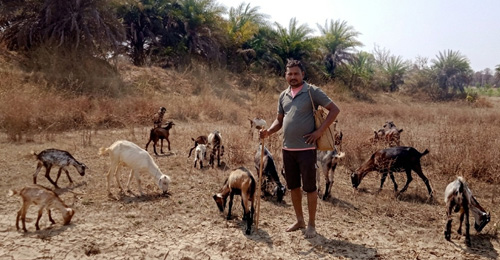
Every morning in Surundwada village begins with a purpose for Lachindar Nag. Once burdened by uncertainty, today he steps into his day with quiet confidence, tending to his goats, planning his work, and shaping a future he once thought was out of reach.
Lachindar, a smallholder farmer with 1.5 acres of land, spent years dependent on a single crop. With no irrigation, his farm could produce only once a year. The yield was barely enough to sustain his family of five. Seasons brought more anxiety than assurance. A failed crop meant deeper hardship.
His situation reflects a larger reality in Jharkhand, where nearly 70 percent of the population depends directly or indirectly on agriculture. Most farmers are small and marginalised, working on fragmented land and relying on subsistence farming. Mono cropping remains common, and climate change has made it worse. Irregular rainfall, declining soil health, and limited access to resources continue to push families into vulnerability.
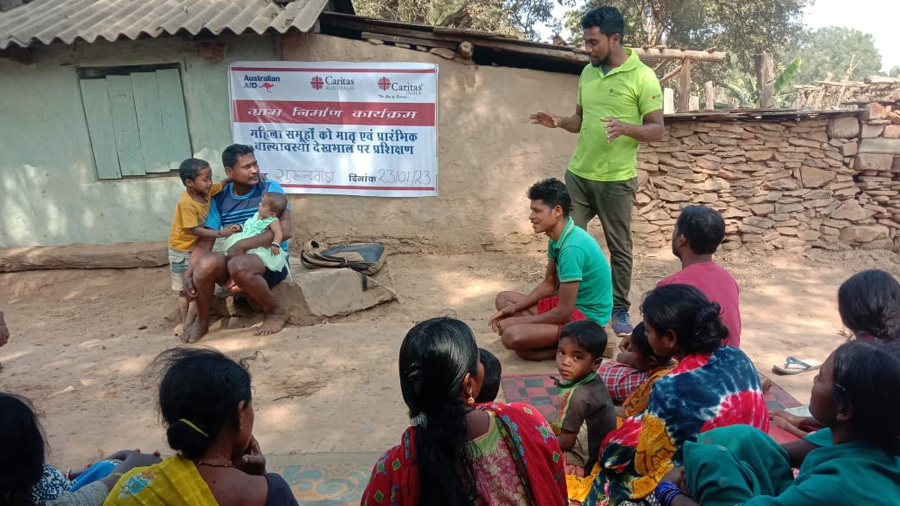
Lachindar’s turning point came in 2022 when he began attending community meetings under the Gram Nirman Program, supported by Caritas Australia and implemented by Caritas India. With more than six decades of experience in community development, Caritas India has been working closely with smallholder farmers to improve farm production, strengthen food security, and promote nutritional security through community-led approaches.
In these meetings, Lachindar was introduced to new ideas. Diversifying livelihoods was one of them. During an interaction with the Veterinary Department, he learned about goat rearing. The idea stayed with him. After careful thought, he decided to begin.
He started with six female goats and one male, along with a basic shed. It was a small step, but it marked a shift in his thinking. He was no longer depending on just one source of income.
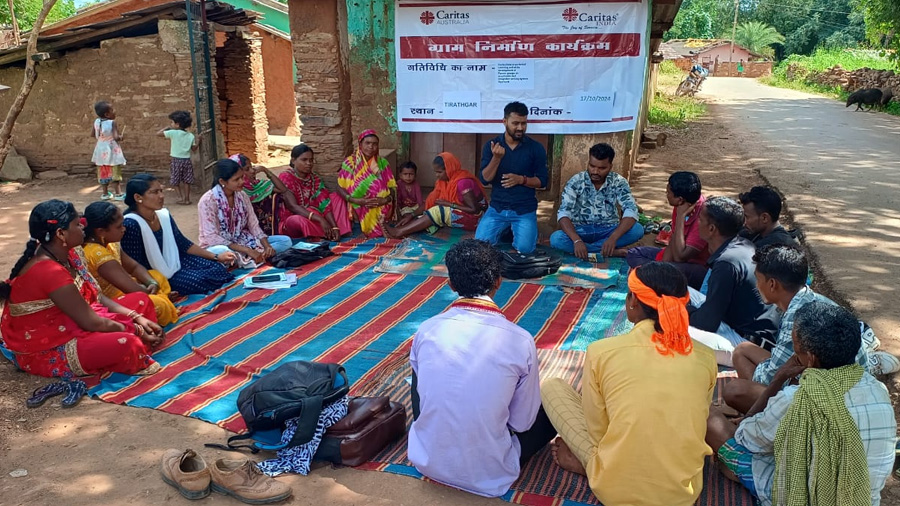
In February 2024, an exposure visit to Ranchi expanded his perspective. He saw how Farmer-Producer Organizations worked. Farmers were coming together, accessing markets, and supporting each other. It showed him the value of collective effort and planning.
Back in the village, Lachindar applied what he had learned. He improved the way he cared for his animals and began maintaining records. His work became more structured. In October 2025, he learned about a government scheme for goat shed construction through a program interface. He applied and received support within a month. The new shed, worth sixty-five thousand rupees, improved the health and safety of his livestock and allowed him to expand with confidence.
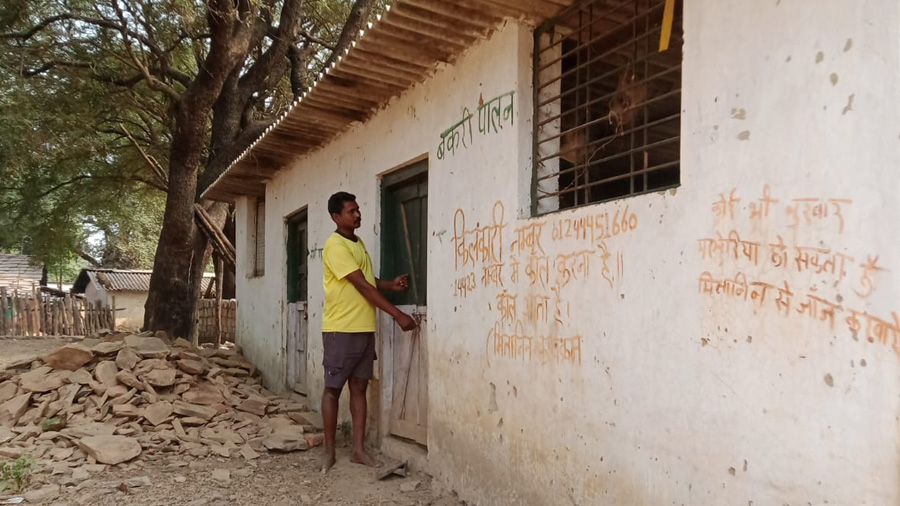
Today, Lachindar’s life reflects stability and progress. His income is diversified. His wife manages a kitchen garden that supports the family’s nutrition. His children take part in daily activities, learning along the way. What was once a fragile livelihood has become a growing rural enterprise.
The change is not just economic. Lachindar has become a resource person in his village. Others look to him for guidance. His journey is influencing how people think about farming, risk, and opportunity.
His story points to clear solutions that can transform many more lives like his. Farmers need access to irrigation so they are not dependent only on rainfall. Livelihood diversification through livestock and allied activities must be strengthened. Organising farmers into groups can improve market access and bargaining power. Linking communities with government schemes can help build assets faster.
Continuous training is essential so farmers can manage enterprises, respond to climate challenges, and make informed decisions. Nutrition-focused practices such as kitchen gardens must be promoted at the household level. Donors and corporate partners have a strong role to play in scaling such models by investing in community-driven programs that deliver real impact.
Lachindar Nag’s journey shows that when the right support reaches the ground, change becomes visible. A small farmer can move beyond survival and build a life of dignity, stability, and growth.
Upcoming News
How Musangu’s Barren Slopes Became a Living Harvest
The dense forests of Ranchi’s Angara Block once cast long, somber shadows over the 382...
LEARN MORE
Four Madhya Pradesh Villages Lead Collective Action for World Water Day 2026
The morning of March 22nd at Kolua village didn’t start with policy speeches or ribbon-cutting....
LEARN MORE
Now Our Playground is Full of Life
"Earlier, we had the desire to play, but we did not have the proper sports...
LEARN MORE 91 -11 - 2336 3390
  director@caritasindia.org


