
 91 -11 - 2336 3390
 director@caritasindia.org
Madhya Pradesh dioceses learn from Kerala’s Biowin model to build farmer-owned agro-enterprises
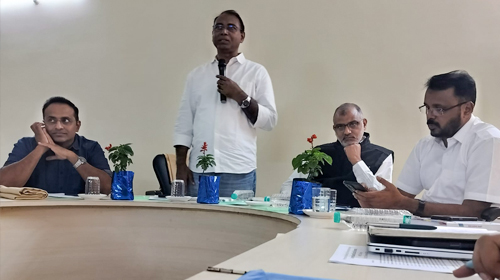
Social service societies from across Madhya Pradesh were oriented on building sustainable, farmer-centred agro-enterprises at a two-day workshop organised on November 20, 2026 by the Madhya Pradesh Social Service Society (MPSSS) in collaboration with Caritas India at MPSSS, Bhopal.
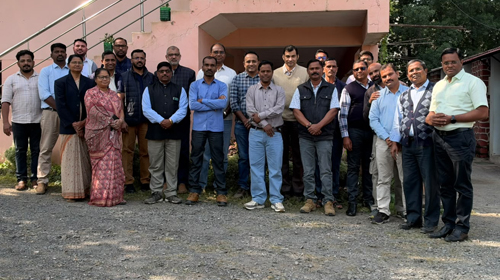
Representatives of nine partner Diocesan Social Service Societies (DSSSs); Assistant Executive Director of Caritas India, Fr. Benny Edayath; SAFBIN Program lead, Dr. Saju M.K.; Caritas Austria Consultant, Mr. Sunil Simon took part in the workshop, held under the SAFBIN BIP programme, to develop a common understanding of social business models and explore ways to strengthen smallholder livelihoods through value addition and market linkages.
Fr. John Joseph, CMD of Biowin Agro Research, Wayanad, who led the technical sessions, said Biowin began in 1999 with 90 farmers from two villages, focusing on farmer mobilisation, organic farming and collective action. A primary pepper-processing unit set up in 2002 led to its first export, worth ₹25,000. Over the years, the initiative grew into an integrated model involving Wayanad Social Service Society, Wayanad Organic Farmers’ Federation, Biowin Agro Research and Biopods Private Limited, each with a complementary role.
The model rests on about 840 Village Farmers Clubs, Regional Farmers Confederations and 48 specialised Internal Control System units, which ensure farmer participation, quality assurance and collective decision-making. Biowin follows a farm-to-market approach covering farmer education, capacity building, produce aggregation, value addition and market development. Its products include coffee, pepper, turmeric, ginger, cardamom, freeze-dried fruits, spice powders and consumer goods under the SIGWE brand. Women make up about 70 per cent of its workforce, and it has buyers in more than 40 countries.
Fr. Joseph said a social enterprise must balance its social mission with professional management and financial sustainability. The governing board should provide strategic direction and accountability, while a professional team handles procurement, pricing, production, quality control, finance and marketing. He named trust, participation and fair value as the foundation of farmer relationships, backed by transparent weighing, fair prices, timely payments and farmers’ involvement in decisions. He also asked partners to distinguish long-term capital investment from the working capital needed for timely procurement and payments, and to assess market demand and identify reliable buyers before investing in processing infrastructure.
On the second day, Fr. Joseph said successful agro-enterprises need coordinated support from financial institutions, government departments, private organisations, technical institutions and development partners. Banks, NABARD and SIDBI can facilitate finance and working capital, government schemes can support processing infrastructure, and CSR foundations can contribute equipment and capacity building. Institutions such as ICAR, Krishi Vigyan Kendras and CSIR-CFTRI can provide technical expertise, product development and quality testing.
He recommended a phased approach, beginning with an assessment of local commodities, organised farmer groups, production volumes and market demand, followed by clear business plans.
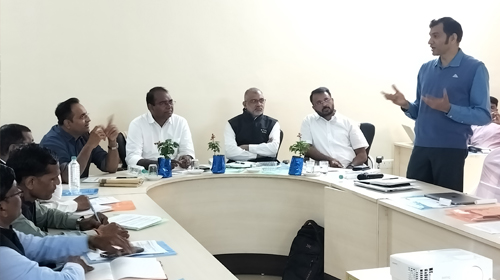
Participants, including MPSSS and DSSS Directors, discussed how the Biowin experience could be adapted to the state, and noted that farmer groups and agricultural interventions developed under SAFBIN provide a strong foundation.
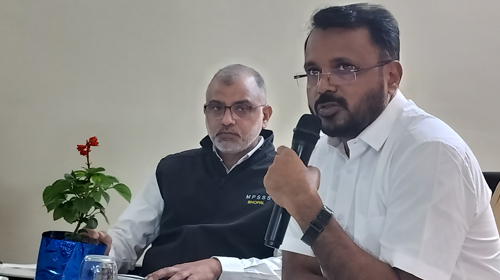
Participants agreed on next steps for a collaborative regional initiative led by MPSSS. Fr. Shinto Abraham will initiate discussions with the MPSSS President for guidance and support. A one-page concept note on the vision, objectives and approach will be prepared, and the detailed proposal will be presented to the Bishops’ Council. A two-year roadmap will be developed, and the roles and responsibilities of each DSSS will be defined to ensure ownership and coordination.
Upcoming News
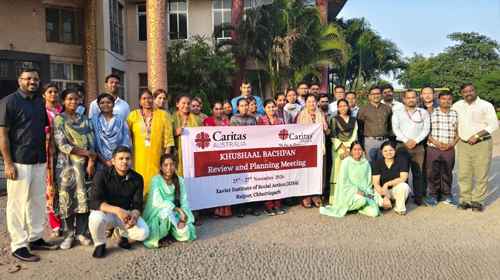
Khushaal Bachpan Sets Sights on Becoming a “Model Programme”
The Khushaal Bachpan (KB) programme will aim to become a model for child-centred development in...
LEARN MORE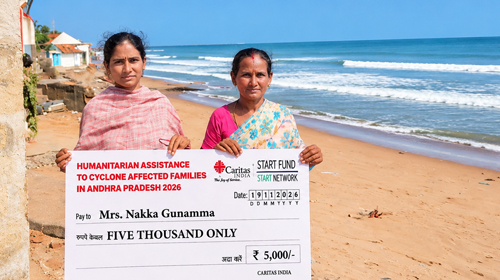
Caritas India extends humanitarian assistance to cyclone affected families in Andhra Pradesh
Caritas India, in collaboration with Diocesan Social Services, has initiated humanitarian assistance for cyclone affected...
LEARN MORE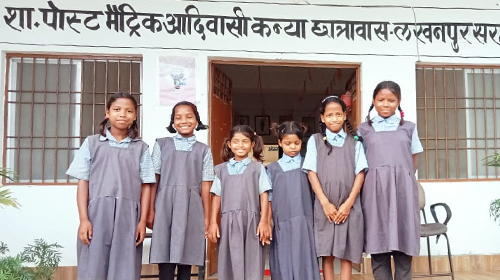
16 Children in Surguja Step Into Hostels and a Brighter Future
For nine-year-old Parvati, the road to school was always the hardest part of the day....
LEARN MORE 91 -11 - 23362735
 director@caritasindia.org


