
 91 -11 - 2336 3390
  director@caritasindia.org
 The Vines That Changed Kishnadev Mandal’s Life
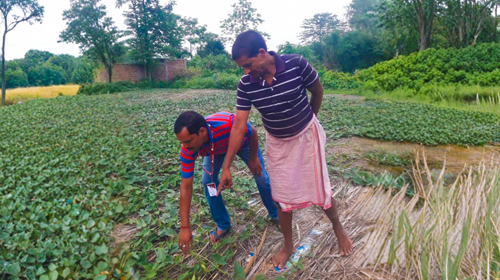
Every morning, Kishnadev Mandal walks out to a field in Araha village that, six months ago, looked nothing like it does today. Where he once grew whatever, the season allowed and hoped it would be enough, there now stand rows of trellises, strung with twine, holding up vines heavy with pointed gourd, Parwal, as it’s known here in the Koshi region of Supaul district, Bihar. Twice a week, he cuts what’s ready, loads it up, and carries it to the local market. Most weeks, it comes to about 50 kilograms. At Rs. 25 a kilo, that’s Rs. 1,250 in his pocket, with the number climbing slowly as the season goes on.
It is not a fortune. But for a farmer whose income used to rise and fall with the unpredictability of conventional crops, it is something close to stability and that, in this part of Bihar, is worth a great deal.
Kishnadev, son of Pritam Mandal, has farmed in Borha Panchayat his whole working life. Like most smallholders in the Koshi belt, a region better known for its floods than its farm incomes, he grew seasonal vegetables and grains, the same way his father had. The work was constant. The returns were not. There were years the harvest covered what the family needed, and years it fell short, and there was rarely much he could do to change the odds in advance.
That changed on a winter morning in late December last year, when word went around the Panchayat that a training on vegetable cultivation was being held under Caritas India’s Saral Programme. Resource persons from the Krishi Vigyan Kendra and the local Block office had come to walk farmers through the basics of improved cultivation, how to manage a nursery properly, how to build trellises for climbing vegetables, how to keep pests in check, and, just as importantly, how to actually sell what they grew. Fifteen farmers from the area sat through the session.
For most of them, it was a useful afternoon. For Mandal, it became the start of something else entirely.
Within two weeks of the training, in the second week of January, he had begun preparing a plot for commercial Parwal cultivation, not as an experiment, but as a serious bet on what he’d just learned. He built the trellises himself, following what the trainers had shown him. He managed the nursery by hand. He kept after the pests before they could take hold. It was the same labour he’d always put into farming, just pointed in a more deliberate direction.
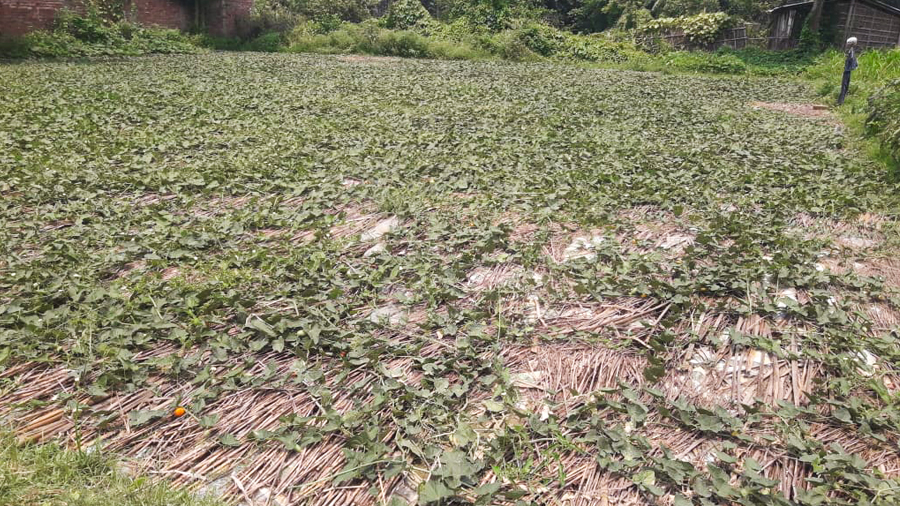
The first harvest came on the 19th of April. The vines have kept producing since, and by the look of things, they’ll keep going until July.
What’s harder to put a number on is what’s happened around Mandal’s field since the harvests started. Word travels fast in a small Panchayat, and his plot was visibly thriving, visibly profitable and has become something of an open lesson for the neighbours who sat through that same training in December and didn’t quite take the leap. Several of them have started asking him questions. A few are talking about trying it themselves next season.
There’s a quieter change too, inside Kishnadev’s own household. Beyond the cash from the market, his family now keeps back a share of the Parwal for their own kitchen, fresh vegetables on the table that didn’t have to be bought, at a time when every rupee saved matters just as much as every rupee earned.
None of this required a windfall or a stroke of luck. It required one training session that reached the right person at the right moment, and a farmer willing to put in the work of trying something new before he could be sure it would pay off. Caritas India’s Saral Programme exists for exactly that gap, the space between a farmer’s daily effort and the knowledge that might let that effort go further. In Kishnadev Mandal’s case, the gap has closed quickly. His vines are still climbing, and so, week by week, is his income.
Upcoming News
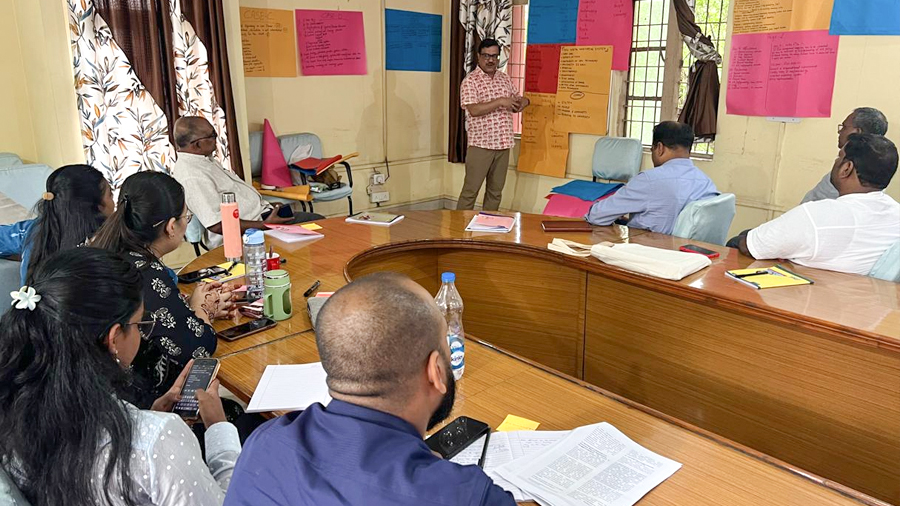
When NGOs Grow, What Breaks First? Caritas India Tackles the Answer in Raipur
Three-day workshop arms executive leaders with governance tools, a 20-policy framework and practical fixes for...
LEARN MORE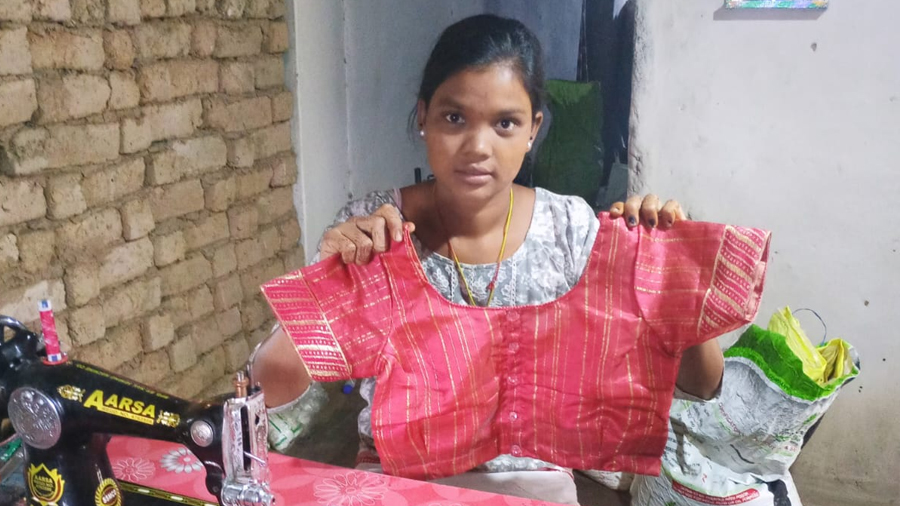
Nine Kilometres Through the Jungle: How Poornima Stitched Her Own Future
For 19 year old Poornima Rawat of Rajamma village in Lailunga block of Chhattisgarh's Raigarh...
LEARN MORE
In a Nuh Village, People Living With Mental Illness Finally Got to Speak, and Be Heard
Nine people sat in that room in Barota village, Nuh district, Haryana, each carrying a...
LEARN MORE 91 -11 - 23362735
  director@caritasindia.org


