
 91 -11 - 2336 3390
  director@caritasindia.org
 Threads of Hope: Women Living with HIV Rebuild Lives in East Delhi
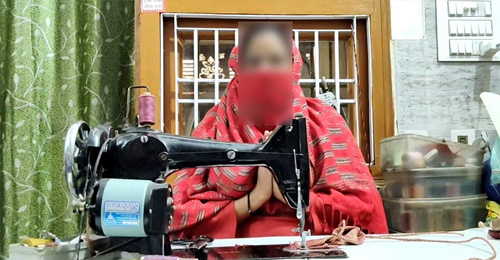
India continues to carry a significant HIV burden. According to the Ministry of Health and Family Welfare (2024), more than 2.5 million people in the country are living with HIV. In Delhi alone, 39,094 people living with HIV were receiving treatment during 2023–2024, while an estimated 2,961 new infections occur each year. Statistics reveal the scale of the challenge. They rarely reveal the lived reality behind it.
For many individuals, HIV is not only a medical condition. It becomes a social label that brings fear, silence, and isolation. People living with HIV and their families often endure a double burden. One is the physical and emotional impact of the disease itself. The other is the stigma imposed by society.
Fear of disclosure prevents many from seeking treatment at government health facilities. Without regular medication, adequate nutrition, and timely medical care, health conditions deteriorate rapidly. Social exclusion compounds the crisis.
The challenge is particularly visible in the crowded urban settlements of East Delhi, where migrant families from different parts of India struggle to survive in fragile economic conditions. Most households depend on daily wage work as factory labourers, street vendors, auto rickshaw drivers, construction workers, or helpers in roadside eateries. Income fluctuates daily. Security is almost nonexistent.
Unlike rural communities that may rely on farmland or livestock, urban slum residents rarely possess productive assets. Social safety nets remain weak.
Women face the sharpest edge of this vulnerability. Limited access to education and employment confines many to unpaid domestic work or low paid jobs as domestic workers in nearby residential colonies. Economic stress exposes them to exploitation, trafficking risks, and unsafe livelihood options.
Since 2021, Caritas India, with support from Caritas Australia, has been implementing the Gram Nirman programme across 18 slums covering 65 sub-settlements in East Delhi.
The initiative works directly with HIV infected and affected families to strengthen both healthcare access and livelihood security. The support is comprehensive. It includes identification and referral services, counselling, treatment for opportunistic infections, home based care, and linkages with government welfare schemes and entitlements. Yet the programme recognises a deeper truth. Medical care alone cannot restore dignity. Economic independence must follow.
Over the past two years, the programme has mobilised seven women’s collectives involving 75 women across different slum clusters. Among them, three groups are now running active income-generating enterprises.
The path to collective action was not simple.
Most residents are migrants. Trust in group initiatives was initially weak. Many women hesitated to join meetings. Some feared social exposure because of HIV related stigma. Others doubted whether such efforts would produce real income.
Field facilitators continued engaging with the communities through repeated meetings, skill development sessions, and sustained mentoring. Gradually, women began to connect with one another. Trust grew. Shared struggles became a source of strength. Today their progress reflects determination and collective resilience.
Ekta mahila samuh: turning skills into stability
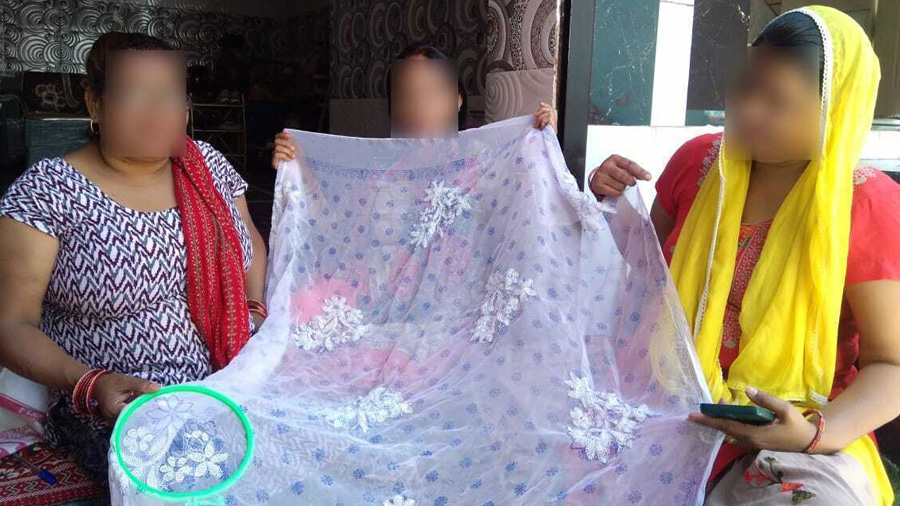
In the Harsh Vihar settlement, a 15 member collective called Ekta Mahila Samuh has built a small but steady enterprise. Led by a woman living with HIV whose identity remains confidential, the group produces vermicelli and papad that are supplied to neighbourhood shops. Members also stitch garments such as blouses and salwar suits for local customers.
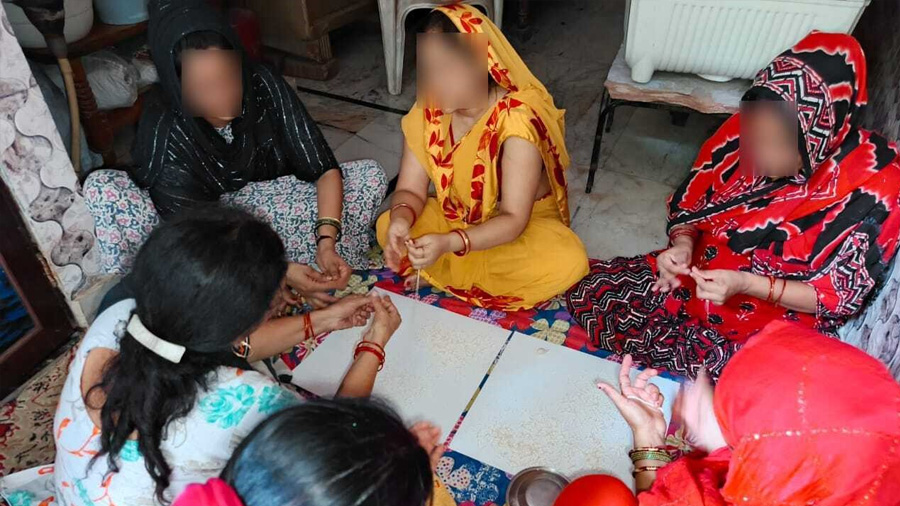
Each woman now earns close to Rs 300 a day, or roughly Rs 9,000 a month. For families that once depended entirely on unpredictable daily labour, this income has brought critical stability. Encouraged by growing demand, the group plans to expand its tailoring activities by purchasing additional sewing machines.
Suraj mahila samuh: enterprise with innovation
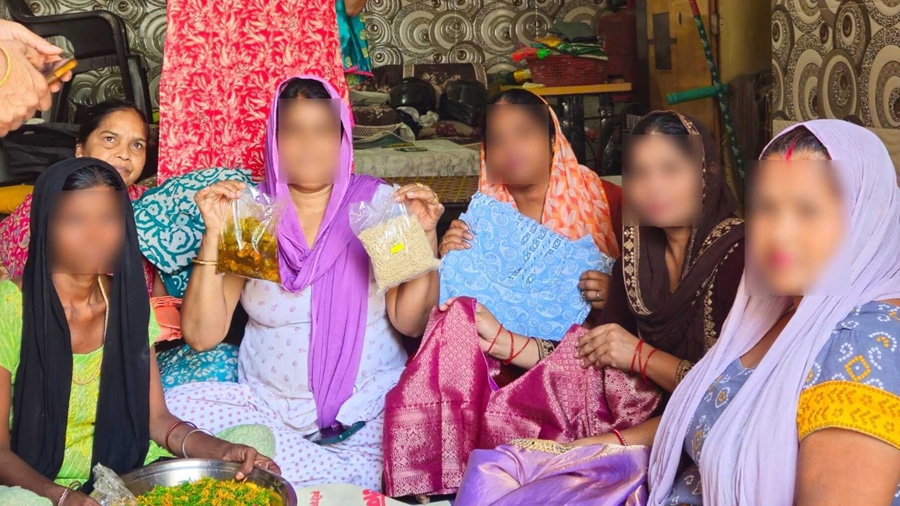
In Ashok Nagar of the Nand Nagri area, Suraj Mahila Samuh has taken a different entrepreneurial route.
Under the leadership of Aanandi (name withheld), the group produces cloth carry bags, selling them in local weekly markets. During festive seasons they diversify their activities by preparing and selling homemade food products.
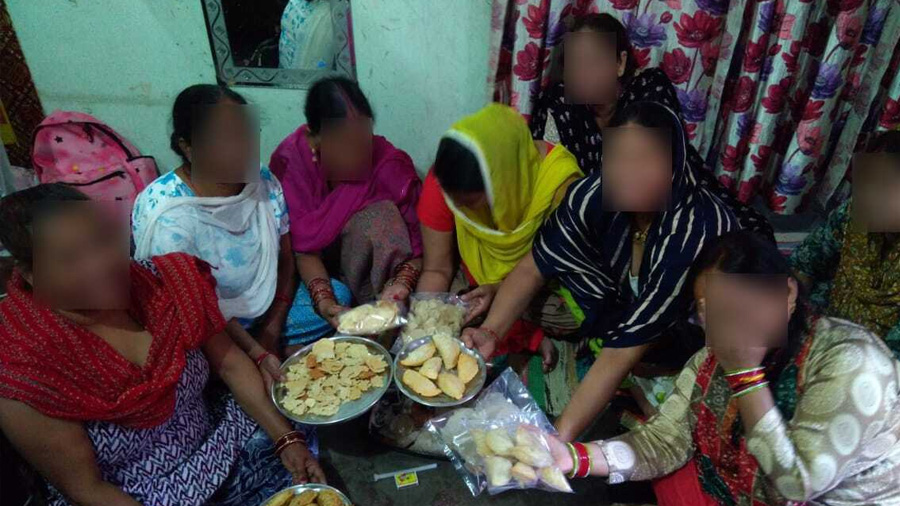
Members now earn between Rs 1,500 and Rs 2,000 each week. For households accustomed to uncertain daily wages, this income represents both security and confidence. These collectives are far more than livelihood groups. They represent courage in the face of stigma.
Women who once lived in silence now work together, earn together, and support one another. Their visibility challenges persistent misconceptions surrounding HIV. Within their neighbourhoods they are gradually becoming symbols of resilience. By linking healthcare support with economic empowerment, the Gram Nirman programme is creating practical pathways for social reintegration. The approach moves beyond charity. It enables communities to reclaim agency over their lives.
In the narrow lanes of East Delhi’s informal settlements, where stigma once silenced families, a quieter transformation is unfolding. Through skill, solidarity, and determination, women are rebuilding their futures.
Dignity is returning. Not as a gift. As something earned, stitched together, and sustained through collective effort.
Upcoming News
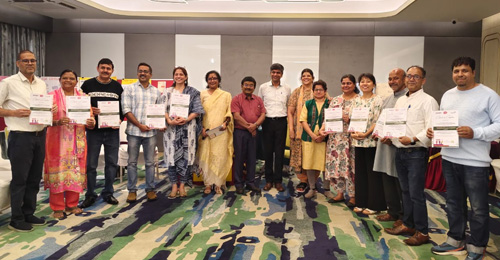
Caritas personnel certified on safeguarding, to lead nationwide partner trainings
Caritas India personnel have been certified on safeguarding by the Karl Kübel Foundation, with support...
LEARN MORE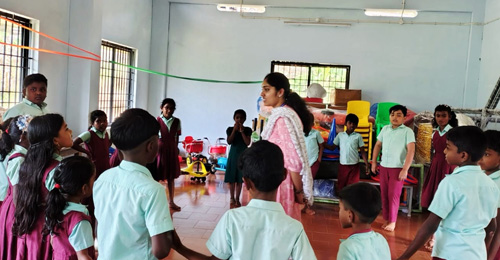
UNARVU: Awakening young minds in Wayanad
In the serene yet disaster scarred landscapes of Wayanad, where communities continue rebuilding their lives...
LEARN MORE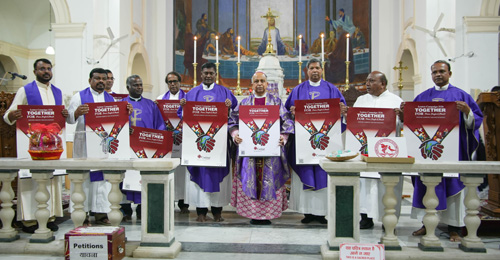
Caritas India launches Lenten campaign with call for peace, inclusion, and climate action
Caritas India has launched the Lenten Campaign 2026 with a bold message: peace must be...
LEARN MORE 91 -11 - 2336 3390
  director@caritasindia.org


