
 91 -11 - 2336 3390
  director@caritasindia.org
 Warnings Save Lives Only When People Trust Them, Says Wayanad Deputy Collector
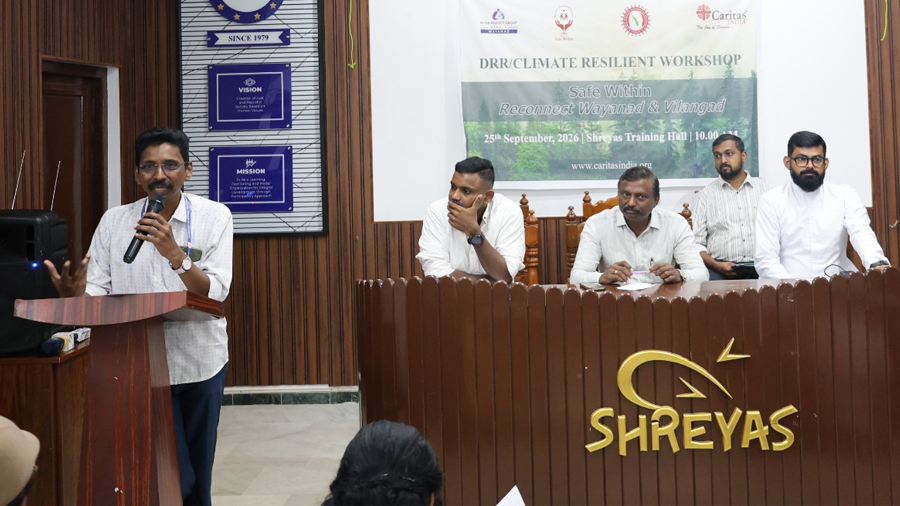
Wayanad has seen what happens when a warning arrives and people hesitate. The landslides of 2024 at Punchirimattam, Mundakkai and Chooralmala in Kerala taught the district that preparedness cannot start once the rain has already begun. That lesson shaped a District Level Disaster Risk Reduction and Climate Resilience Workshop organised by Caritas India at Shreyas, Bathery, on 25 September 2026, under its Safe Within, Reconnect Wayanad & Vilangad project.
Shri Varghese Kurian, Deputy Collector and Disaster Management Officer, Wayanad, told participants that evacuation instructions save lives only when communities trust those who issue them. “If we are prepared, we can face any situation. Whatever we are trained to do, we should carry it out properly,” he said. He cautioned volunteers against attempting rescue tasks without proper training. He also spoke of the vital role NGOs, volunteers and faith institutions play in awareness and timely response, and urged agencies to build lasting relationships with families and community leaders well before an emergency.
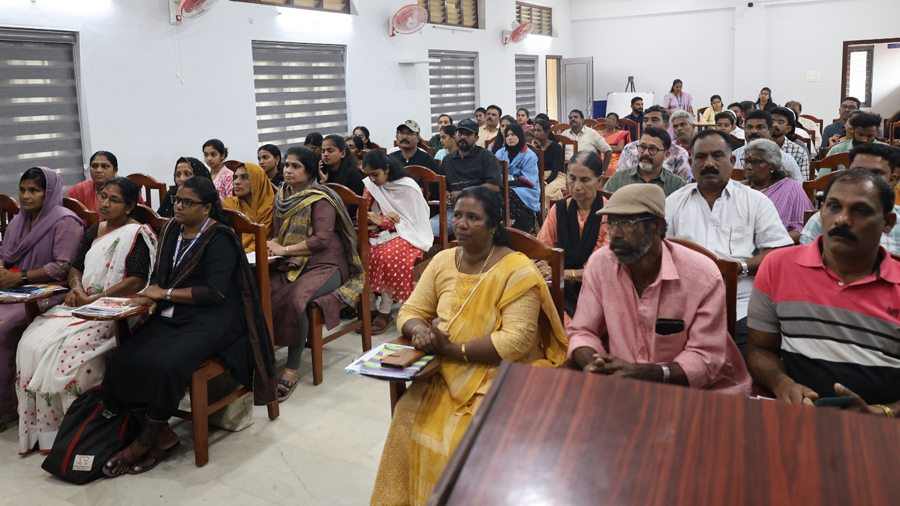
The workshop drew members of the Inter Agency Group, NGOs, disaster response practitioners and the project’s partner organisations: WSSS Mananthavady, Shreyas Bathery, COD Thamarassery and Jeevana Calicut. Discussions covered early warning, emergency preparedness, communication and community resilience.
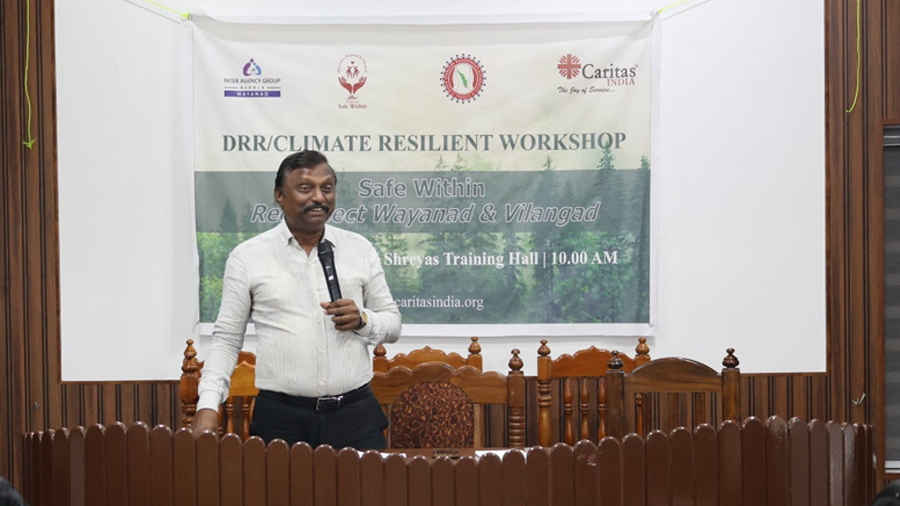
Dr. V. R. Haridas, National Project Coordinator and Climate Justice Lead at Caritas India, explained how heavier rainfall, deforestation, altered natural drainage and unplanned development increase risk in hilly areas. He encouraged participants to track local rainfall, use reliable weather information and understand how the land around them behaves. Practical steps followed: clearing drainage channels, protecting vegetation and natural water systems, harvesting rainwater and reviving traditional wells and ponds. Such measures help in both downpours and dry spells. Dr. Haridas reminded the room that protecting the environment is itself a form of disaster risk reduction, and that small, steady actions by communities add up to long term resilience.
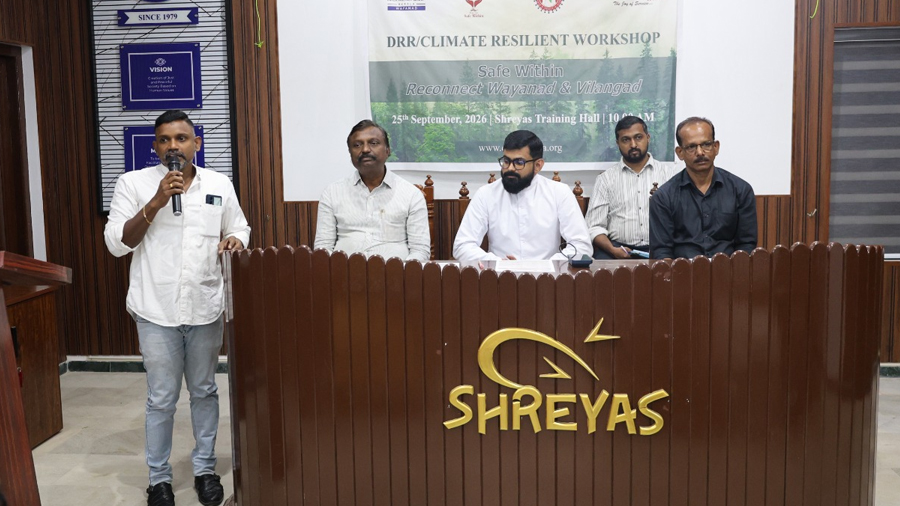
A group discussion led by Mr. Abeesh Antony, State Programme Associate, Caritas India, identified five areas for joint action: spreading early warnings, preparing communities, sharing information, responding to emergencies and using resources in a coordinated way.
Safe Within is the second phase of Caritas India’s humanitarian response to the 2024 landslides. With the backing of Caritas Internationalis, the organisation moved beyond rebuilding homes to prioritise mental health, because families who survived the disaster often carry anxiety, sleeplessness and silent grief long after the debris is cleared. Working with the National Institute of Mental Health and Neurosciences (NIMHANS), Caritas India trained community volunteers to recognise emotional, social and economic stress among women, men, children and vulnerable groups. The project is implemented with the Kerala Social Service Forum and Diocesan Social Service Societies, and its Community Resource Centres remain the backbone of recovery on the ground.
The preparedness side is growing just as quickly. HEART (Humanitarian Emergency Aid and Response Team) Task Force teams already operate across nine panchayats in two districts. A one day training with the Kerala Catholic Youth Movement added 75 young volunteers, and 40 more were trained at Vythiri on 4 June 2026. Their value is simple. When floods or landslides cut off rural pockets, professional help can take hours, and survival depends on people already on the ground. The training goes beyond rescue skills and encourages volunteers to connect personal discipline with institutional response networks, so that every local effort fits into a larger system.
Participants left with a shared understanding that disaster preparedness is a continuous process, not an emergency time activity. Trust with communities, local capacity and open information sharing connect prevention, response and resilience into one system.
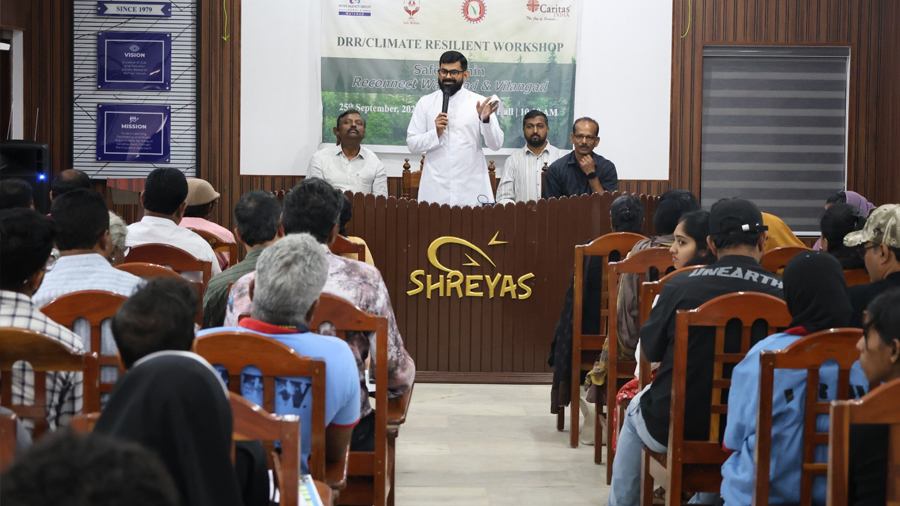
Fr. David Alinkal, IAG Wayanad Convenor and Executive Director, Shreyas Bathery, welcomed the gathering and stressed advance coordination and shared learning among agencies. Mr. Shaji K.V., Programme Manager, and Mr. Shaji K.P., Programme Officer, offered felicitations. Mr. Sajo Joy, KSSF Coordinator, proposed the vote of thanks.
Upcoming News
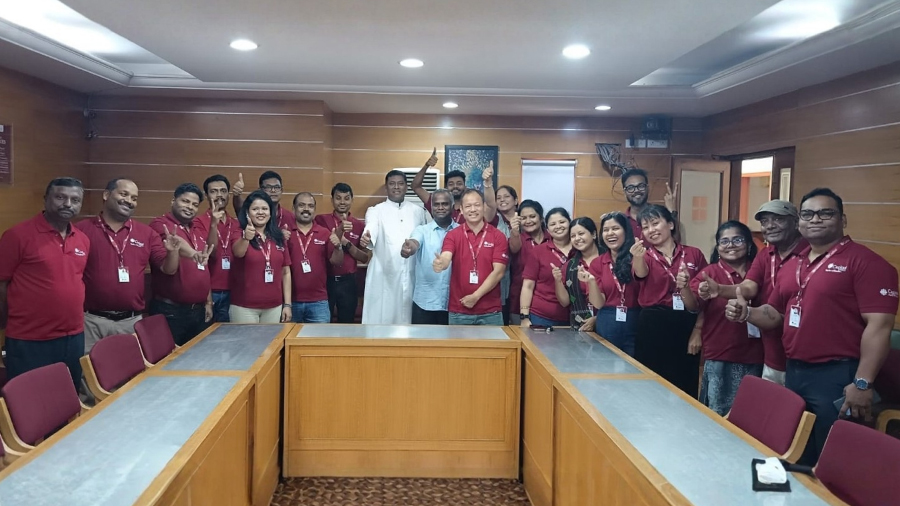
Caritas India Marks 64 Years of Service with Gratitude and Renewed Commitment
"Christian love cannot remain only in our hearts. Love must become action." With these words,...
LEARN MORE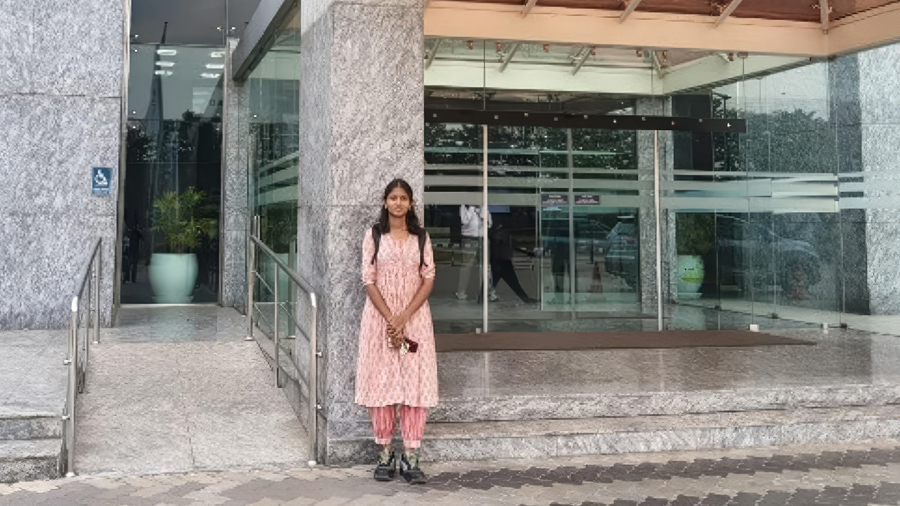
AutoShakti Opened a Door for Kalayarsi
In Mambakkam village near Sriperumbudur, the mornings begin early at Kalayarsi's home. Her mother prepares...
LEARN MORE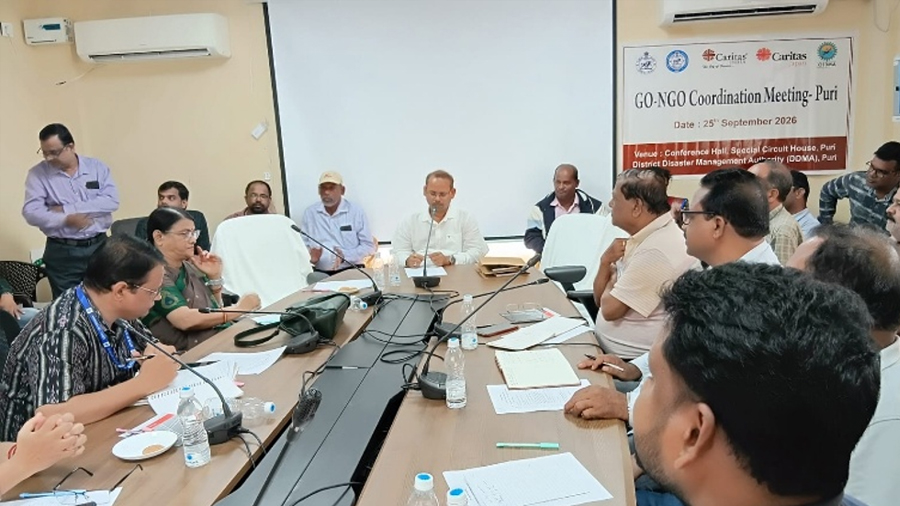
Government and NGOs agreed to set-up One Platform for Disaster Preparedness in Puri, Odisha
Government departments and more than 20 NGOs in Puri district agreed to set up a...
LEARN MORE 91 -11 - 23362735
  director@caritasindia.org


