
 91 -11 - 2336 3390
  director@caritasindia.org
 FARM field schools outsmart rats and crabs with farmer made solutions
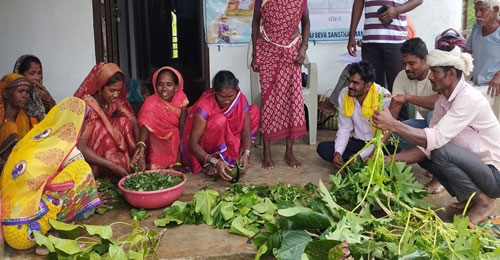
Rats slicing through panicles. Crabs tunnelling into bunds. Seedlings clipped clean at the base. Farmers in Malimohgaon and Silpura had watched their paddy fields suffer season after season as these two stubborn pests chewed through roots, drained water from plots, and left patchy fields that threatened household food stocks. Losses of ten to fifteen percent had become routine.
Chemical sprays were available, but farmers knew the outcome. High cost. Weak impact. Soil life is damaged. Crabs unaffected. They needed a solution that protected both crops and the land. The turning point arrived inside the FARM field school promoted by the Caritas India SAFBIN project and supported by Caritas Austria. This space became the ground for experimentation, analysis, and collective decision-making.
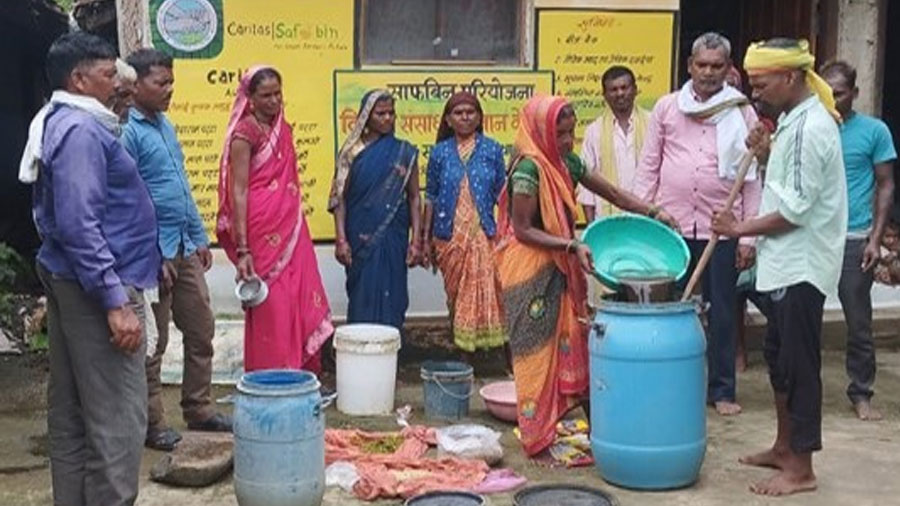
When the indigenous Luchi variety was planted under on-farm adaptive research, the problem intensified. Fresh burrows appeared on the bunds, entire rows wilted, and farmers raised the red flag. The field school group decided to examine options together. They chose to trust their traditional knowledge. Lamit and Dashparni Ark stood out as potent organic preparations known for repelling rats and crabs through their sharp odour and bitter plant compounds.
Mr Amrit Netam from Malimohgaon took the lead in the first trial. His feedback was direct. “Spraying Lamit and Dasparni at regular intervals significantly reduced rat and crab infestations, protecting our crops and bunds,” he said. “This method lowered our expenses on expensive chemical pesticides while keeping crops healthy.”
As his results spread through the community, forty-five farmers prepared their own batches. The ingredients came straight from their surroundings. Garlic, chilies, tobacco, and cow urine for Lamit. Ten bitter plants, cow dung, and cow urine for Dashparni ark. Farmers applied them along field edges, burrows, and bunds. Every new FFS meeting became a space to compare field observations and fine-tune the application schedule.
The changes were visible. Rat holes fell silent. Crab tunnels stopped appearing. Water stayed inside the fields. Plants stood upright with stronger roots. Confidence grew.
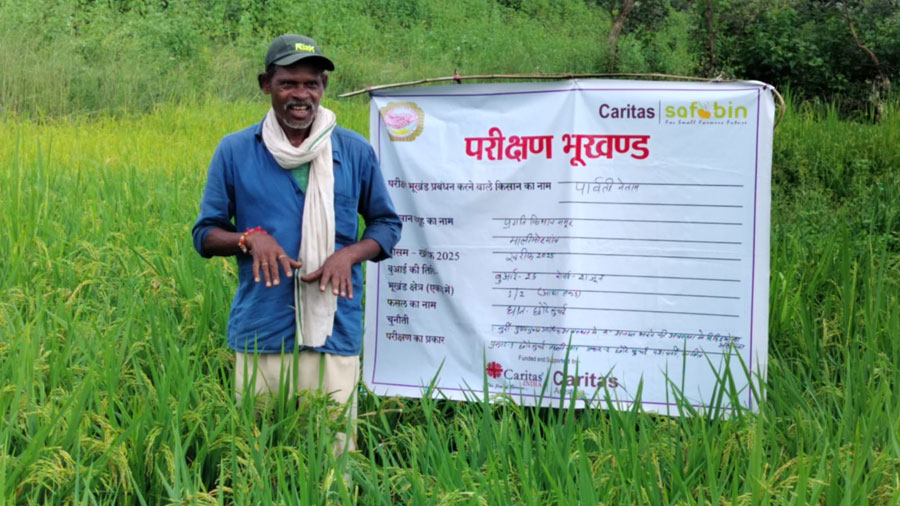
Mr Munna Lal Maravi from Silpura captured the transformation. “It is a simple, low-cost, and safe method for the soil, crops, and all living organisms, and it increases crop yield,” he said. “Lamit and Dasparni provide an inexpensive and effective solution for pest and crop management, while conserving water and soil.”
Monitoring data matched farmer testimonies. Rat and crab presence dropped by eighty to ninety percent. Water retention improved. Yield rose by ten to fifteen percent. And no chemical pesticide was used at any stage.
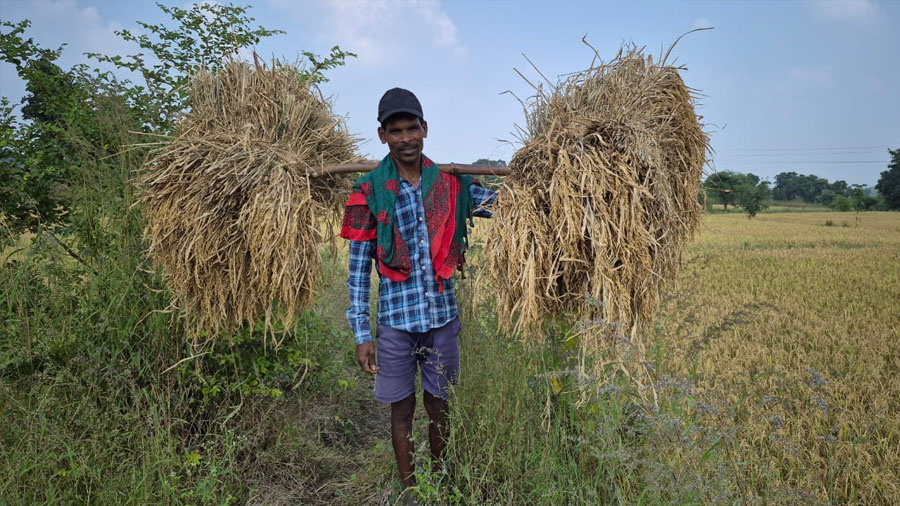
The FARM field school became the backbone of this success. It guided farmers through the entire cycle in identifying the challenge, analysing options, testing the organic formulations, observing the impacts, and refining the approach together. The practice spread quickly. Cross learning sessions carried the experience to ten villages, reaching over four hundred fifty farmers. Adoption rose as more farmers witnessed the results.
The core achievement goes beyond pest control. Farmers proved that organic, low-cost solutions can outperform commercial chemicals when supported by structured learning spaces like the FARM field school and backed by programs such as Caritas India’s SAFBIN initiative with the support of Caritas Austria.
Upcoming News
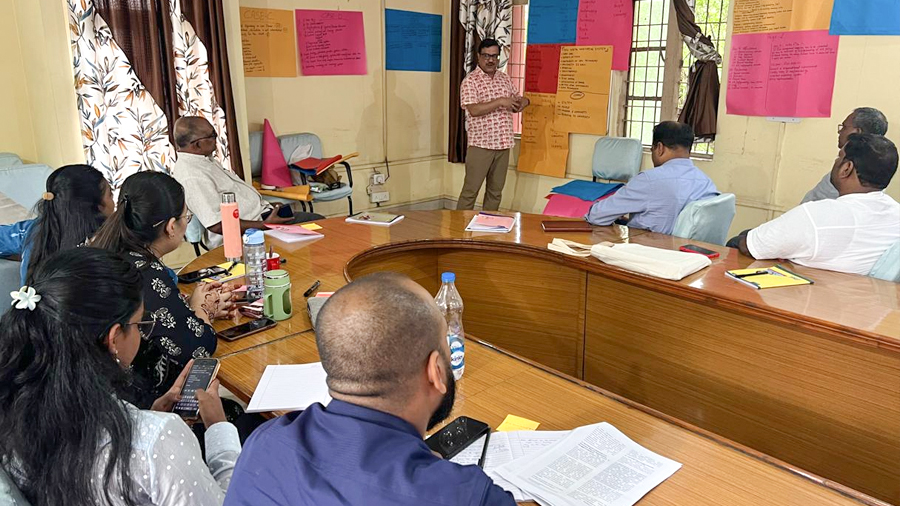
When NGOs Grow, What Breaks First? Caritas India Tackles the Answer in Raipur
Three-day workshop arms executive leaders with governance tools, a 20-policy framework and practical fixes for...
LEARN MORE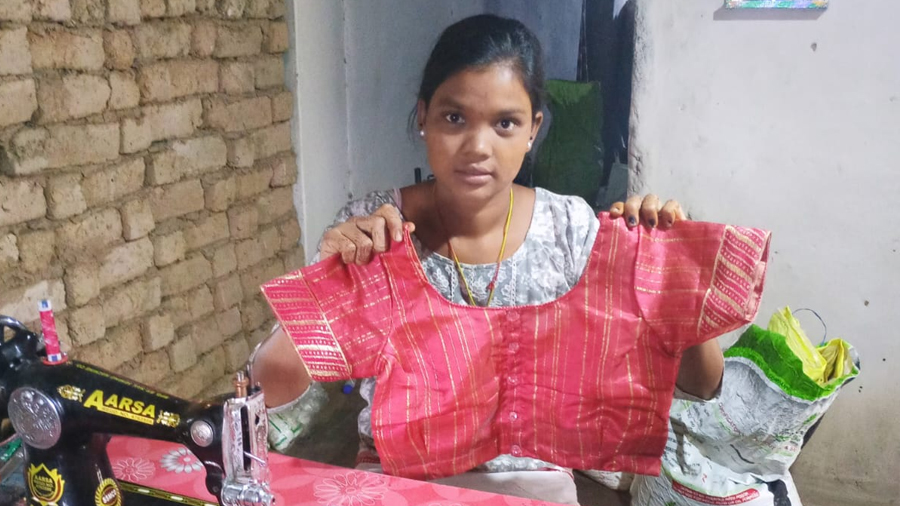
Nine Kilometres Through the Jungle: How Poornima Stitched Her Own Future
For 19 year old Poornima Rawat of Rajamma village in Lailunga block of Chhattisgarh's Raigarh...
LEARN MORE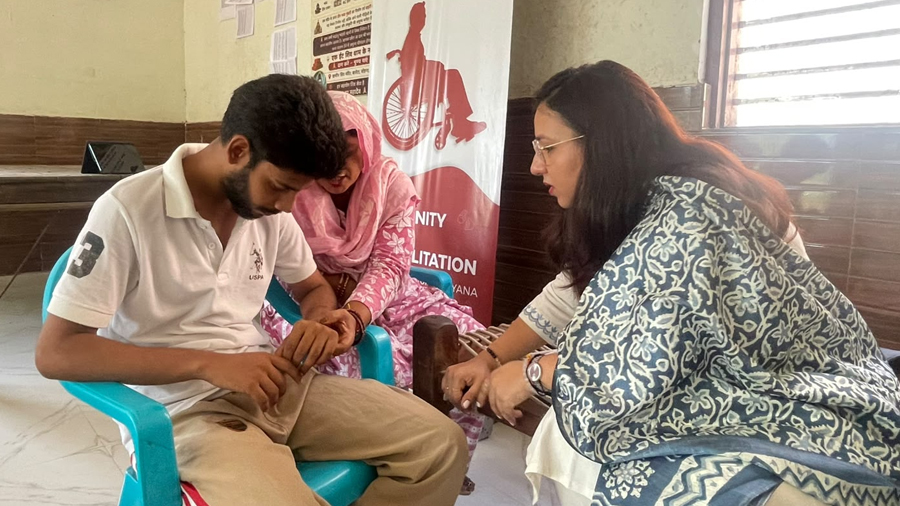
In a Nuh Village, People Living With Mental Illness Finally Got to Speak, and Be Heard
Nine people sat in that room in Barota village, Nuh district, Haryana, each carrying a...
LEARN MORE 91 -11 - 23362735
  director@caritasindia.org


