
 91 -11 - 2336 3390
  director@caritasindia.org
 Caritas India Showcases Safeguarding practices at Caritas Asia’s Regional Leadership Training
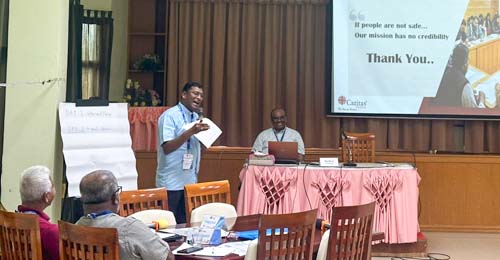
Caritas Asia’s four-day Twin Training on Leadership, Compliance, and Integral Ecology held from 20 to 23 April 2026 brought together the Executive Directors of member organisations from across the Asian region to deliberate on the new Strategic Framework 2026–2030 and to deepen shared accountability in humanitarian practice. Among the most anticipated sessions of the gathering was a presentation by Fr. Jesudass R, Executive Director of Caritas India, on the organisation’s journey in building a robust, field-tested safeguarding culture, a session that drew wide engagement from participants.
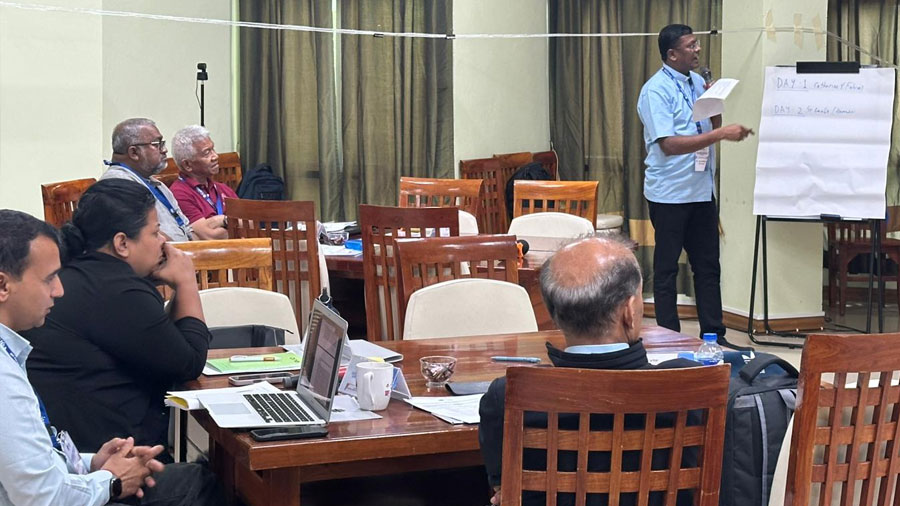
Speaking before peers and senior leaders from across Caritas Asia’s member network, Fr. Jesudass walked the gathering through Caritas India’s deliberate and structured effort to move safeguarding from the margins of organisational life to its very centre. His presentation was grounded in specifics, not aspirations but actual shifts in how the organisation trains its people, structures its accountability systems, and integrates the protection of the vulnerable into every dimension of its programming, including ecology and advocacy.
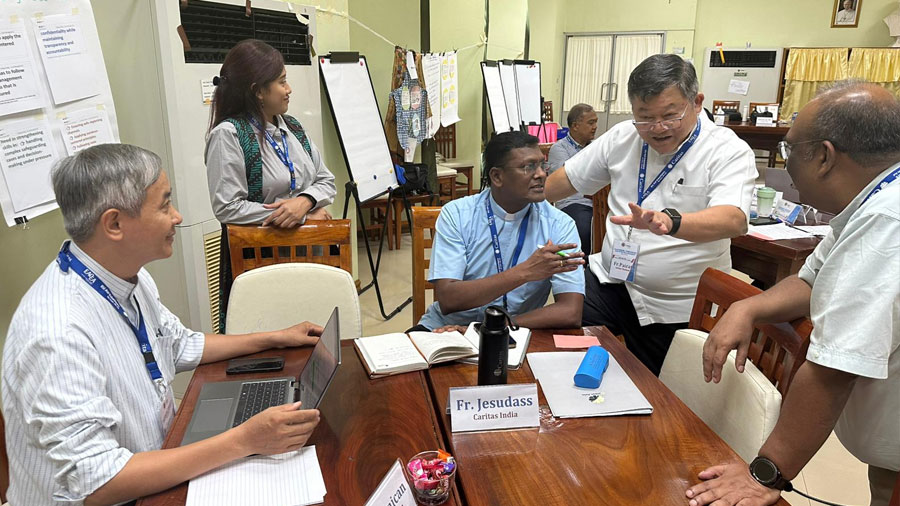
What distinguished the Caritas India presentation from a conventional good-practice report was its directness. Through two thoughtfully designed visual frameworks Fr. Jesudass invited member organisations across Asia to interrogate their own systems, their own daily trade-offs, and their own understanding of what leadership truly demands.
The two visual frameworks presented by Caritas India gave language to things leaders already knew but had not yet articulated. The tensions named in the second poster like speed versus compliance, delivery versus safeguarding is not abstract. They are the specific pressure points where safeguarding systems either hold or quietly collapse. By naming them openly and then presenting India’s concrete institutional responses.
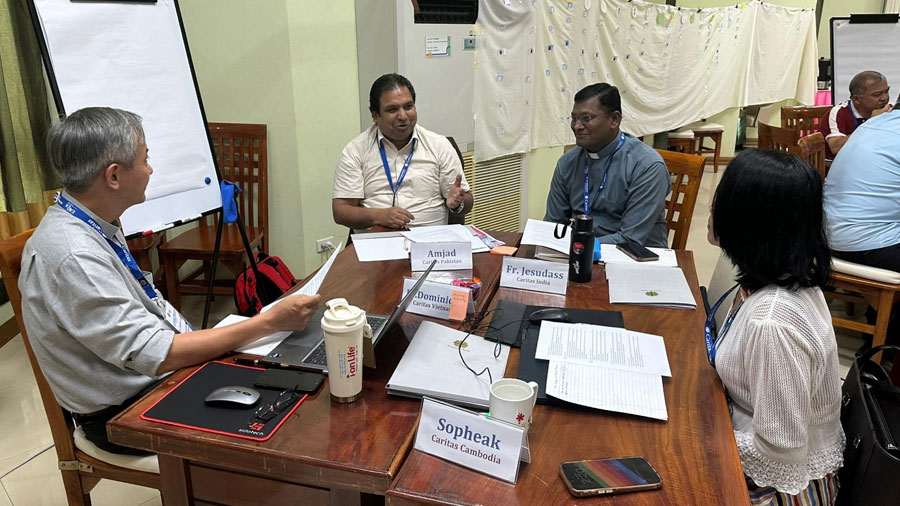
The presentation resonated strongly within the training’s overarching theme: that humanitarian organisations face a defining tension between speed and compliance, between delivery and safeguarding, and that only those who invest in building institutional systems, rather than relying on individual goodwill, can navigate that tension sustainably. Caritas India’s model was offered as evidence that the investment pays off.
The Caritas Asia Twin Training was designed as a combined intervention bringing Leadership and Compliance together with Integral Ecology to reduce cost while achieving greater strategic coherence across member organisations. Directors were present for all four days, with thematic leads on climate action and advocacy joining for the final two days on 22 and 23 April. The training directly serves the Caritas Asia Strategic Framework 2026–2030, which sets an ambitious horizon of moving from individual learning to institutional change across the entire regional network.
Caritas India’s participation and presentation was a recognition of the organisation’s credibility as a learning institution within the Caritas family in Asia, one that has done the hard internal work of translating mission into systems, and is now generously contributing that experience to the wider network.
As member organisations across Asia now carry the training’s insights back to their own contexts, Caritas India’s safeguarding model stands as one of the most concrete and replicable contributions to emerge from the gathering, a reminder that the journey from good intentions to real protection is possible, and that India has already begun walking it.
Upcoming News
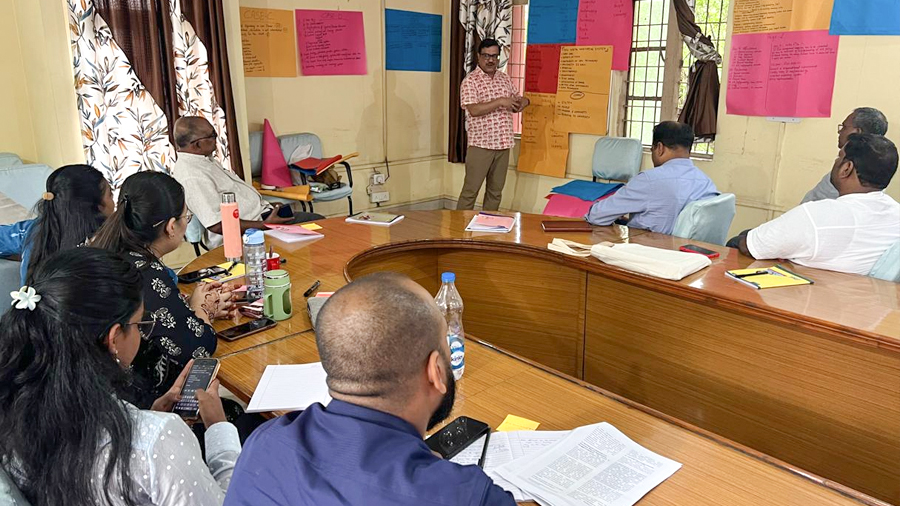
When NGOs Grow, What Breaks First? Caritas India Tackles the Answer in Raipur
Three-day workshop arms executive leaders with governance tools, a 20-policy framework and practical fixes for...
LEARN MORE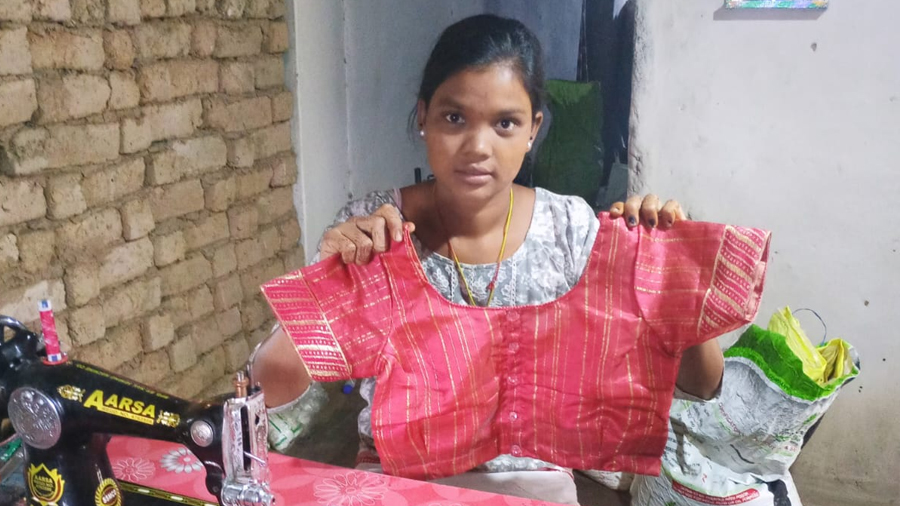
Nine Kilometres Through the Jungle: How Poornima Stitched Her Own Future
For 19 year old Poornima Rawat of Rajamma village in Lailunga block of Chhattisgarh's Raigarh...
LEARN MORE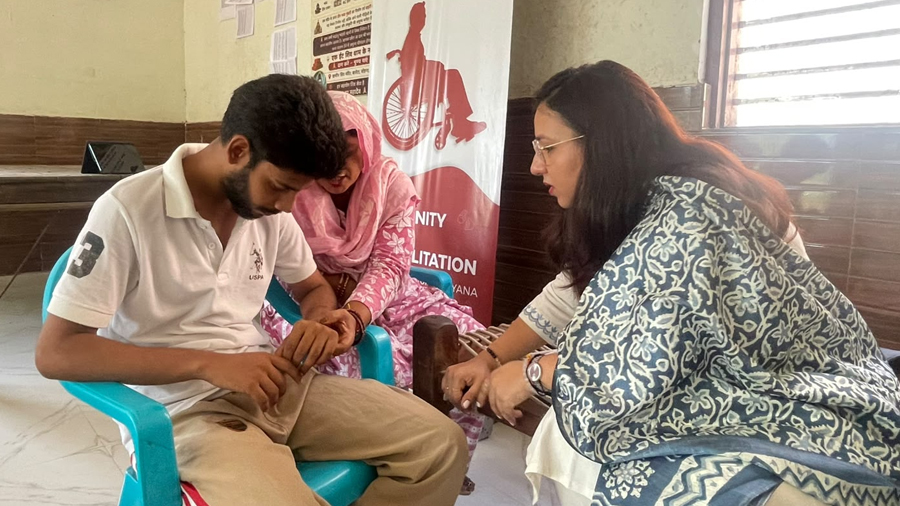
In a Nuh Village, People Living With Mental Illness Finally Got to Speak, and Be Heard
Nine people sat in that room in Barota village, Nuh district, Haryana, each carrying a...
LEARN MORE 91 -11 - 23362735
  director@caritasindia.org


