
 91 -11 - 2336 3390
  director@caritasindia.org
 How Sustainable Farming Helped Biswas Munda Leave Migration Behind
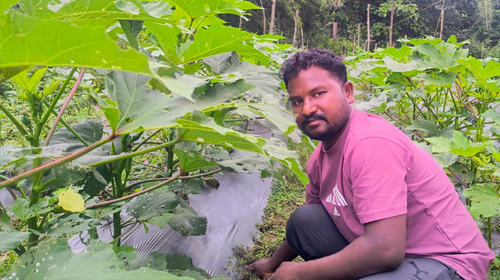
In the forested uplands of Angara Block in Ranchi district, life has always moved with the rains. Families farm small plots of rain-fed land, and when the monsoon falters, so does the harvest. With little irrigation and few ways to reach a real market, farming alone rarely carries a household through the year. So every season, young men leave Jamuntoli and villages like it, travelling to Gujarat, Maharashtra, and Tamil Nadu for whatever labouring work they can find.
Biswas Munda once assumed his life would follow that same road.
He grew up working the fields alongside his parents, learning to read the soil and the seasons. It was a modest living until 2011, when his father died unexpectedly. As the eldest son, Biswas suddenly carried the responsibility for his mother, his wife, and his children and the family’s small farm income wasn’t enough to meet it. So he left, travelling first to Arunachal Pradesh and later to Gujarat for migrant labour. The work kept the family afloat, but only just.
“I worked hard every day, but even then, the income was just enough for survival. I was away from my family and had no certainty about the future. Deep down, I wanted to find a way to earn a living in my own village,” Biswas recalls.
He eventually returned to Jamuntoli, hoping to make the family’s two acres work for him. But traditional methods brought traditional results like low yields, little certainty, no real way forward.
That changed in 2021, when Gram Nirman Phase II began working in Jamuntoli. The programme, implemented by Caritas India with the support of Caritas Australia, introduced the Asset-Based Community Development approach encouraging farmers to build on the resources they already had rather than dwell on what they lacked. For Biswas, it reframed everything. His land stopped looking like a limitation and started looking like a starting point.
“The trainings and exposure visits changed the way I looked at farming. Earlier, I thought agriculture was only about growing paddy. I learned that with planning and diversification, farming can provide a stable and sustainable income,” he says.
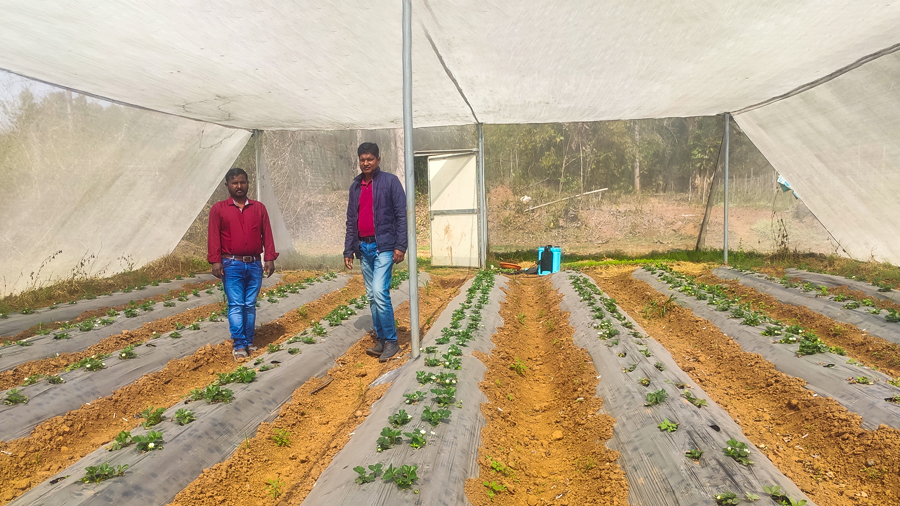
Through the programme, Biswas accessed a drip irrigation system worth ₹68,000 from the Department of Horticulture, contributing just ₹3,500 of his own, along with 80 kilograms of ginger seed from the Department of Agriculture. With reliable water for the first time, he began growing grafted tomatoes, lady’s finger, and brinjal on 20 decimals of land, a plot now expected to yield 3,000 to 4,000 kilograms this season. He also built a raised-platform goat shed and now keeps 24 goats, giving his household a second income that doesn’t rise and fall with a single crop.
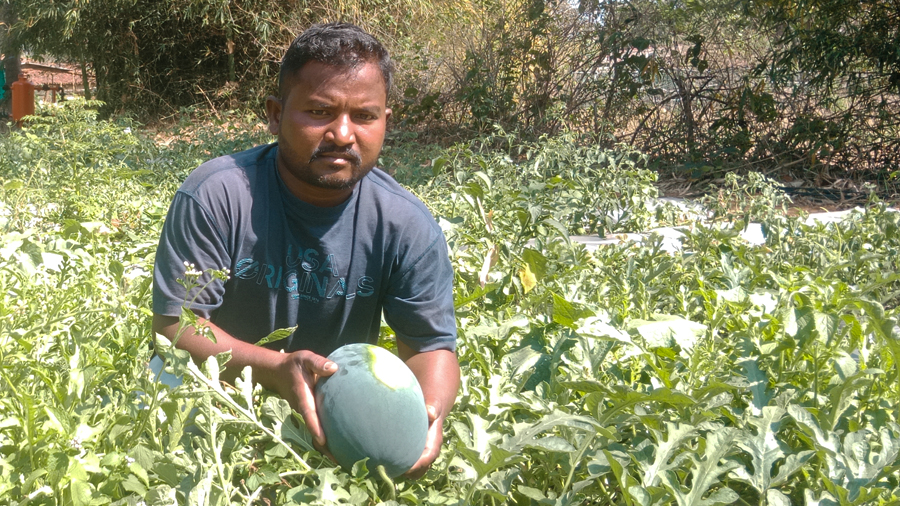
What has changed most, perhaps, is what Biswas now allows himself to imagine. He is already planning his next steps like pig rearing, fish farming, strawberry cultivation, and a polyhouse nursery, for which he has submitted an application.
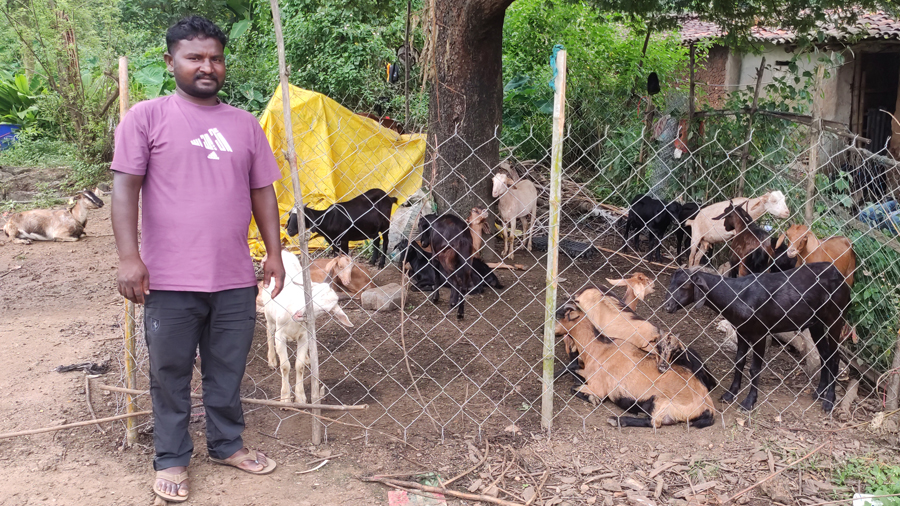
“Today, I am earning through farming and livestock rearing, and I can plan confidently for my family’s future. Most importantly, I can stay in my village and build my livelihood here,” he says.
That last line carries the weight of his whole journey. Migration once felt like his only option. Through Gram Nirman and the partnership between Caritas India and Caritas Australia that makes it possible. Biswas found another one: a future built at home.
Upcoming News
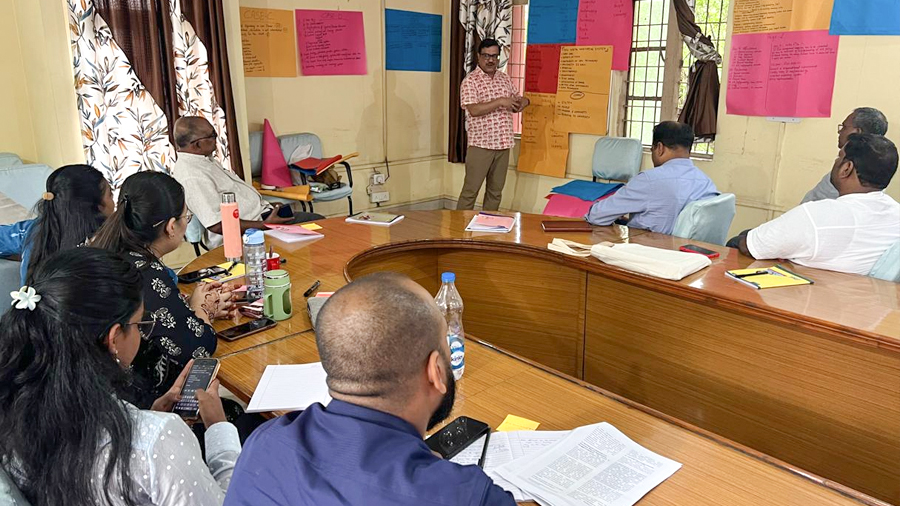
When NGOs Grow, What Breaks First? Caritas India Tackles the Answer in Raipur
Three-day workshop arms executive leaders with governance tools, a 20-policy framework and practical fixes for...
LEARN MORE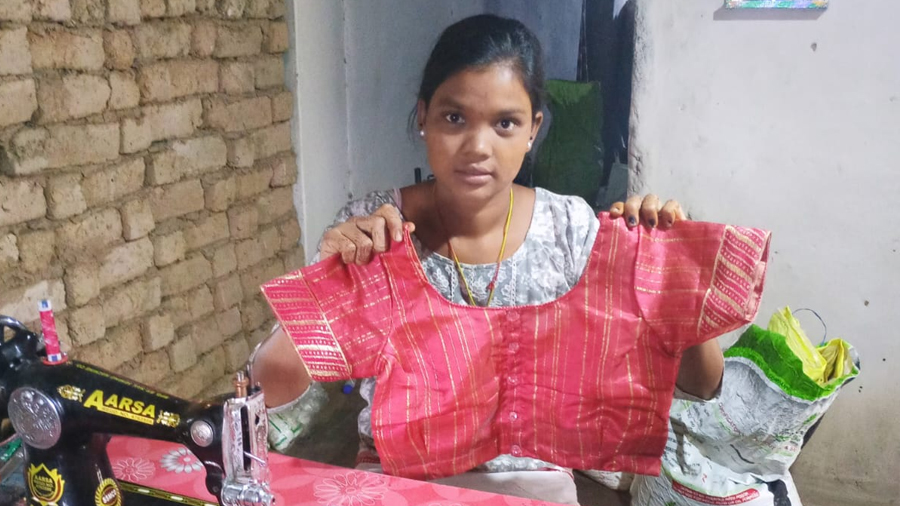
Nine Kilometres Through the Jungle: How Poornima Stitched Her Own Future
For 19 year old Poornima Rawat of Rajamma village in Lailunga block of Chhattisgarh's Raigarh...
LEARN MORE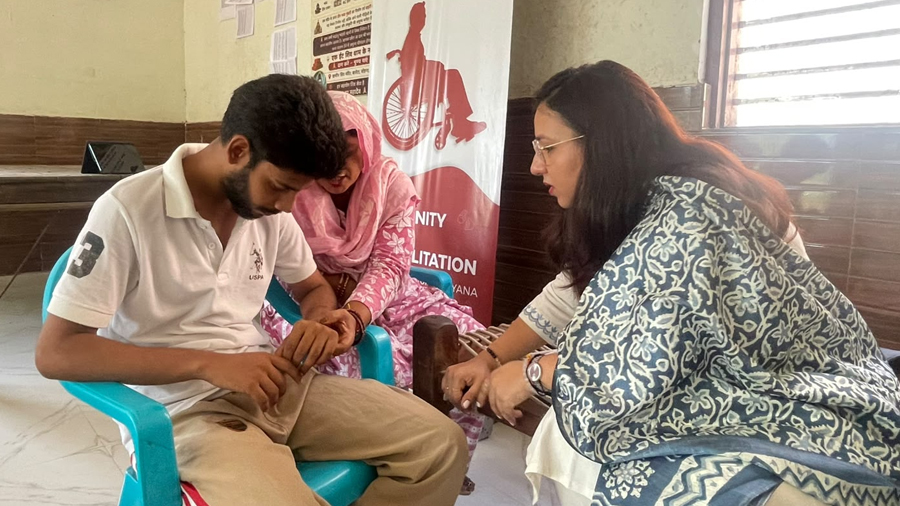
In a Nuh Village, People Living With Mental Illness Finally Got to Speak, and Be Heard
Nine people sat in that room in Barota village, Nuh district, Haryana, each carrying a...
LEARN MORE 91 -11 - 23362735
  director@caritasindia.org


