
 91 -11 - 2336 3390
  director@caritasindia.org
 Climate-Resilient Farming Boosts Smallholder Income 2.37 Times in Madhya Pradesh
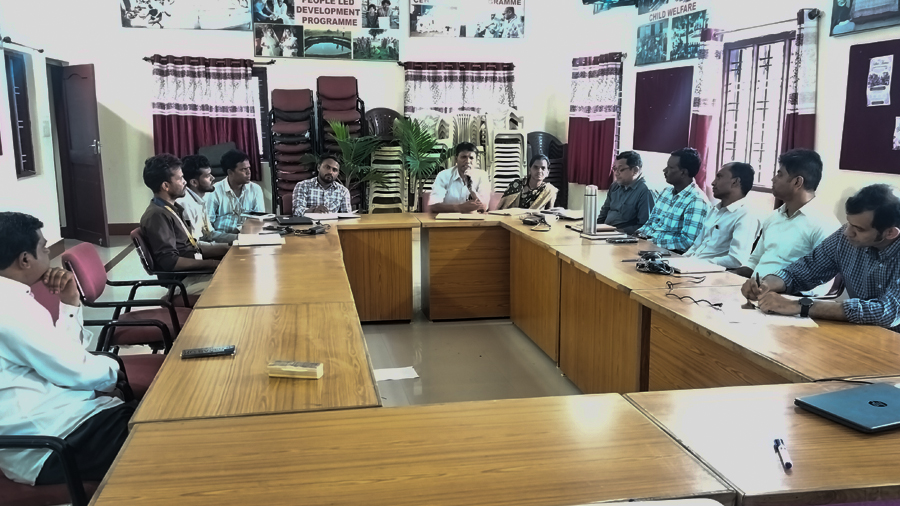
Farmers using On-Farm Adaptive Research (OFAR) trials and mixed farming systems under the SAFBIN Programme earned an average net income of Rs. 38,165 per acre — 2.37 times higher than the Rs. 16,090 per acre earned under conventional winter mono-cropping, according to a key finding presented at a Partner Review and Planning Meeting in Sagar, Madhya Pradesh. Cost-benefit analyses, supported by OFAR growth indicator records and field data, showed that locally adapted, low-cost agroecological practices significantly enhanced climate resilience, productivity, and farm profitability.
Caritas India, with support from Caritas Austria, organised the two-day meeting for the SAFBIN BIP 2025–26 Programme on 8–9 July 2026 at the MVSS Centre, Sagar, bringing together implementing partners MVSS and MPSSS to review achievements, share field learnings, and plan priorities for the next six months. Discussions covered strengthening Kharif 2026 implementation, scaling up Integrated Farming System (IFS) Farmer Field Schools, improving programme and financial management, and developing a time-bound action plan.
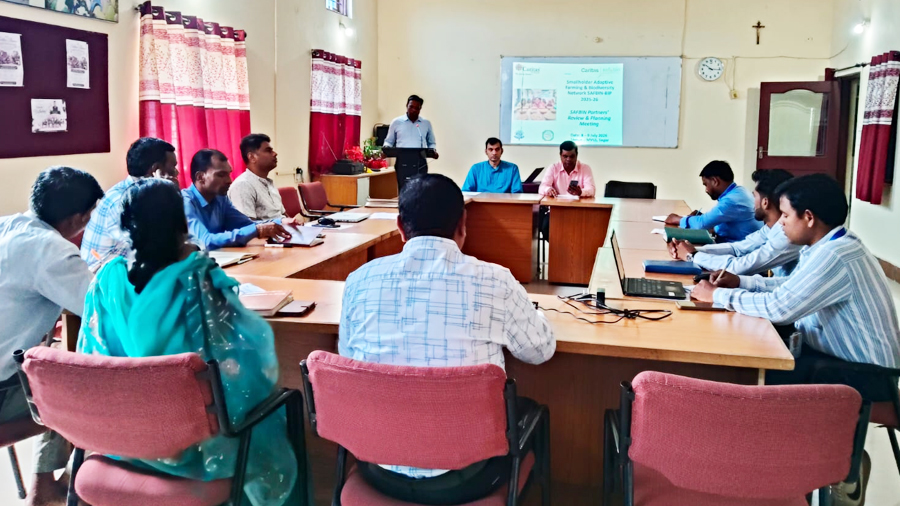
Dr. Mukund Deshmukh, Assistant Program Lead, SAFBIN, welcomed participants and reviewed the programme’s milestones over the past two and a half years, noting that implementation challenges had been converted into opportunities through innovation, collaboration, and community participation. The inaugural session included a traditional lamp-lighting ceremony, with guests felicitated with Moringa saplings from community-managed nurseries.
Dr. Saju M.K., Zonal Program Lead, outlined the meeting’s objectives and presented the 2026 outcome framework and OFAR trial strategy, highlighting plans to reduce cultivation costs and improve farmer incomes through value addition, branding, grading, and market linkages.
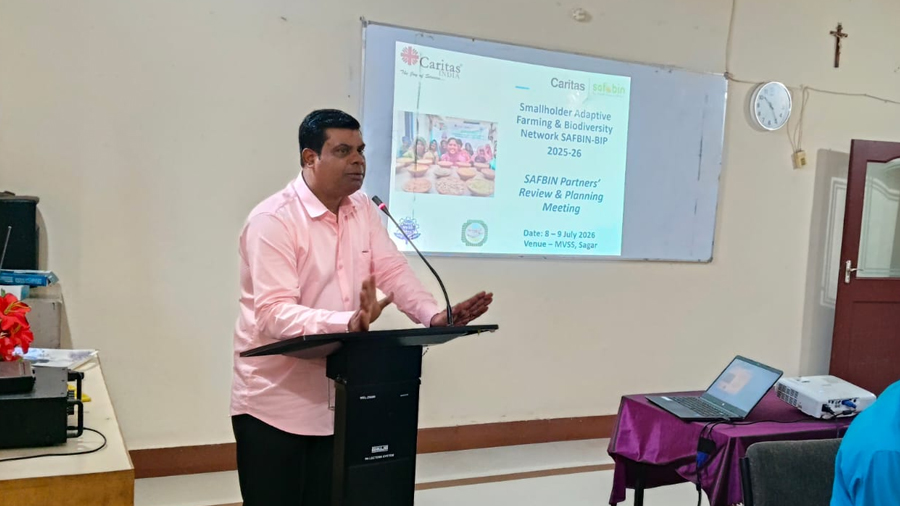
Father Thomas Philip, Executive Director of Manav Vikas Seva Sangh, addressed the gathering as special guest, saying, “SAFBIN should strengthen value chains, farmer-led marketing, and collective institutions such as cooperatives or producer companies. Establishing Community Knowledge Centres can provide continuous training, technical support, market information, and climate-resilient solutions, ensuring sustainable benefits for farming communities.” He added that the programme should engage all sections of the community while ensuring sustainability beyond the project period.
Partners also presented a summer Little Millet trial from Mandla, where tribal farmer Mr. Harichand Narte harvested 55 kg from a 20-decimal plot using 5 kg of improved seed — evidence of the feasibility of off-season millet cultivation and diversified farming systems for climate resilience and nutritional security.
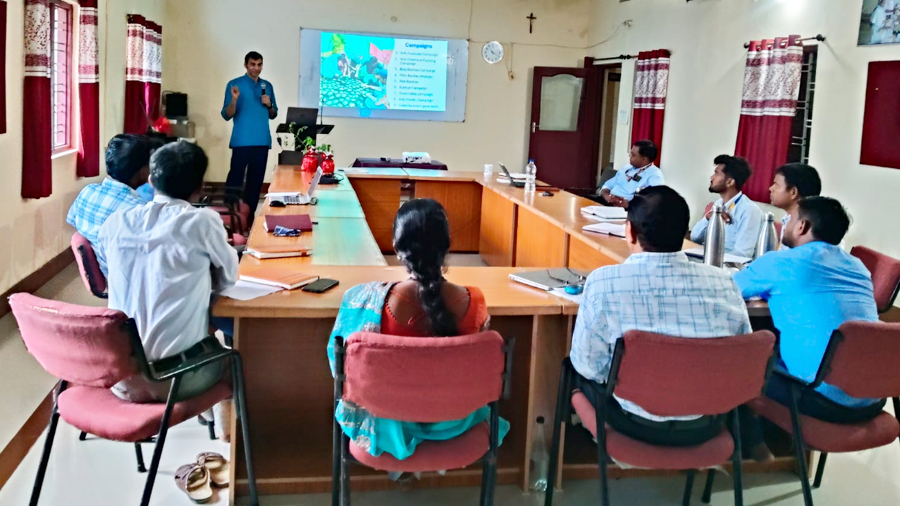
Dr. Saju M.K. proposed community-led campaigns to reduce chemical fertiliser and pesticide use, promote seed and soil conservation, encourage poultry rearing and cattle protection, and establish plastic-free villages and Seed Treasuries under the Green Village initiative.
On day two, Dr. Deshmukh led a capacity-building session on the SAFBIN results framework and a monitoring framework for OFAR trials, covering follow-up planning for value addition, Farmer Producer Organization formation, and market linkages. Mr. Soju Mathew, Finance Associate, Caritas India, conducted a session on budgeting and financial reporting using the SAFI software system.
Mr. Ramesh Yadav, Program Extension Associate, MPSSS, Mandla, attending his first such meeting, said it “greatly enhanced my conceptual understanding of the programme” and “motivated me to work more effectively with underprivileged communities.”
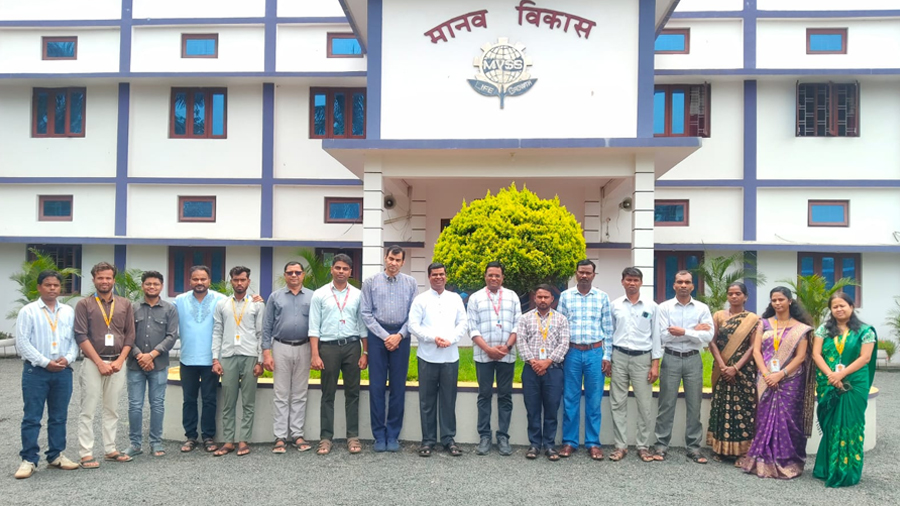
The meeting concluded with MVSS and MPSSS finalising six-month action plans with defined deliverables, resources, and timelines, and a vote of thanks by Mr. Soju Mathew.
Upcoming News
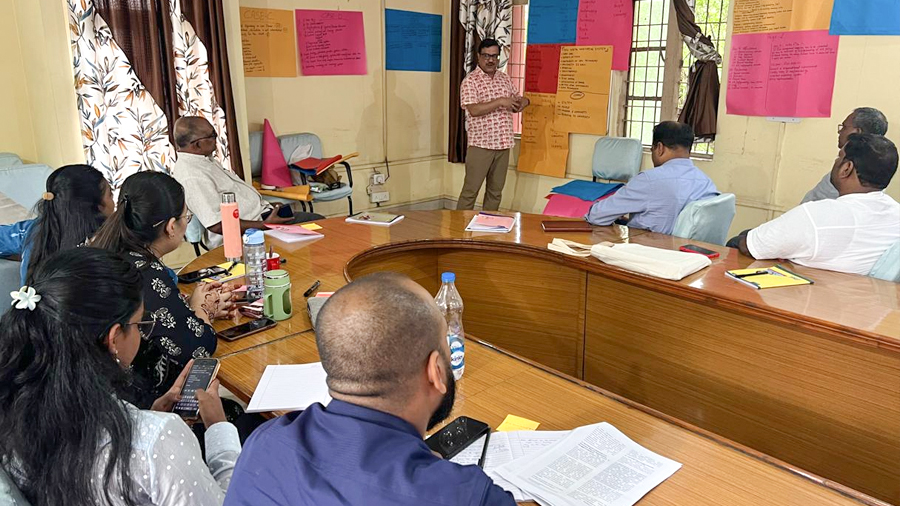
When NGOs Grow, What Breaks First? Caritas India Tackles the Answer in Raipur
Three-day workshop arms executive leaders with governance tools, a 20-policy framework and practical fixes for...
LEARN MORE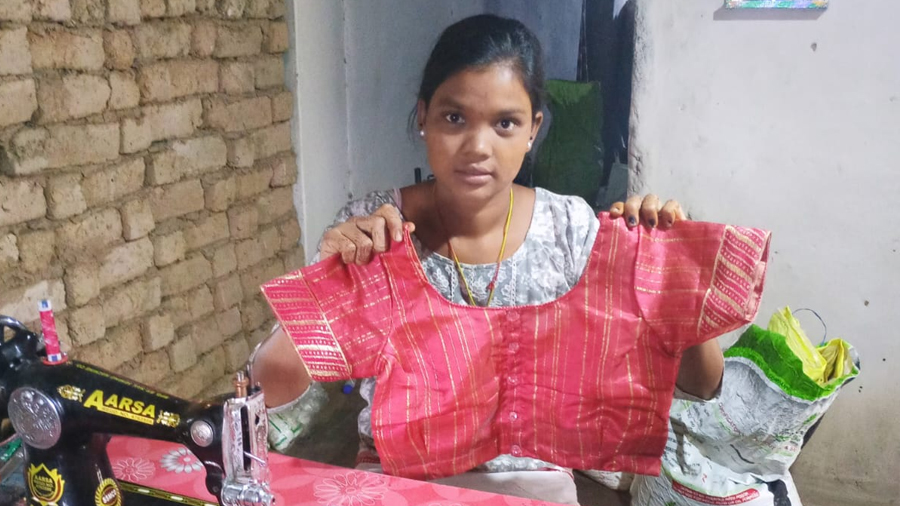
Nine Kilometres Through the Jungle: How Poornima Stitched Her Own Future
For 19 year old Poornima Rawat of Rajamma village in Lailunga block of Chhattisgarh's Raigarh...
LEARN MORE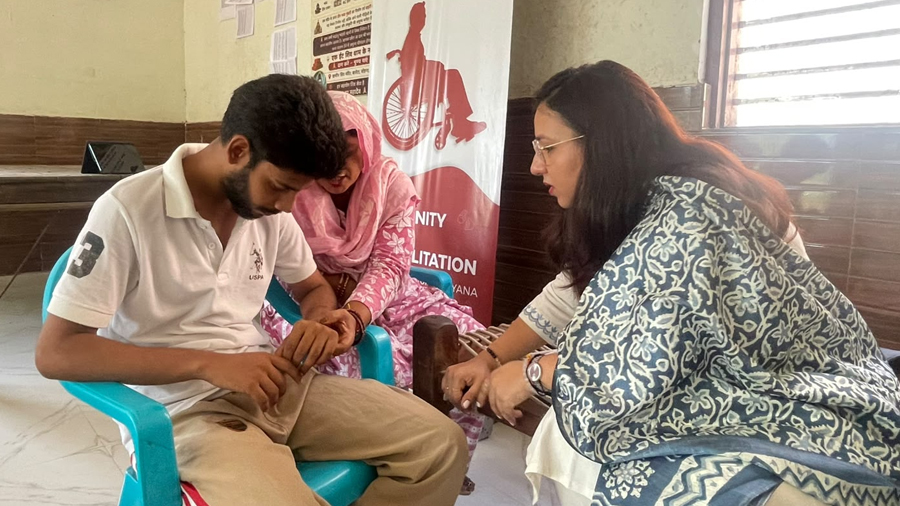
In a Nuh Village, People Living With Mental Illness Finally Got to Speak, and Be Heard
Nine people sat in that room in Barota village, Nuh district, Haryana, each carrying a...
LEARN MORE 91 -11 - 23362735
  director@caritasindia.org


