
 91 -11 - 2336 3390
  director@caritasindia.org
 How Family Livelihood Built a Khushaal Bachpan in Bastipara
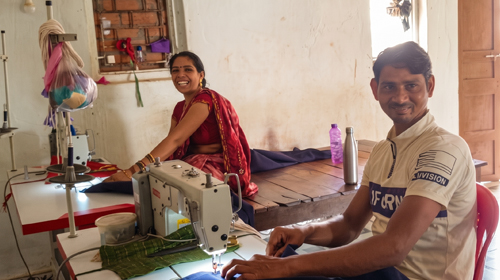
In Bastipara, a small hamlet of Kevradih village under Sirri Panchayat, Chhattisgarh most families depend on precarious daily wage labour and small-scale agriculture for subsistence. Irregular employment and scarce household income often force families into vulnerable cycles, particularly when disability or health challenges compromise a home’s earning capacity. For mothers, securing a stable income while balancing caregiving and domestic responsibilities remains an ongoing struggle.
Among these households is Mrs. Gayatri Bhardwaj, a 37-year-old mother of three. Her husband, Mr. Munna Lal Bhardwaj, lives with a physical disability that prevents him from taking on strenuous manual labour like other men in the village. Consequently, the weight of providing for the entire household rested squarely on Gayatri’s shoulders. Despite her determination and willingness to work, the absence of a reliable income made it an agonizing daily battle to keep her children fed, clothed, and in school.
The family frequently had to make heartbreaking compromises between basic survival and long-term well-being, agonizing over whether to afford notebooks and uniforms or arrange daily meals. When Munna Lal required periodic medical consultations and medicines, the situation turned critical. Treatments were repeatedly postponed or financed through high-interest borrowing from neighbours and relatives. Every unexpected expense and school fee deadline deepened their debt burden, threatening to pull the children out of the classroom and leaving little hope for a better future.
A decisive turning point came on 20 June 2025, when Gayatri was identified as an eligible beneficiary under the Income Generating Activity initiative of Caritas India’s Khushaal Bachpan Programme. Rooted in the conviction that protecting child rights and preventing school dropouts requires economically resilient households, the programme stepped in to provide targeted support. Recognizing her aptitude and keen interest in tailoring, the team provided Gayatri with an Usha Electronic Sewing Machine to establish a sustainable home-based enterprise.
Seizing the opportunity with both hands, Gayatri began stitching petticoats and garments directly from her home. In the initial weeks, orders were modest, generating an income of approximately ₹3,000 per month. Rather than being deterred by the modest start, she concentrated on high-quality stitching, dependable turnaround times, and courteous customer service. Her reputation for meticulous work soon crossed the boundaries of Bastipara, bringing in regular orders from surrounding villages and steadily expanding her earning potential.
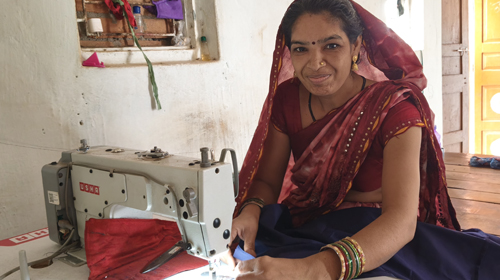
Reflecting on those early struggles, Gayatri recalls the profound transformation:
“There was a time when every single rupee carried worry. We were always torn between spending on our children’s education, kitchen expenses, or my husband’s medical treatment. Receiving the sewing machine through Khushaal Bachpan gave us a doorway, but it was relentless hard work that changed our lives. Today, we manage our home with confidence. My children’s education continues without disruption, and I feel immense dignity knowing my work has brought stability to our home.”
With guidance from the programme on financial discipline, Gayatri established a strict routine of saving a portion of her earnings rather than spending it entirely on immediate needs. This forward-looking financial discipline bore tangible fruit on 1 January 2026, when she reinvested her accumulated savings to purchase a second Usha Electronic Sewing Machine for her husband. Working side by side, the couple expanded their production capacity, successfully managing bulk assignments and elevating their monthly household income to approximately ₹16,000.
This substantial leap in earnings has brought comprehensive stability to the family across every sphere of life. Everyday household necessities are now met comfortably without resorting to debt, and the vicious cycle of borrowing has been broken. For the children, school fees, uniforms, textbooks, and learning supplies are now arranged punctually, completely safeguarding their right to continuous education. Munna Lal receives regular medical care and medicines without hesitation or delay, while the household has established a formal savings reserve for future emergencies.
Sharing his perspective on the journey, Munna Lal Bhardwaj reflects on the newfound dignity within their home:
“Earlier, I felt helpless seeing my family struggle while I was unable to contribute due to my disability. Today, our life is secure because of Gayatri’s grit and enterprise. She has earned immense respect in our village, and as a family, we hold our heads high. Most importantly, our children are studying well and we no longer live under the shadow of financial fear.”
Today, Gayatri’s enterprise has grown into a beacon of grassroots empowerment in Bastipara. Local women regularly visit her doorstep seeking advice on tailoring methods, financial management, and launching home-based micro-enterprises of their own. Her journey stands as a powerful testament to the core philosophy of Caritas India’s Khushaal Bachpan Programme: that when a mother is economically empowered, children are protected, family dignity is restored, and an entire community steps forward into sustainable self-reliance.
Upcoming News
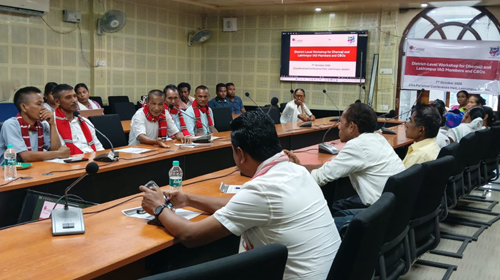
Caritas India Brings IAGs and Community Organizations Together in Assam
As climate change reshapes weather patterns and intensifies disaster risks across Assam, strengthening community preparedness,...
LEARN MORE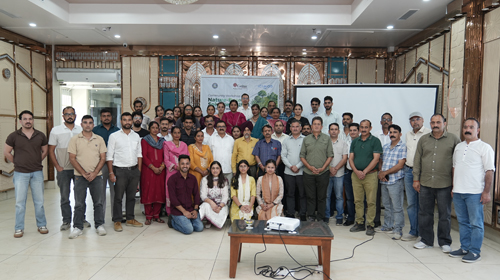
Dharampur Workshop Hands Flood Protection Works to the Community
Sixty three people gathered in Jahu with one question to settle. Who will look after...
LEARN MORE
Sumit’s Reintegration Journey Back to Kaithal
When Sumit finished his 12th standard in Kaithal, Haryana, the world beyond his village seemed...
LEARN MORE 91 -11 - 23362735
  director@caritasindia.org


