
 91 -11 - 2336 3390
 director@caritasindia.org
Maize trial in Sagar shows lower-cost farming can match chemical-heavy yields
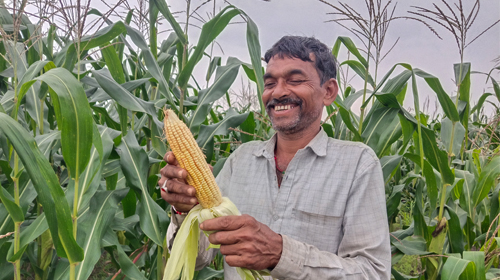
A farm trial in Tinsua village of Sagar district in Madhya Pradesh has shown that smallholder farmers can harvest as much maize while spending far less, offering fresh hope to families struggling with rising input costs and unpredictable weather.
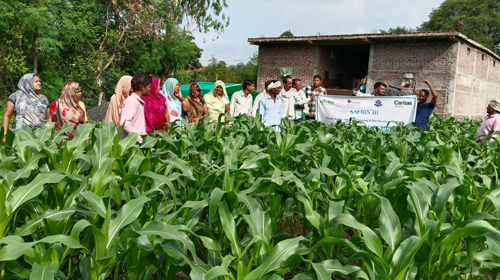
The trial was conducted during the Kharif 2026 season under the On-Farm Adaptive Research (OFAR) initiative of SAFBIN, a project supported by Caritas India and Caritas Austria which is implemented by Manav Vikas Seva Sangh (MVSS), Sagar. Four farmers grew the same maize variety, 6668, on separate plots, each using a different crop management approach.
Arvind Patel, a member of the Radhe Shyam Group under the Smallholder Farmer Collective, followed the recommended package of practices on his 0.5-acre plot and added natural pest repellents, including Dashparni. He harvested 12 quintals, the same as the control plot, where the farmer followed his usual practices.
The difference was in the cost. Arvind spent ₹8,000 on cultivation, while the control farmer spent ₹11,360. At ₹1,530 a quintal, both earned a gross income of ₹18,360. Arvind’s net profit was ₹10,360, against ₹7,000 for the control plot. His benefit-cost ratio was 2.30:1, compared with 1.62:1.
Four plots, four approaches
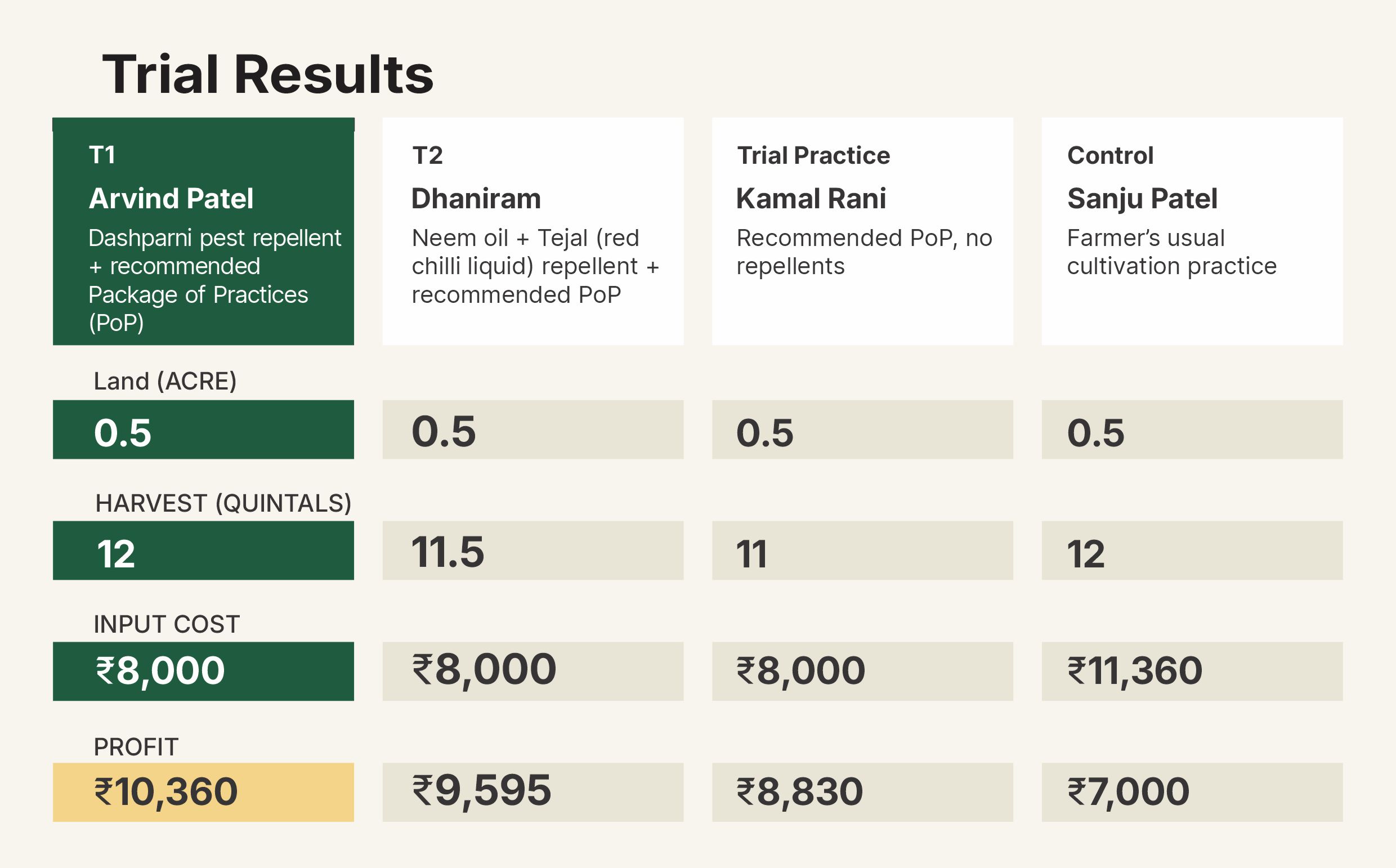
In the second plot, Dhaniram used neem oil and Tejal, a red chilli-based liquid, along with the recommended practices. He recorded the largest cobs, at 11 cm, and produced 11.5 quintals, earning a net profit of ₹9,595. The third plot, managed by Kamal Rani and following the recommended practices alone, produced 11 quintals and a net profit of ₹8,830.
The tallest plants, at 146 cm after 60 days, were recorded in the third plot, yet it did not earn the most. Project staff said the results show that plant height and cob size alone do not decide profitability. “Production and cultivation costs must also be considered,” the field team noted.
Preparing the field
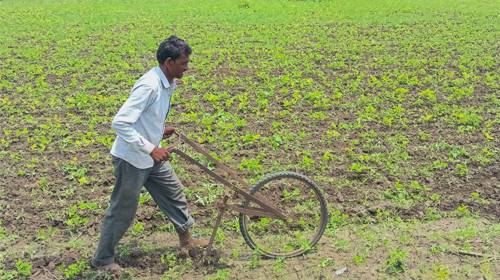
Arvind applied a trolley-load of farmyard manure before sowing and treated his 4 kg of seed with Beejamrit and Trichoderma two days earlier. Sowing was done between June 15 and July 5 with 25-30 cm spacing. He added about 100 kg of vermicompost, weeded manually twice, applied around 100 litres of Jeevamrit per dose at two growth stages, and installed pheromone traps a month after sowing.
Watching for climate risks
SAFBIN’s crop vulnerability assessment, carried out in summer 2026, identified high temperatures, heavy rainfall and Fall Armyworm as the main threats to maize in the region. Project-level estimates suggest the pest could cause nearly 40% damage at the vegetative stage, potentially affecting 70% of farmers, and around 50% damage at silking, affecting about 60%. No such damage was observed in Mr. Patel’s plot. Officials clarified that the figures reflect broader risks, not losses recorded in his field.
Learning that travels
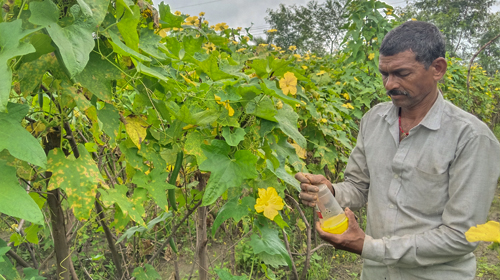
Before joining SAFBIN in 2024, Mr. Patel grew mainly soybean with chemical inputs, and yellow mosaic disease and rising costs left his family dependent on a single crop. Since 2025 he has attended about 20 Farmer Field School sessions and now also grows chickpea, lentil, potato, pea, brinjal, okra and chilli. Vegetables alone bring in an estimated ₹23,000 a year.
“SAFBIN has changed the way I look at farming,” Mr. Patel says. “I want to share my learning with fellow farmers so that we can learn from one another, reduce farming risks, and build more sustainable and profitable livelihoods.”
Project officials said continued documentation and comparison across seasons would help identify practices best suited to local conditions for wider adoption among smallholder farmers in Sagar.
Upcoming News
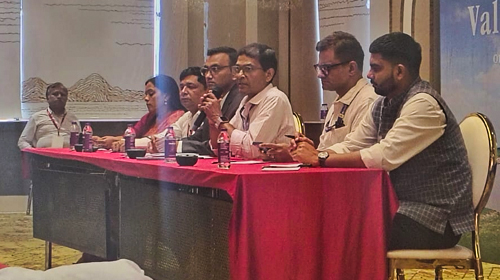
Experts call for last-mile flood early warning systems along Bihar’s ‘ghost river’
Experts, government representatives and community leaders participating in a two-day workshop here have called for...
LEARN MORE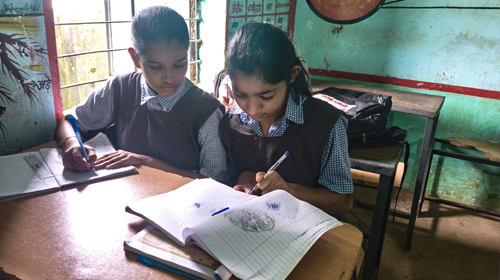
Take Me to School Every Day: Gunjan’s Determination That Changed Her Story
For 14-year-old Gunjan Bhardwaj of Kewradih village, the words “Take me to school every day…”...
LEARN MORE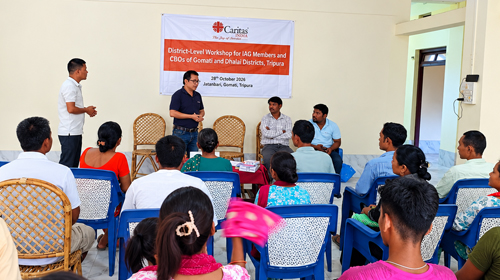
Caritas India Brings IAGs and Community Organisations Together in Tripura to Strengthen Local Resilience
When flood waters rise in the villages of Gomati and Dhalai, the first people to...
LEARN MORE 91 -11 - 23362735
 director@caritasindia.org


