
 91 -11 - 2336 3390
 director@caritasindia.org
Experts call for last-mile flood early warning systems along Bihar’s ‘ghost river’
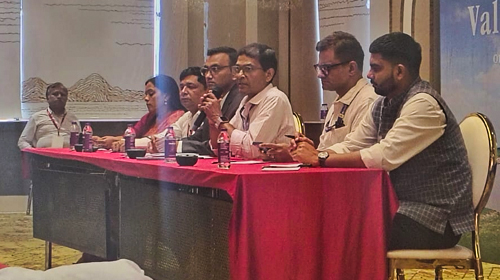
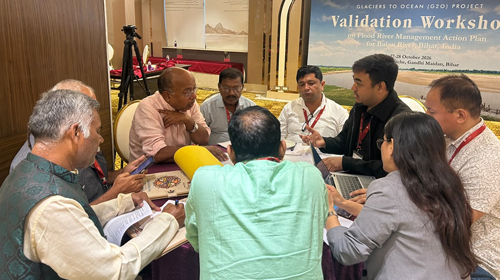
Experts, government representatives and community leaders participating in a two-day workshop here have called for strengthening community-based flood early warning systems and cross-border data sharing between Nepal and Bihar, after a ground-level study found that nearly nine in ten households along the Balan river basin have never received a flood warning in their lives.
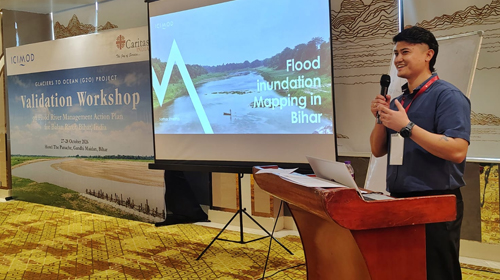
The study outcomes were presented by Caritas India’s research team at the validation workshop on the Flood Management Action Plan for the Balan River Basin, organised by Caritas India in partnership with ICIMOD under the Glaciers to Ocean (G2O) project, supported by the Sasakawa Peace Foundation, Japan. The workshop, held at Patna on October 27–28, brought together the Bihar State Disaster Management Authority (BSDMA), Nepal’s Department of Water Resources and Irrigation, IIT and university researchers, civil society organisations and flood-affected villagers from Madhubani district.
A river with a ghost’s name
For generations, communities along the Balan have called it the “Bhutahi” — ghost — river, a name born of its habit of appearing suddenly and disappearing just as fast, being very unpredictable. Rising in Nepal’s Chure range and entering Bihar near Laukaha in Madhubani, the river floods the same villages almost every year.
The household vulnerability assessment, covering 433 households across 12 flood-prone villages, more than the 400 originally targeted found that 89.1% of households experience flooding every year. For 61%, the water rises above waist height; for one in five households, it stays around their homes for over a month. As many as 96.3% of families identified heavy rainfall on the Nepal side as a cause of the floods, underlining the transboundary nature of the hazard.
“The Balan is easily overlooked because it sits between the bigger Kamla and Kosi basins, but for the families who live along it, it is the only river that matters,” shared Ms. Monisha Majumdar, Caritas India with the participants.
Warnings that never arrive
The study’s most striking finding was the near-total absence of early warning. While 95% of the few households that do receive warnings trust the information, 86.4% of all surveyed households said they had never received a flood early warning, and only 5.8% were aware of any local early-warning instrument.
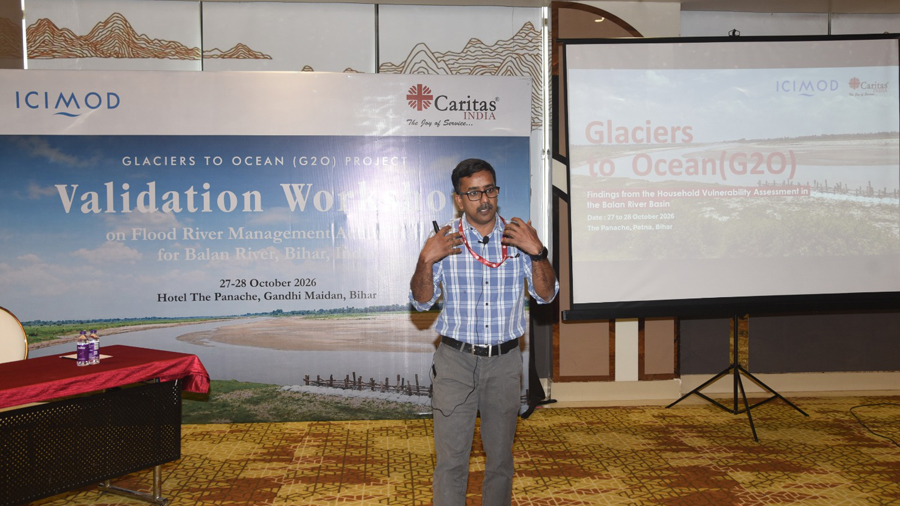
“About half of the warnings that do reach families arrive with less than an hour to act. A warning that comes when the water is already at the doorstep is not a warning, it is an announcement,” stated Dr. Dileesh Varghese from Caritas India while sharing the study outcomes.
The assessment also revealed deep social vulnerability. In 89.8% of households, the decision to evacuate is taken by the male head alone, leaving women, children, older persons and persons with disabilities — 21.2% of respondents themselves reported a disability — with little say in matters of life and death. Only 26.1% of households knew the location of the nearest flood shelter or raised platform, and a mere 3.9% had taken part in a flood preparedness drill in the last three years.
The shoulder that carried a village
Behind the numbers were stories that moved the room. In Phulparas, coordinators recounted meeting a man who had carried his neighbours through floodwater on his shoulders, year after year — and who showed the shoulder that had bent under the weight of that labour. In Gonhi Tola and Kisnipatti, residents described an embankment that is “for some a blessing, for others a curse,” trapping floodwater that can no longer drain away.
The study found that 73.9% of households depend on a single livelihood, mostly climate-sensitive agriculture, and that nearly four in five lack usable sanitation during floods. Matras village emerged as the highest-risk settlement, with Bishanpur, Gonhi Tola, Karihar, Kabcchuwa and Bochahi close behind.
Trust across the border
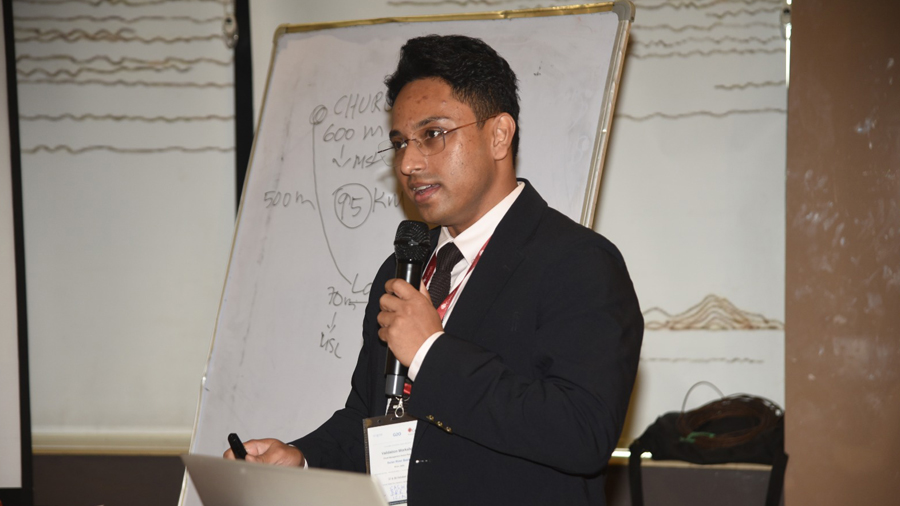
A panel discussion moderated by ICIMOD’s Dr. Saswata Sanyal with Prof. Amrita Dhiman of the Disaster Management Institute, Dr. Anand Bijeta of BSDMA, Manoj Pantha of Nepal’s water resources department and Deepak Jha of Sabal Nepal stressed that the shared “roti-beti” ties between communities on either side of the open border could become the foundation of a people-first early warning network.
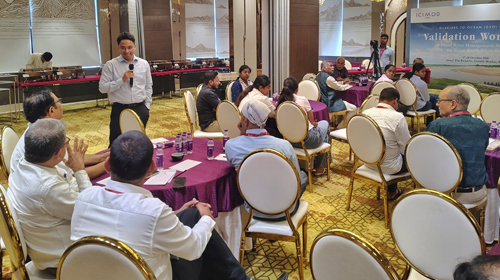
ICIMOD’s sessions showcased tools already at hand: two-day weather forecasts through HIWAT, streamflow predictions with up to 10 days of lead time, and radar-satellite flood mapping that sees through cloud cover. “A community-based early warning system is not just about installing a device; it is about ensuring that communities receive, understand, and act on warnings,” the ICIMOD team said.
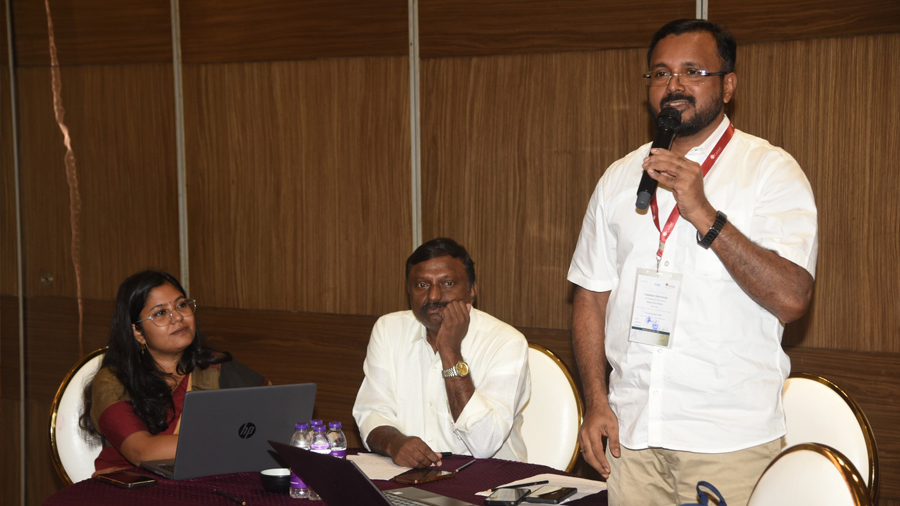
Inaugurating the workshop, Fr. Beeny Edayath, Assistant Executive Director of Caritas India said, “Building flood resilience requires collective action, strong institutional partnerships, and active community participation.”
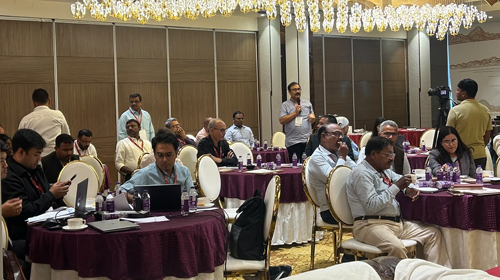
Participants agreed on a roadmap for the next phase: strengthening village-level early warning and evacuation planning, gender-responsive preparedness, livelihood diversification, safe water and sanitation, and formal coordination between BSDMA, the district administration in Madhubani and Nepal’s river authorities, so that the next flood season finds the Balan’s families warned, ready and no longer alone.
Upcoming News
Maize trial in Sagar shows lower-cost farming can match chemical-heavy yields
A farm trial in Tinsua village of Sagar district in Madhya Pradesh has shown that...
LEARN MORE
Take Me to School Every Day: Gunjan’s Determination That Changed Her Story
For 14-year-old Gunjan Bhardwaj of Kewradih village, the words “Take me to school every day…”...
LEARN MORE
Caritas India Brings IAGs and Community Organisations Together in Tripura to Strengthen Local Resilience
When flood waters rise in the villages of Gomati and Dhalai, the first people to...
LEARN MORE 91 -11 - 23362735
 director@caritasindia.org


