
 91 -11 - 2336 3390
 director@caritasindia.org
A Harvest Too Small for the Market? Study Points to the Power of Selling Together
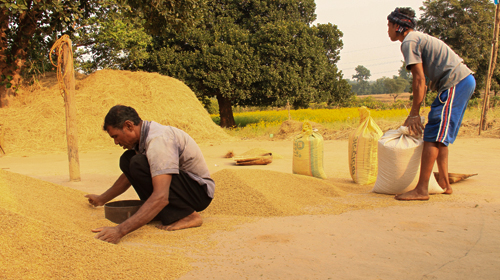
A farmer may have a harvest to sell, yet too little produce to make the journey to a better-paying market worthwhile. Sell close to home, and the price may be lower. Travel farther, and transport costs can erode the return. Caritas India’s Smallholder Adaptive Farming and Biodiversity Network (SAFBIN) programme value-chain study undertaken with smallholder farmers in Madhya Pradesh identifies a way to address this dilemma by bringing farmers’ produce together so they can approach the market with greater volume and stronger negotiating power.
The study’s high-priority recommendation is aggregation, pooling individual farmers’ marketable surplus for collective sale. Rather than each farmer separately finding a buyer, arranging transport and accepting the price available locally, a farmer collective can coordinate these activities and negotiate for a larger quantity of produce.
The problem is not just the price, it is the cost of reaching it.
The report identifies low individual marketable surplus as a recurring barrier to remunerative markets. In its soybean analysis, it notes that transporting small quantities to the district market can be uneconomical, leaving farmers dependent on individual sales to village or local-town traders.
During the study period, farmers reported a soybean price difference of ₹200–₹500 per quintal between villages and Sagar district headquarters, depending on market demand. This difference does not represent a guaranteed additional earning: transport, handling and other marketing costs must also be considered. It does, however, reveal the market-access problem that collective selling seeks to address.
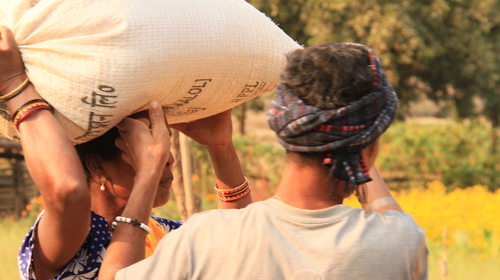
The challenge is therefore not simply to tell farmers where prices are higher. It is to make reaching those markets commercially viable.
The report recommends organising collective marketing through farmer institutions that can pool produce, maintain consistent quality and negotiate across trading channels. Combining quantities could help farmers reach the scale required by larger buyers while coordinating transport and sale arrangements.
This changes the starting point of the transaction. Instead of approaching a buyer with a small individual lot, farmers can offer an aggregated consignment supported by agreed quality standards. The study identifies that volume, quality and collective negotiation is the pathway towards better price realisation.
The recommendation provides a focused direction for agribusiness support: strengthen farmers’ ability to participate in markets together, rather than treating every household as an isolated seller.
Pooling produce will work only if farmers trust the system. The study therefore recommends clear procurement rules, transparent record-keeping, agreed selling arrangements and timely payments. Its proposed action plan includes assessing available quantities, confirming members’ commitents, organising finance and negotiating price, transport and payment terms with buyers.
Timely payment is particularly important. The report describes farmers selling soon after harvest because they need cash for household expenses and loan repayment. A collective marketing arrangement must respond to that reality; a potentially better price is of limited use to a farmer who cannot afford to wait for payment.
The report also cautions against relying on a one-time market linkage. It calls for a sustainable collective marketing system, supported by leadership, market information, business planning and continued handholding.
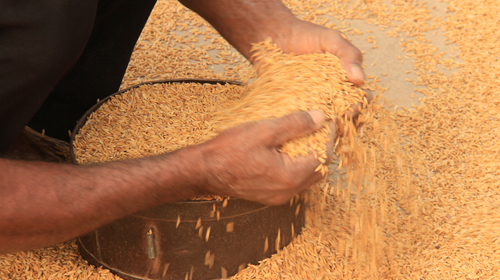
The study establishes the case for collective selling; it does not establish that the proposed approach has already increased farmers’ incomes. Its value lies in identifying a practical intervention that SAFBIN can pursue and assess.
The test of success should be straightforward after transport, handling and collective operating costs, do participating farmers receive a better net return and are they paid on time?
The report has identified where an agribusiness response can begin. For farmers whose individual harvests are too small to reach larger markets economically, the proposed route is not necessarily to grow more first. It is to organise what they already have and take it to market together.
Upcoming News

Bringing Water Closer to Home: An Inclusive Community Resilience Initiative in Assam
When floodwater enters 13/10 Grant Village in Assam, it also reaches the sources families depend...
LEARN MORE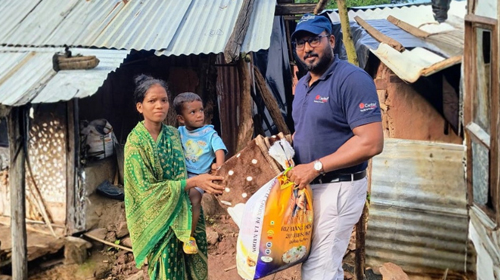
Caritas India Rushes Relief to Cyclone Arnab Hit Families in Odisha’s Gajapati
Caritas India has begun distributing emergency ration kits and blankets to families battered by Cyclone...
LEARN MORE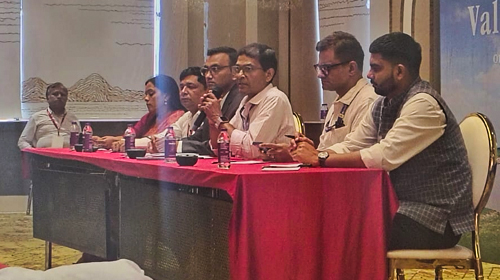
Experts call for last-mile flood early warning systems along Bihar’s ‘ghost river’
Experts, government representatives and community leaders participating in a two-day workshop here have called for...
LEARN MORE 91 -11 - 23362735
 director@caritasindia.org


