
 91 -11 - 2336 3390
 director@caritasindia.org
16 Children in Surguja Step Into Hostels and a Brighter Future
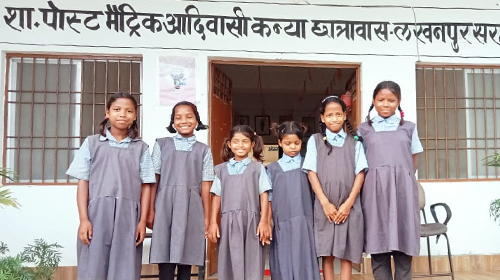
For nine-year-old Parvati, the road to school was always the hardest part of the day. Living in the remote village of Bendopani in Surguja, Chhattisgarh, she often wondered whether she would be able to keep studying at all.
“I want to study further and achieve something in my life,” she says. “Earlier, reaching school was difficult, and I was worried about whether I could continue my education. Now, I am happy that I can stay in the hostel and study regularly.”
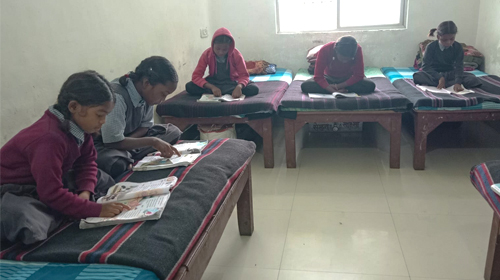
Parvati is one of 16 children from Bendopani and Remhla villages who secured admission to Tribal Department hostels in July 2026. Fifteen of them belong to Particularly Vulnerable Tribal Groups (PVTGs). Many were at risk of dropping out because of difficult family circumstances, limited parental care and little support for their education. For them, schooling meant more than enrolment. They needed a safe place to stay, regular meals, help with their studies and an environment where they could learn without fear or uncertainty.
The change began with the community itself. Under the Khushaal Bachpan (KB) Programme, supported by Caritas India and Caritas Australia, the KB team worked closely with Bal Panchayat members, the children’s village-level forums, to find children who were struggling to stay in school.
“During our village interactions, we identified children who were finding it difficult to attend school because of their family situations,” says Vikash Korva, a Bal Panchayat member from Bendopani. “We wanted these children to have the opportunity to study regularly and build a better future.”
Ghuran, a Bal Panchayat member from Remhla, shares the same concern. “We understood that some children were at risk of leaving school because they were not receiving enough support at home,” he says. “We are happy that these children have now received an opportunity to continue their education.”
The Bal Panchayat members identified the children, spoke with their families and motivated them to pursue their education. The KB team then guided the admission process and coordinated with the hostel authorities.
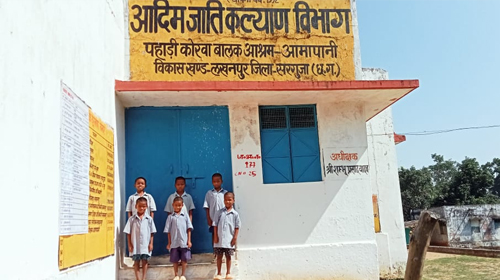
The 16 children, aged 6 to 14 and studying in Classes 1 to 6, have been placed in four hostels run by the Tribal Department. Six children are now at Ashram Amapani Hostel, three at Lakhanpur Hostel and one at Kunni Hostel. The six girls have found a home at Belkhrikha Girls’ Hostel.
For the girls, the move matters especially. Belkhrikha Girls’ Hostel is about 13 kilometres from their homes, too far to travel every day. “We are happy to welcome these children and provide them with a safe environment where they can continue their education,” says Luciya Lakra, Superintendent of the hostel. “We hope they will make good use of this opportunity and achieve their educational goals.”
Upcoming News
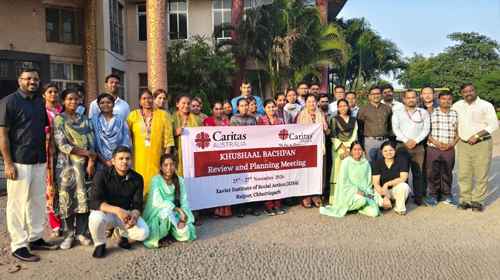
Khushaal Bachpan Sets Sights on Becoming a “Model Programme”
The Khushaal Bachpan (KB) programme will aim to become a model for child-centred development in...
LEARN MORE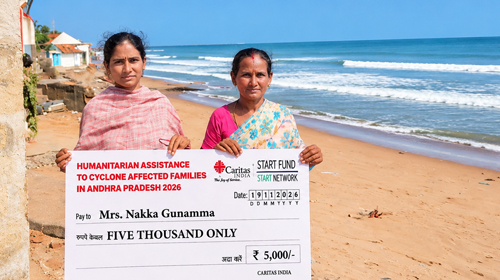
Caritas India extends humanitarian assistance to cyclone affected families in Andhra Pradesh
Caritas India, in collaboration with Diocesan Social Services, has initiated humanitarian assistance for cyclone affected...
LEARN MORE
Madhya Pradesh dioceses learn from Kerala’s Biowin model to build farmer-owned agro-enterprises
Social service societies from across Madhya Pradesh were oriented on building sustainable, farmer-centred agro-enterprises at...
LEARN MORE 91 -11 - 23362735
 director@caritasindia.org


