
 91 -11 - 2336 3390
 director@caritasindia.org
Khushaal Bachpan Sets Sights on Becoming a “Model Programme”
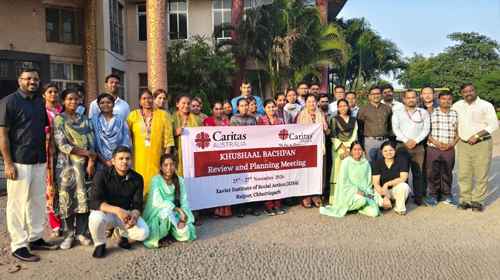
The Khushaal Bachpan (KB) programme will aim to become a model for child-centred development in its fourth year, with a sharper focus on measurable results, community ownership and child-led action, after a three-day review and planning meeting at XISA, Raipur.
Held from 25 to 27 November, the meeting brought together the State Programme Team, District Programme Associates (DPAs) and other key functionaries to review progress, discuss challenges and plan the year ahead.
Fr. Benny Edayath, Assistant Executive Director, Caritas India, delivered the keynote. He praised the programme’s progress and said KB should show how child-centred development, community participation, local governance and sustainable change can work together. He urged the team to focus on measurable impact, strengthen community ownership and create practices others can replicate.
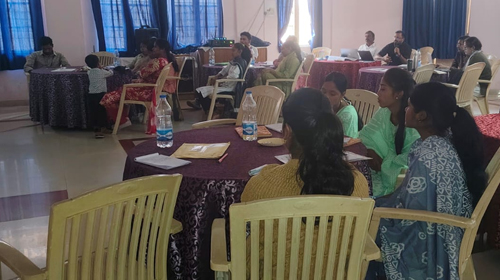
Teams from Raipur, Jashpur, Raigarh, Bastar and Surguja shared their work. Members of Bal Panchayat are attending Gram Sabha meetings and submitting memorandums to Gram Panchayats on village problems and basic civic amenities. Child Champions are also identifying out-of-school and dropout children through household surveys and family visits, and helping them return to school.
In Jashpur, a Learning Centre continued to function under a Peer Learning Educator in the absence of an Academic Mentor, showing the potential of peer-led learning. Ludo was used in mental health sessions and Snakes and Ladders to raise menstrual hygiene awareness. Boys were trained as Menstrual Hygiene Management Champions to reduce stigma.
A women’s group proposed making their village free of substance abuse. The Gram Sabha passed the proposal and formed a committee to monitor it. Children led awareness rallies, wall-writing and campaigns on education, child protection, cleanliness and the environment, while community members painted awareness messages on walls. A low-cost drainage system using local materials was built in a school to address waterlogging.
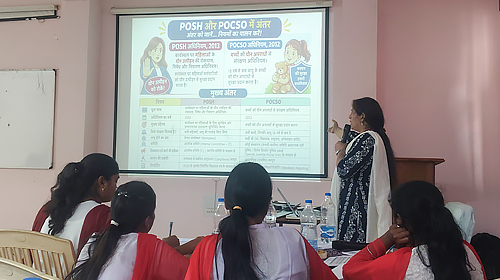
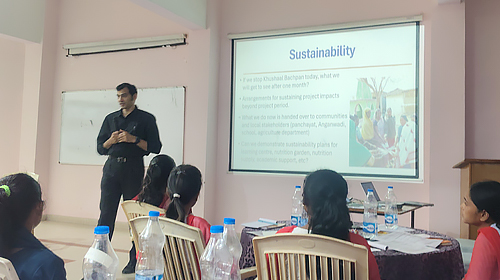
During the first two days, the meeting held thematic sessions on safeguarding, healthy workplace relationships, research and data management, disability inclusion, impact envisioning, project sustainability and programme management. Observations from field visits and suggestions for improving the programme were also discussed.
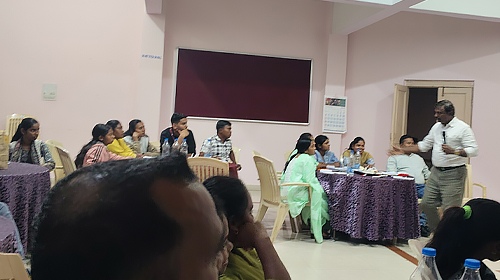
The meeting reviewed the activity plan and budget and resolved to strengthen the roles of DPAs, CEs and AMs, improve finance and procurement coordination, and develop knowledge products to document the programme’s impact.
On the final day, districts reviewed their targets and achievements and prepared district-specific thematic action plans. The agreed priorities are project sustainability milestones, knowledge development, visibility, decentralised leadership and closer coordination between the Head Office and field teams.
Upcoming News
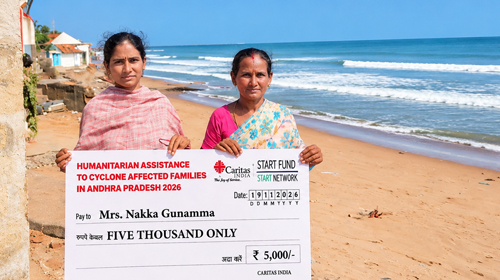
Caritas India extends humanitarian assistance to cyclone affected families in Andhra Pradesh
Caritas India, in collaboration with Diocesan Social Services, has initiated humanitarian assistance for cyclone affected...
LEARN MORE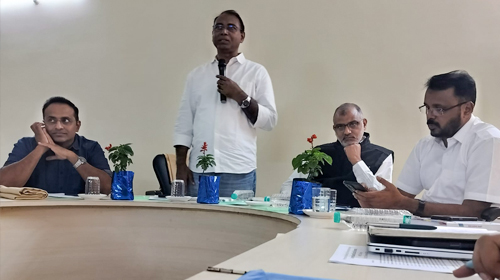
Madhya Pradesh dioceses learn from Kerala’s Biowin model to build farmer-owned agro-enterprises
Social service societies from across Madhya Pradesh were oriented on building sustainable, farmer-centred agro-enterprises at...
LEARN MORE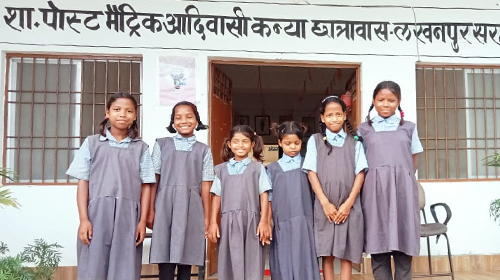
16 Children in Surguja Step Into Hostels and a Brighter Future
For nine-year-old Parvati, the road to school was always the hardest part of the day....
LEARN MORE 91 -11 - 23362735
 director@caritasindia.org


