
 91 -11 - 2336 3390
 director@caritasindia.org
Collective Work by Farmer’s Clubs to Strengthen and be Self-Sustained Groups
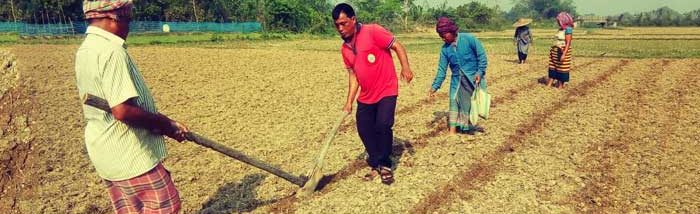
Collective farming has emerged as one of the transformative and sustainable practices that have been strongly promoted under the aegis of Facilitating Agricultural Regeneration Measures (FARM) Northeast programme towards achieving self-reliance of the communities. The programme aims to have sufficient food production and nutritional intake as per their cultural food habits, adopt and promoted indigenous seeds for cultivation and consumption and have control over the local market for the sale of excess organic products.
Jana Unnayan Samiti Tripura (JUST) with support from Caritas India, is implementing the FARM programme, funded by Misereor, Germany to Empower Community for Nutritional food intake in West and Khowai Districts of Tripura.
The smallholder farmers from Uruabari and Kolaghat villages under Hezamara R.D Block in West Tripura District in Tripura have always been interested to form groups to access improved knowledge and technology to promote agricultural practices towards improving economic status. Motivations and encouragement by the JUST team helped Mr. Sambhu Debbarma from Kolaghat village to take lead in organizing his people to form groups. He also donated land in 2 places for the groups to do their collective farming for their income generation.
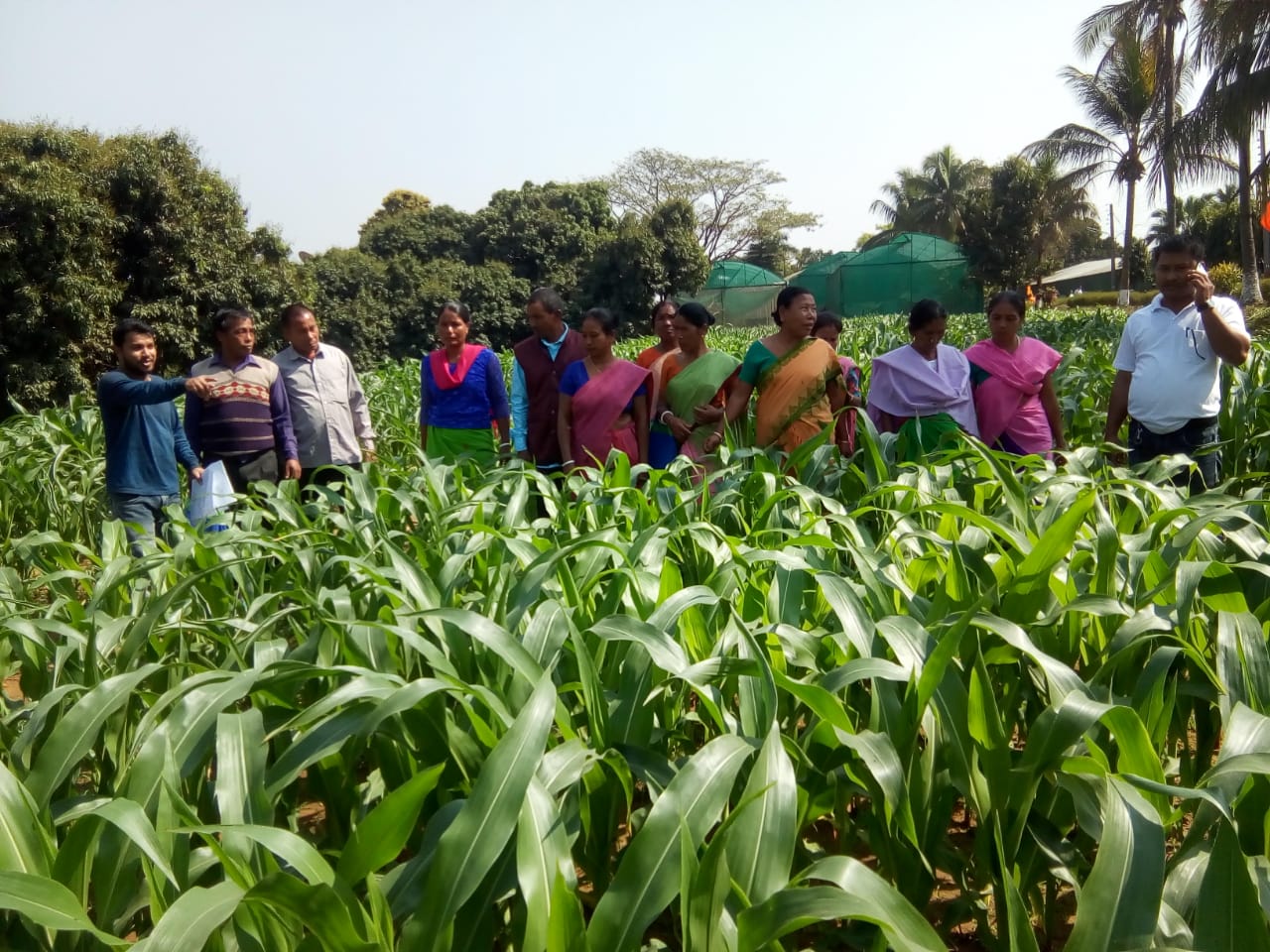
During the intervening months of February and March 2020, FARM team of JUST organised an exposure of the farmers to a Workshop cum capacity building program on Maize as Food-Feed Crop for Farmer’s Prosperity at ICAR, Agartala. Having participated in the workshop the farmers got motivated to carry out maize cultivation. Seeing the level of motivation, JUST facilitated the farmers and they mobilized improved Maize and paddy seeds from ICAR.
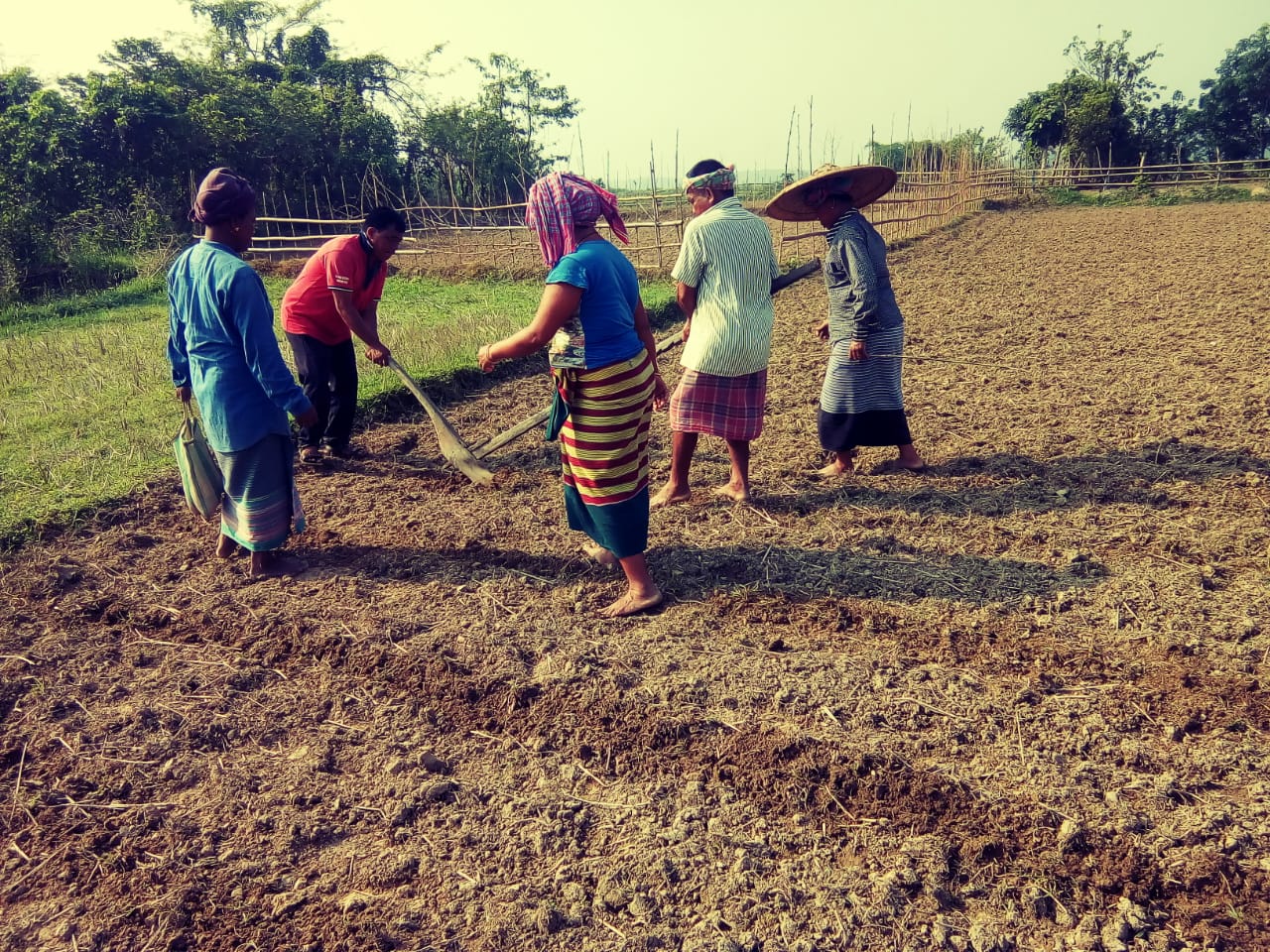
Upon receiving the seeds, the 2 farmers’ clubs decided for collective cultivation. They carried out maize cultivation consecutively for 3 times at 4 kani (1.2 acres) field and earned about Rs. 75,000/- approximately during the first season. Then the 2 groups also cultivated paddy at 5 kani (1.5 acres) which will be harvested by end of November or First week of December 2020. They are expecting to earn at least Rs. 20,000/- to Rs. 25,000/- approximately.
This motivated the farmers from the nearby project villages when they came in contact with the 2 active groups during an exchange programme. They have shared that they would also plan out cultivation by adopting such a successful model during the upcoming season.
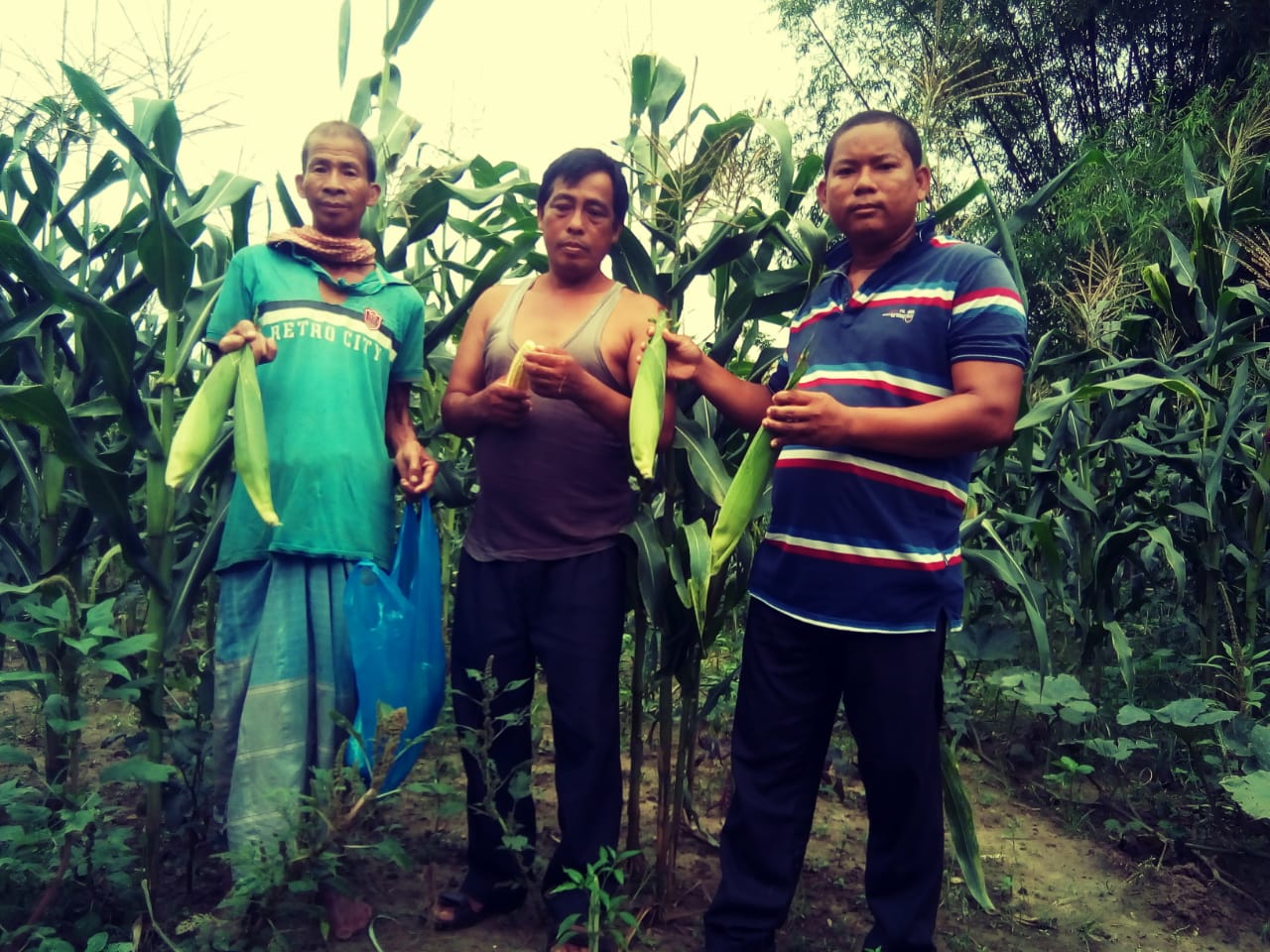
Seeing the success of this intervention JUST plans to take forward this model to other FARM NE project villages. JUST further plans to link farmers with other Government Departments other than ICAR to strengthen linkages with government schemes and projects to generate the required assistance to benefit the smallholders.
Upcoming News
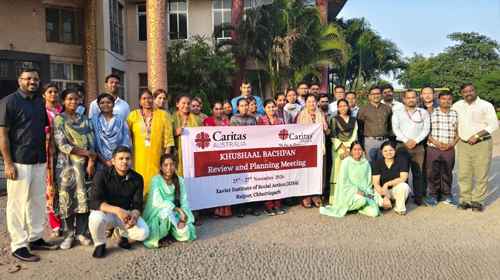
Khushaal Bachpan Sets Sights on Becoming a “Model Programme”
The Khushaal Bachpan (KB) programme will aim to become a model for child-centred development in...
LEARN MORE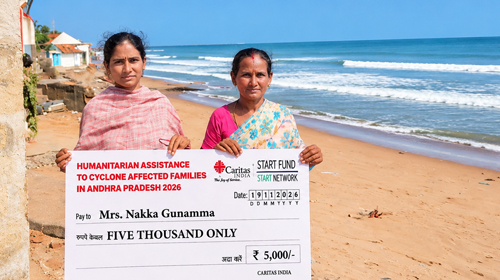
Caritas India extends humanitarian assistance to cyclone affected families in Andhra Pradesh
Caritas India, in collaboration with Diocesan Social Services, has initiated humanitarian assistance for cyclone affected...
LEARN MORE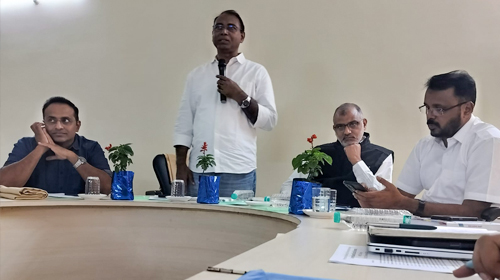
Madhya Pradesh dioceses learn from Kerala’s Biowin model to build farmer-owned agro-enterprises
Social service societies from across Madhya Pradesh were oriented on building sustainable, farmer-centred agro-enterprises at...
LEARN MORE 91 -11 - 23362735
 director@caritasindia.org


