
 91 -11 - 2336 3390
 director@caritasindia.org
Leading the Path: Journey from a Para Worker to a Lead Trainer
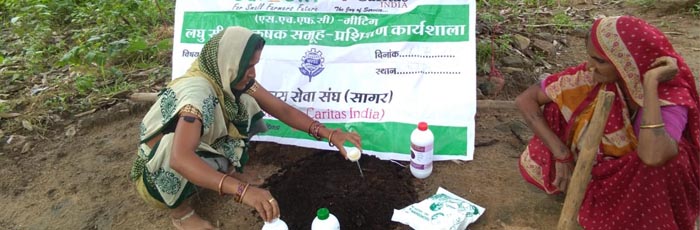
Progressive farmer Nagina Bee has not used chemical fertilisers on her 2.5 acres farm for the last three years and working to improve the soil health by integrating nutrient and bio pest repellents from her own farm waste. Not only her harvest has increased but the input cost has drastically reduced by adopting these farming practices.
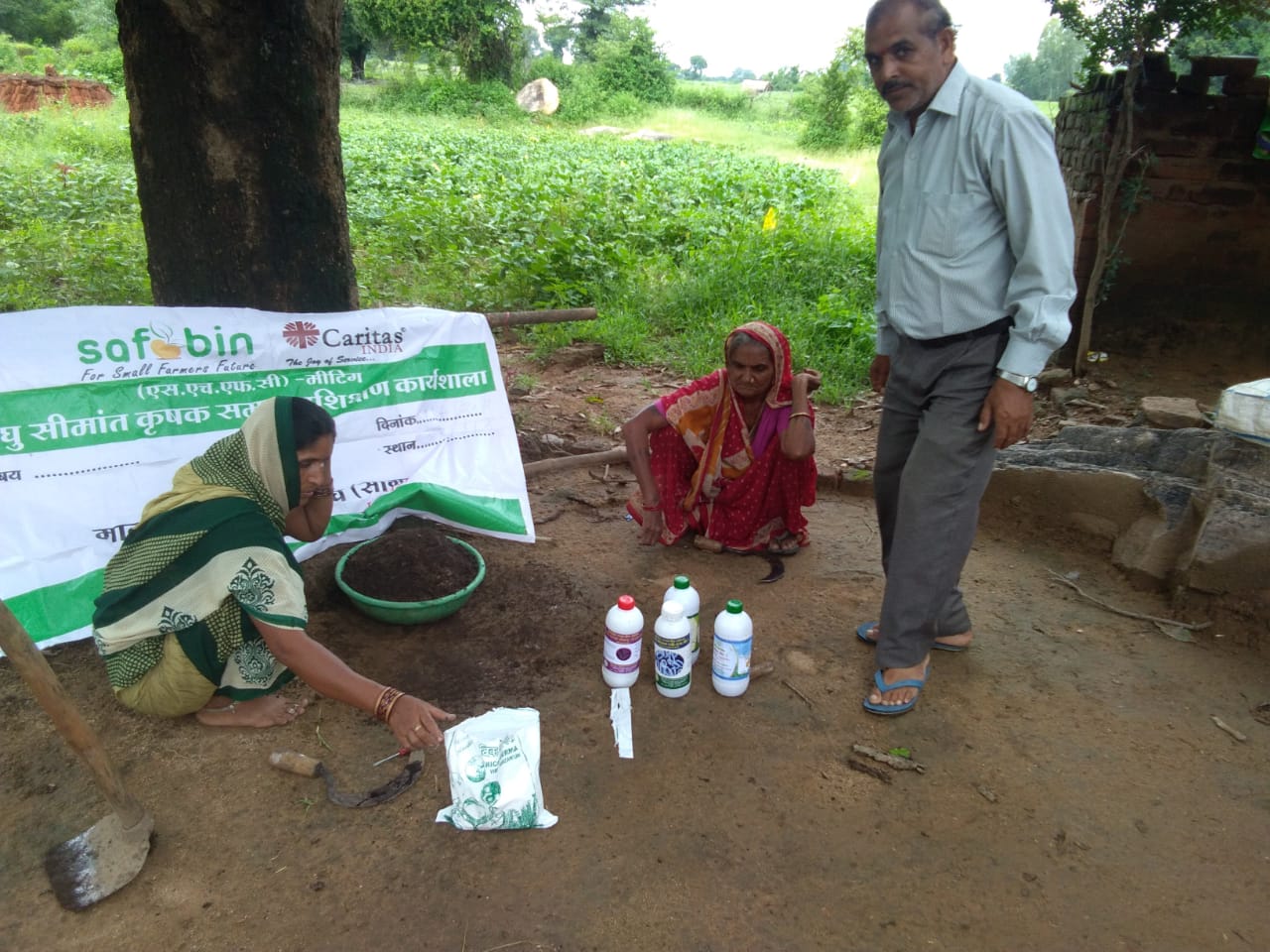
She gathered the knowledge about preparation of botanicals & bio pest repellents from the Caritas India SAFBIN program which is being implemented by Manav Vikas Seva Sangh in Sagar, Madhya Pradesh. She has put this knowledge into practice by applying to her field and received encouraging results.
Nagina has never been to school and got married at a very early age. The early death of her father in law pushed to migrate with her husband. For one year, the couple sustained through intense labour work in the city but returned to their village as it becomes difficult to survive there.
She purchased a small piece of land in Amarmau (SAFBIN adopted village) and started cultivating but realized to improve her skill & knowledge for better production. She started following the activities organized several organisations and local department, but the knowledge shared by those were limited and around conventional farming practices which she found more cost-effective and has to depend on external market for inputs.
In one of the communities meeting, she met our village research person (VRP) of SAFBIN programme at her village Amarmau where she learned about objective & purpose of the program and the features of smallholder friendly techniques in the context of changing climate conditions. She showed a keen interest and discuss with VRP and ensured her presence apart from her domestic responsibilities. The learnings gained from the training was tested at home by preparing organic manure.
While preparing such botanical from her own farm waste, she could reduce the input cost significantly and decided to share this learning with women of her hamlet and motivate them to follow the same practices.
Witnessing the farmers centric, farmers led approach, she was being offered an opportunity to in SAFBIN programme as a volunteer and started facilitating the members of smallholder farmers collective. As of now, she has trained almost 100 farmers to prepare low cost organic botanicals like Matka khad, jeevamrit, lamitark, dasparni ark, etc.
Caritas India through its SAFBIN programme is working to build resilience to climate change while maintaining farm ecosystem. The programme promotes traditional wisdom by enabling low cost, environment-friendly, simple and innovative local solutions.
Upcoming News
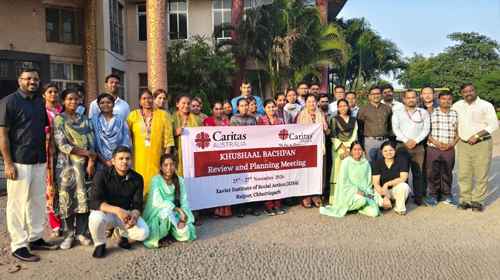
Khushaal Bachpan Sets Sights on Becoming a “Model Programme”
The Khushaal Bachpan (KB) programme will aim to become a model for child-centred development in...
LEARN MORE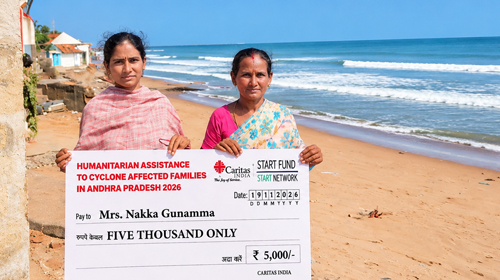
Caritas India extends humanitarian assistance to cyclone affected families in Andhra Pradesh
Caritas India, in collaboration with Diocesan Social Services, has initiated humanitarian assistance for cyclone affected...
LEARN MORE
Madhya Pradesh dioceses learn from Kerala’s Biowin model to build farmer-owned agro-enterprises
Social service societies from across Madhya Pradesh were oriented on building sustainable, farmer-centred agro-enterprises at...
LEARN MORE 91 -11 - 23362735
 director@caritasindia.org


