
 91 -11 - 2336 3390
 director@caritasindia.org
Integrated WADI Development for Tribal Farmers of Darjeeling District through NABARD –CARITAS CSR support
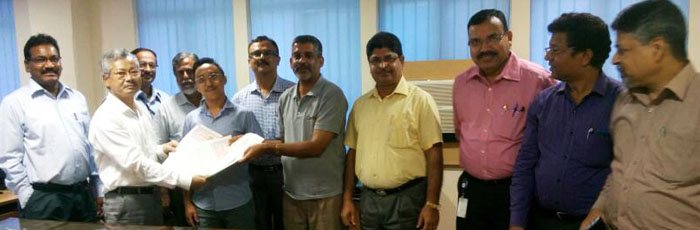
Five hundred tribal households from fifteen villages of Gorubathan block, Darjeeling district will get benefit of Integrated WADI model of development.
Recently an MOU is signed between National Bank for Agriculture and Rural Development (NABARD), CARITAS INDIA and its partner Anugyalaya in the month of May’17.
The proposed intervention will enhance the income and employment potential through land based alternate livelihood options, and by supporting social development of participating families including women’s empowerment process.
It will also create a replicable model in the region for scaling up in future during a span of 6 years.
CARITAS INDIA, NABARD and district officials of horticulture and Agriculture have taken up gorubathan block under Kalimpong sub division as the WADI model area.
‘WADI’ is an integrated tribal development initiative of NABARD which supports various welfare projects for Scheduled Tribes in the country under its Tribal Development Fund.
This is the first model in the CSR mode in the eastern zone of NABARD where NABARD and CARITAS has agreed for a collaboration in 70:30 ratio to support Anugyalaya partner for implementation of WADI in the gorubathan block.
Gorubathan is predominantly inhabited by tribal people and other backward classes and most of the people are engaged in agricultural and allied activities. The farmers have smallholdings and are small or marginal farmers practicing subsistence traditional agriculture. Productivity is not maximized within their existing assets.
Animal husbandry practices are integral part of farming systems for their subsistence, which does not address issues of nutrition, health and hygiene and scientific integration into the farming system.
Under this intervention each farmer will devote at least 1 acre of land under WADI model under fruit trees, ie improved Guava varieties, khasi orange and kiwi as a potential fruit crop in the higher altitude i.e. 440 metre.
Along with this, some non-WADI interventions are also included primarily on animal resources, IGA through vegetable production and vending, bee keeping etc. to ensure better livelihood of people.
Apart from this, capacity building support will be provided to the Community on Health and Education measures, Nutrition, Crop and Animal Safety along with Business development plan and networking.
The other important stakeholders involved in the project planning and technical consultations are district and block agriculture and horticulture Department, Uttar Banga Krishi Viswavidyalaya, Kalimpong research Centre, KVK of Kalimpong and state horticulture directorate, GOWB.
Upcoming News
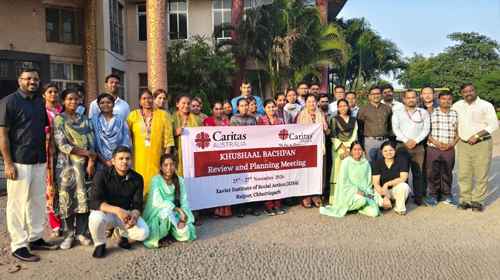
Khushaal Bachpan Sets Sights on Becoming a “Model Programme”
The Khushaal Bachpan (KB) programme will aim to become a model for child-centred development in...
LEARN MORE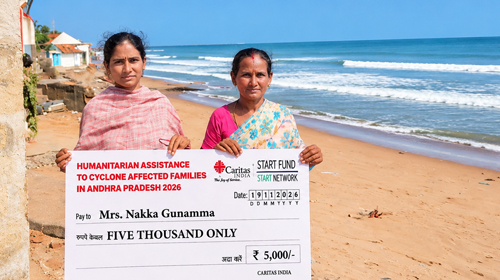
Caritas India extends humanitarian assistance to cyclone affected families in Andhra Pradesh
Caritas India, in collaboration with Diocesan Social Services, has initiated humanitarian assistance for cyclone affected...
LEARN MORE
Madhya Pradesh dioceses learn from Kerala’s Biowin model to build farmer-owned agro-enterprises
Social service societies from across Madhya Pradesh were oriented on building sustainable, farmer-centred agro-enterprises at...
LEARN MORE 91 -11 - 23362735
 director@caritasindia.org


