
 91 -11 - 2336 3390
  director@caritasindia.org
 A Grocery Shop, a Mother’s Resolve, and Three Daughters Who Stayed in School
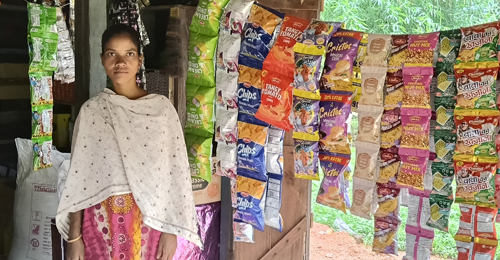
Three young girls in this remote village are attending school regularly today because their mother now runs a grocery shop from her home. Meenakshi is in Class 3, Pavitra in Class 1, and their younger sister Angel goes to the local Anganwadi Centre. A year ago, their parents were not sure they could keep affording their notebooks, uniforms, and school supplies.
The shift came through a small but decisive intervention. In April 2026, Caritas India’s Khushaal Bachpan Programme provided Rukmani Bai Ekka with the materials and stock to open a grocery shop in her home. Within months, the family’s income stabilised, the girls’ education was secured, and Rukmani Bai became, for the first time, a primary earner and decision maker in her household.
“The Khushaal Bachpan Programme gave me more than a grocery shop, it gave me the confidence that I could earn with dignity and build a better future for my children,” Rukmani Bai says.
Why one family’s story matters to many
Sihardand is a village where most households depend on seasonal farming and daily wage labour, work that is irregular by nature and offers no guarantee of income from one week to the next. When that uncertainty meets a family’s fixed obligations, school fees, uniforms, notebooks, it is almost always children’s education that gives way first. This is not a story unique to the Ekka family. It is the pattern behind why so many children in India’s rural and tribal belts drop out of school not because their parents do not value education, but because they cannot consistently afford it.
Rukmani Bai and her husband, Sudheer Ekka, lived this pattern for years. Whatever they earned through occasional labour went toward food and daily needs, leaving little for their daughters’ schooling. There were stretches when buying a school uniform or a set of notebooks felt out of reach, and the family feared their daughters’ education could be interrupted altogether.
How the intervention worked
The change began not with a grand gesture but with a home visit. Field teams under the Khushaal Bachpan Programme regularly visit households in project villages to understand the conditions children are growing up in. During one such visit to the Ekka household, the team recognised a vulnerable family and, just as importantly, a woman willing to work but without the capital to start anything on her own.
This is where the programme’s underlying philosophy comes into play. Khushaal Bachpan is built on a simple but often overlooked understanding: a child’s education can only be sustained when a family’s economic situation is stable. School fees can be waived and scholarships can be offered, but if parents are still uncertain about their next meal, education is usually the first thing to be sacrificed. Rather than treating school dropout or irregular attendance as the problem to be fixed, the programme looks upstream, at the economic fragility that causes it. This is why the team works to identify the most marginalised families in each village and support them with income generating activities suited to their skills and circumstances, addressing the root cause rather than the symptom.
After assessing the household’s circumstances, the team identified grocery retailing as a livelihood option well suited to Rukmani Bai. It offered the possibility of a steady income while allowing her to remain close to home and manage her children’s needs alongside the business. This reflects how Caritas India designs its Khushaal Bachpan interventions more broadly, addressing not just a single need but working across education, livelihood, and child protection together, so that a family’s economic stability and a child’s right to learn are treated as connected outcomes rather than separate problems.
The programme counselled the family on building a sustainable, home based enterprise and then, in April 2026, supplied the grocery materials needed to get it running. This falls under the programme’s Income Generating Activity component, one of several tools it uses to strengthen the economic footing of vulnerable families identified through community level engagement.
From a few shelves to a steady income
Rukmani Bai started small, stocking only essential household items in the early weeks. She managed the shop carefully, kept quality consistent, and slowly built trust among her neighbours, who valued not having to travel further for daily essentials. As her customer base grew, so did her confidence.
The Khushaal Bachpan team did not step back after the initial support. Field staff continued to visit, encouraging her to maintain adequate stock, set aside part of her earnings, and reinvest in expanding the shop. This ongoing mentoring, as much as the initial materials, shaped how effectively the business took root.
The results reached well beyond the shop’s shelves. The family could now buy groceries without borrowing, meet household expenses on time, and provide school uniforms, books, and notebooks whenever their daughters needed them. The anxiety that once accompanied every school related expense has given way to routine.
Sudheer Ekka describes the change plainly: “Earlier, it was painful to see our daughters asking for school materials when we did not have enough money to buy them. Since my wife started the grocery shop, our situation has changed. We can now manage household expenses with greater confidence, and our daughters are continuing their education without interruption. Seeing my wife become financially independent has also brought respect and confidence to our family.”
A wider ripple in the village
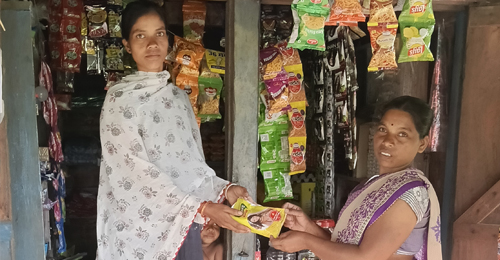
The shop has changed more than the family’s finances. Rukmani Bai now takes a larger role in household decisions, plans expenses with more confidence, and contributes actively to savings. Her example has not gone unnoticed. Other women in Sihardand have begun exploring livelihood options of their own, encouraged by seeing a neighbour build something lasting out of very little.
Rukmani Bai now hopes to expand her shop by adding new products, with an eye toward higher and more stable earnings. Her stated goal is simple and specific: to see all three of her daughters educated and given opportunities that were once out of reach for the family.
The larger picture
Khushaal Bachpan is an integrated programme run by Caritas India across four states, Chhattisgarh, Rajasthan, Madhya Pradesh, and Uttar Pradesh, including districts such as Jashpur, Bastar, Raipur, Raigarh, and Surguja. The programme works to ensure children have a safe, happy, and dignified childhood by building an enabling environment around them, engaging parents, communities, and institutions such as schools and health services alongside government systems already working for child welfare.
The initiative, developed jointly with Caritas Australia, was launched as a five year, multi state programme running from 2023 to 2027, designed after research into how the socio economic conditions facing children in India had shifted following the COVID 19 pandemic.
Rukmani Bai Ekka’s grocery shop is a small piece of that larger design. It demonstrates the principle that runs through the programme’s approach: that a child’s education is only as stable as the family’s economic ground beneath it. Rather than responding to school dropout after it happens, Khushaal Bachpan works further back, identifying the most economically marginalised families in a community and helping them build a sustainable source of income. Financial independence, in this view, is not a side benefit of the programme, it is the foundation on which everything else, attendance, learning, safety, and dignity, is built. When parents have a stable income, children stay in school. When one woman gains economic independence, the effects move outward, into her household’s decisions, her daughters’ futures, and her neighbours’ aspirations.
Upcoming News
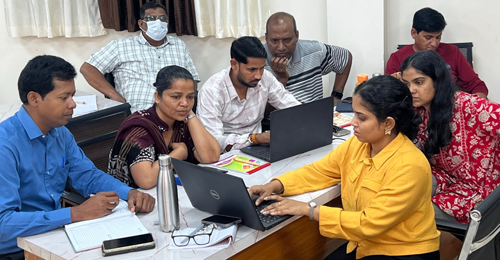
Caritas India Trains Partner Organisations in Evidence Based Project Proposal Writing
Some of the strongest community projects never get built, not for lack of need or...
LEARN MORE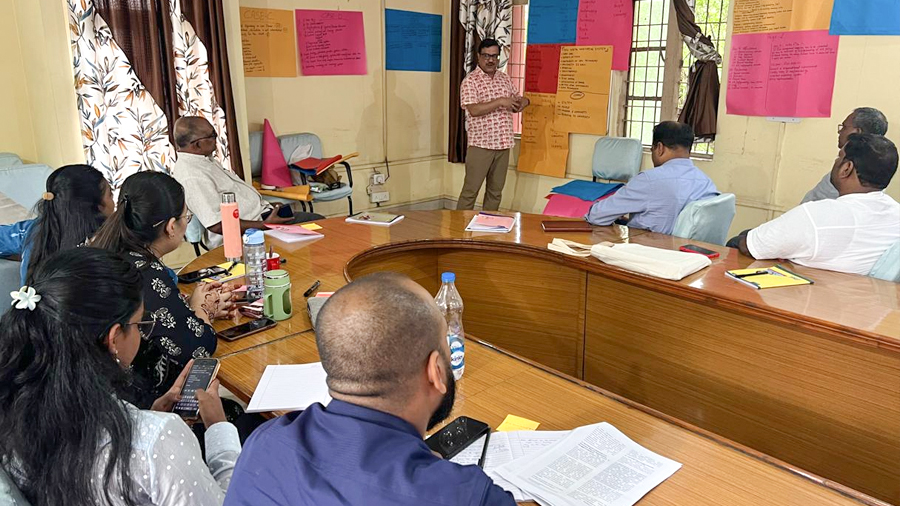
When NGOs Grow, What Breaks First? Caritas India Tackles the Answer in Raipur
Three-day workshop arms executive leaders with governance tools, a 20-policy framework and practical fixes for...
LEARN MORE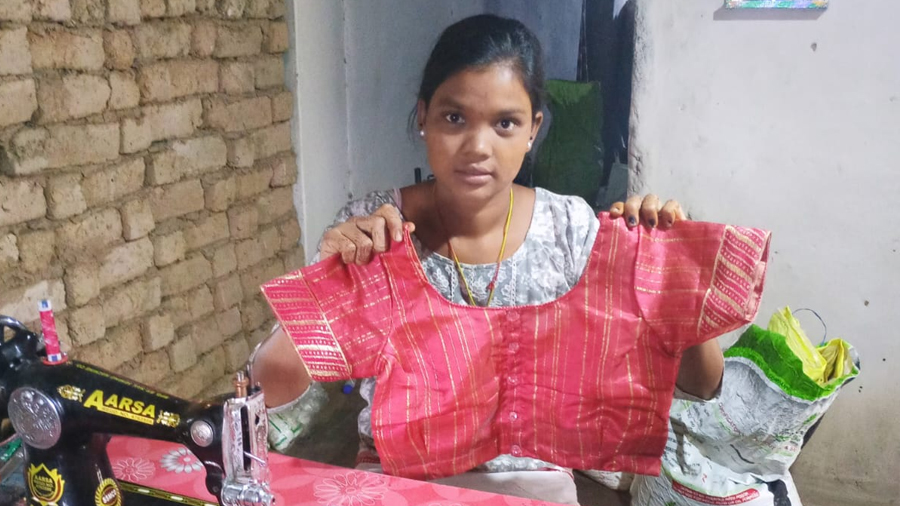
Nine Kilometres Through the Jungle: How Poornima Stitched Her Own Future
For 19 year old Poornima Rawat of Rajamma village in Lailunga block of Chhattisgarh's Raigarh...
LEARN MORE 91 -11 - 23362735
  director@caritasindia.org


