
 91 -11 - 2336 3390
  director@caritasindia.org
 Caritas India Trains Partner Organisations in Evidence Based Project Proposal Writing
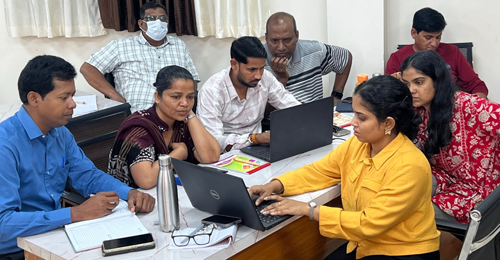
Some of the strongest community projects never get built, not for lack of need or lack of will, but because the proposal asking for funds never made the case convincingly enough. It is a quiet failure that repeats across the development sector every year, and it was precisely this gap that Caritas India set out to close with a three day workshop held from 15 to 17 September 2026 at Janvikas Society, Palda, Indore.
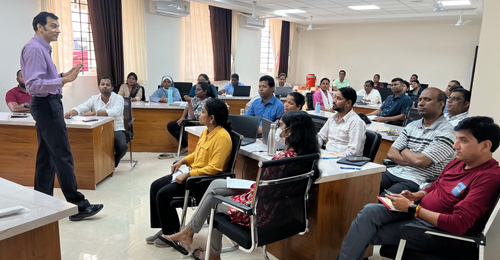
Facilitated by Dr Saju and coordinated by Mr Haridas, the Project Proposal Development Workshop brought together staff from partner organisations to learn how to turn a community problem they already understand deeply into a proposal a donor can understand just as clearly. Over three days, participants worked through the full arc of proposal development, from analysing a problem’s root causes to building a budget that funders can trust, with the explicit aim of producing proposals that are clear, evidence based, and results oriented.
What participants learned
The sessions began with situation analysis, split into macro and micro levels. Macro analysis asked participants to consider the wider forces, legislation, economics, politics, and development trends, that shape a community’s circumstances, typically drawn from secondary sources. Micro analysis pushed participants closer to the ground, examining specific local realities such as household numbers, sex ratio, literacy, land distribution, and employment patterns, gathered directly from the community itself. Together, the two levels of analysis were presented as the foundation of an evidence based project rationale, one that reflects actual needs rather than assumptions.
From there, participants moved into Problem Tree Analysis, a method that places the central problem at the centre of a diagram, its root causes below, and its effects branching above, much like the structure of a tree. This was followed by Objective Tree Analysis, which converts the same problem tree into a positive framework, turning negative problem statements into the solutions and objectives a project will pursue.
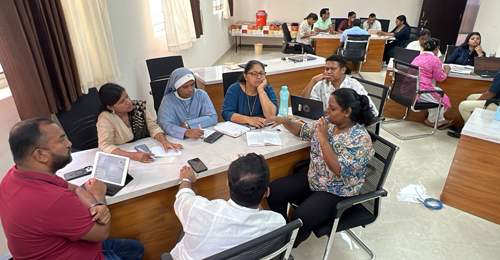
A significant portion of the workshop was devoted to the Result Framework, covering the three levels through which project results are commonly understood: impact, the long term and sustainable change a project contributes to; outcome, the concrete changes experienced by the people the project serves; and outputs, the direct and tangible products of project activities. Participants also learned to distinguish quantitative results, which can be expressed in numbers, from qualitative ones, which capture shifts in attitudes, capacities, participation, and accountability.
Building on this, the workshop introduced the SMART framework, encouraging participants to ensure that project results are specific, measurable, achievable, realistic, and time bound. Sessions on indicators, sources of verification, risks, and assumptions rounded out the technical toolkit, with facilitators pointing to examples such as farm visits, focus group discussions, baseline surveys, Panchayat records, and school attendance registers as practical ways to verify a project’s progress.
Participants were also introduced to the Logical Framework Matrix, which draws together a project’s intervention logic, indicators, sources of verification, and risks in a single structure, and to the Theory of Change, a way of mapping how activities lead to outputs, outcomes, and eventually long term impact.
Sustainability and budgeting given equal weight
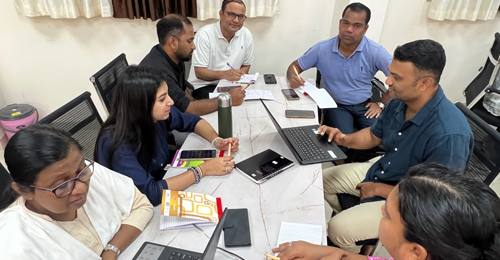
The workshop did not treat proposal writing as a purely technical exercise. A dedicated session on strategy and sustainability asked participants to think beyond the life of a project, considering community ownership, community based structures, financial sustainability, capacity transfer, and risk management as conditions for lasting change. The closing sessions turned to activity organisation and budgeting, with an emphasis on zero based budgeting, where every cost must be justified and tied directly to a planned activity and its expected result.
Throughout, facilitators stressed that strong grant writing is as much about communication as content. Participants were encouraged to write proposals that are clear, concise, persuasive, and free of unnecessary repetition, excessive formality, or complicated jargon, so that a donor or funding agency can understand the proposed intervention and its expected impact without difficulty.
Why this matters beyond one workshop
For the wider development sector, capacity building of this kind carries significance well past the three days spent in a training room. Many organisations working closest to vulnerable communities understand the problems they are trying to solve better than anyone, yet struggle to present that understanding in language and structure that funders recognise and trust. A workshop that equips partner staff with tools such as problem tree analysis, result frameworks, and zero based budgeting effectively strengthens the entire pipeline between community need and available resources, benefiting donors seeking accountable investments and communities waiting on projects to materialise in equal measure.
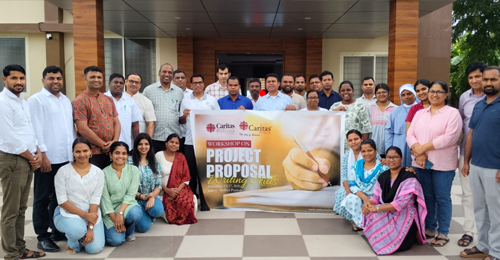
Participants left the workshop with greater clarity on project planning and proposal development, and with renewed motivation to apply what they had learned within their own organisations and communities. Participants expressed appreciation to Dr Saju for his facilitation and to Mr Haridas for coordinating the programme, marking the conclusion of a workshop intended to translate into stronger, more sustainable, and more community focused project proposals in the months ahead.
Upcoming News
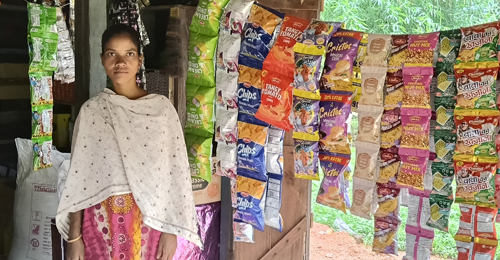
A Grocery Shop, a Mother’s Resolve, and Three Daughters Who Stayed in School
Three young girls in this remote village are attending school regularly today because their mother...
LEARN MORE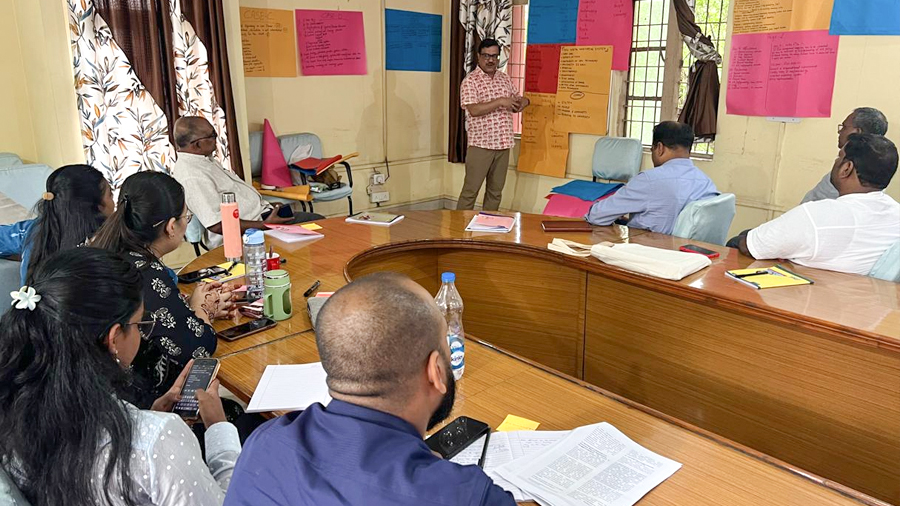
When NGOs Grow, What Breaks First? Caritas India Tackles the Answer in Raipur
Three-day workshop arms executive leaders with governance tools, a 20-policy framework and practical fixes for...
LEARN MORE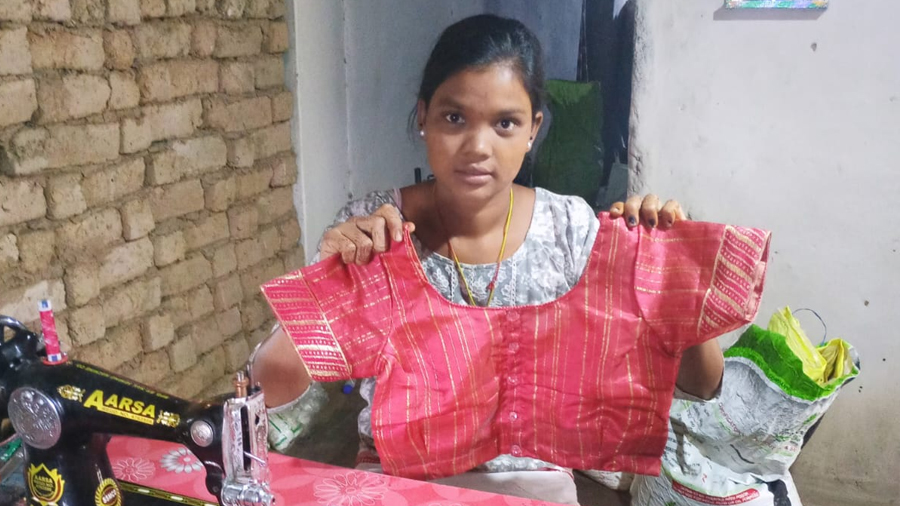
Nine Kilometres Through the Jungle: How Poornima Stitched Her Own Future
For 19 year old Poornima Rawat of Rajamma village in Lailunga block of Chhattisgarh's Raigarh...
LEARN MORE 91 -11 - 23362735
  director@caritasindia.org


