
 91 -11 - 2336 3390
  director@caritasindia.org
 Biresh Pegu’s ’s Journey toward Climate-Resilient Livelihoods
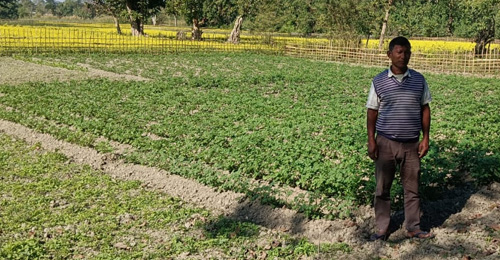
Climate-smart training is helping small farmers in Assam turn climate anxiety into opportunity, with projects like SARAL showing that even flood-prone communities can boost yields and incomes through resilient practices. Supported by Caritas Italiana, the SARAL project in Gerjai village of Dhemaji district has transformed mustard farmer Biresh Pegu from a cautious survivor into a confident cultivator who now plans his seasons with science and strategy rather than fear.
For years, Biresh’s reality mirrored that of many smallholders in Assam. Weather patterns grew erratic, traditional knowledge no longer matched the climate, and access to technical guidance was minimal. Though he owned 18 bighas of land, he cultivated mustard on only 5 bighas because the risk of loss felt too high. His yields hovered around 2 quintals per bigha, giving him barely 10 quintals in total. Selling 9.5 quintals at about ₹5,000 per quintal brought in roughly ₹47,500, an amount that covered only basic family expenses and left nothing for investment, savings, or shock absorption.
“I worked very hard, but the return was too little. Farming was only about surviving, not moving forward,” he recalls, echoing concerns repeatedly documented among climate-exposed farmers in Assam. Each season felt like a gamble between input costs and unpredictable floods or dry spells. Farming had stopped being a pathway to progress and had become a daily negotiation with uncertainty.
The turning point came when Biresh joined a climate-resilient agriculture training facilitated under the SARAL project, where more than 400 farmers across Assam and Tripura have been introduced to adaptive practices. For the first time, he was exposed to practical, science-based techniques aligned with changing weather conditions: improved seed selection, better land preparation, balanced nutrient management, and timely crop operations. Trainers also stressed integrating modern methods with indigenous knowledge, a strategy widely recommended for climate resilience in Indian agriculture.
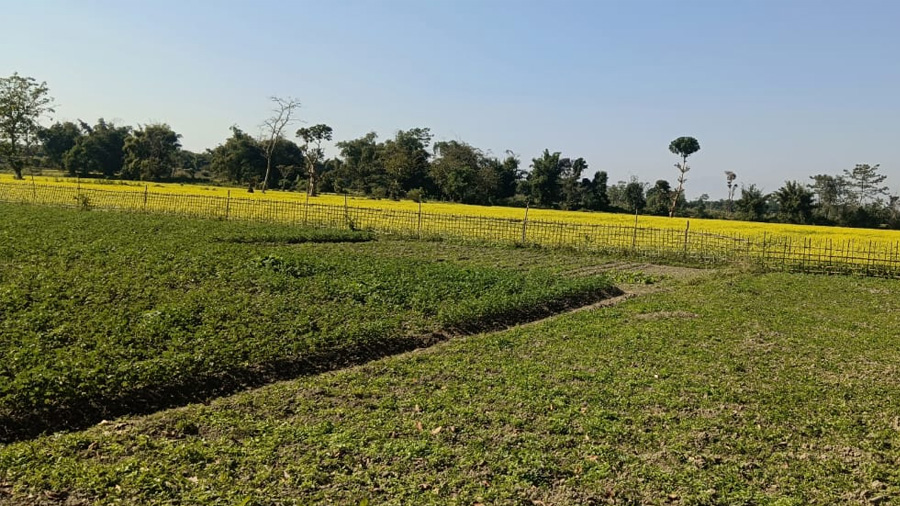
“Earlier, I followed traditional methods without understanding the science behind them. The training gave me clarity and confidence to make better decisions,” Biresh shares. The difference was not only in technique but in mindset. With new confidence and ongoing technical support, he expanded mustard cultivation from 5 bighas to 13 bighas, applying the newly learned practices across his field rather than experimenting on a tiny patch.
The impact has been dramatic. Studies show that climate-resilient mustard technologies can increase productivity by more than 50 percent over traditional varieties. In Biresh’s case, the adoption of improved practices has pushed his expected yield to about 5 quintals per bigha, more than doubling his earlier output. On 13 bighas, this translates to an estimated 65 quintals of mustard. At a market price of around ₹5,000 per quintal, his projected income is ₹3,25,000, nearly seven times what he previously earned from mustard.
Beyond the impressive numbers, the change in his life is bigger. With higher and more reliable income, the family can now plan for education, healthcare, and farm improvements instead of reacting to every crisis. Research across Assam has shown that such climate resilient interventions help farmers reduce migration, diversify crops, and strengthen food security. For Biresh, this new stability has restored dignity and pride in farming. “I never imagined my yield could increase so much. The training opened my eyes and gave me the confidence to believe that a better life for my family is possible,” he says.
His journey captures what the SARAL project, supported by Caritas Italiana, aims to achieve: moving small farmers beyond subsistence and helping them build climate-resilient livelihoods. When timely knowledge meets opportunity and support, even the most climate vulnerable households can reclaim control over their land, their income, and their future.
Upcoming News
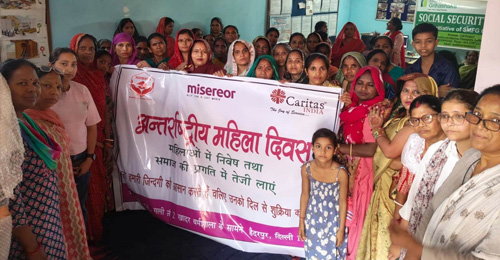
Migrant Women Workers Lead the Charge for Equality
For the 70 women gathered under the banner of the Pravasi Bandhu Program this week,...
LEARN MORE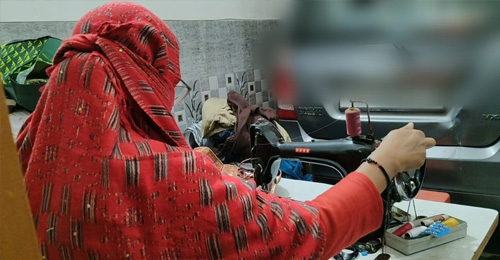
How One Mother Stitched Her Life Back Together
In a small, busy lane in Gokulpuri, there’s a sound that means everything to a...
LEARN MORE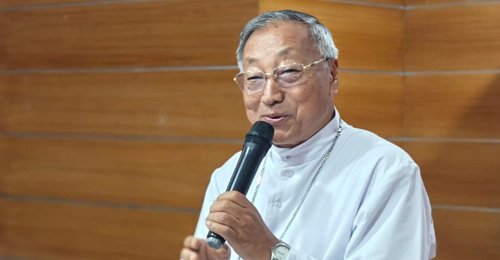
Archbishop Dr. Linus Neli Takes the Helm at Caritas India
A new chapter of compassion has begun. Archbishop Dr. Linus Neli officially took charge as...
LEARN MORE 91 -11 - 2336 3390
  director@caritasindia.org


