
 91 -11 - 2336 3390
  director@caritasindia.org
 Bringing Rights and Health to Invisible Migrant Workers
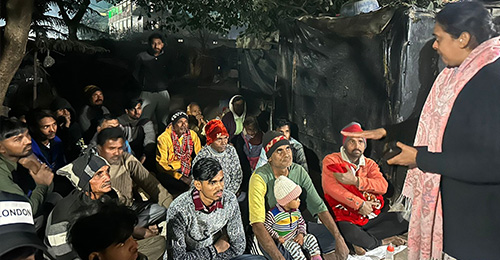
From factory clusters in Baddi to open labour points in Old Goa, Caritas India’s Pravasi Bandhu Program, supported by Misereor, is quietly transforming how migrant workers understand their rights and protect their health. By combining legal literacy with preventive health services, the programme is reaching some of the most neglected migrant communities who rarely access formal information, legal safeguards, or basic screening.
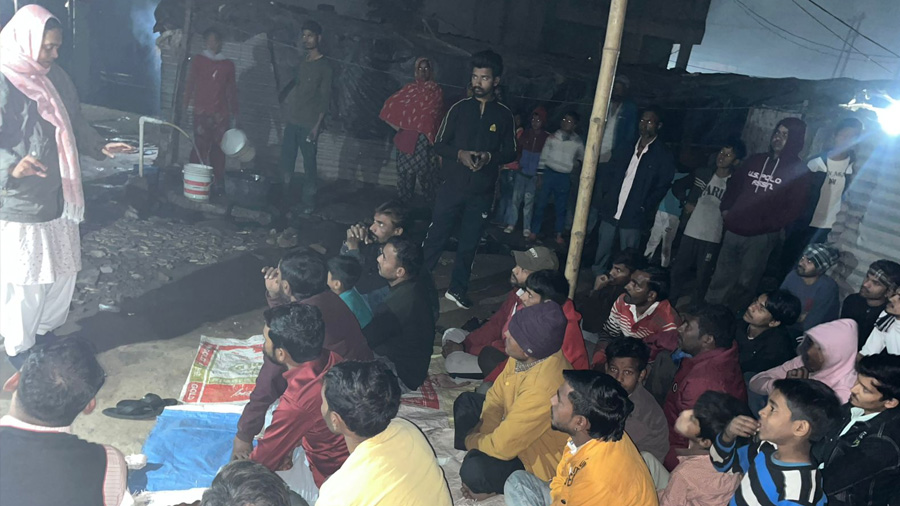
In Chandigarh, Caritas India partner Manav Seva Samiti organised an interactive legal awareness session in Baddi for a group of 48–53 migrant labourers employed in industrial units. The focus was simple but powerful: helping workers understand what the Employees’ State Insurance (ESI) Scheme and compensation laws actually mean for them when accidents or occupational hazards strike.
Through group discussions and an extended question–and–answer segment, workers learned about their entitlements to medical care, disability support, and death benefits for their families in case of workplace injury or loss of life. Many participants shared that, until now, they had only a superficial idea of these provisions and often faced delays or confusion when trying to access compensation. The session gave them the clarity and confidence to assert their rights and to follow proper legal procedures when incidents occur.
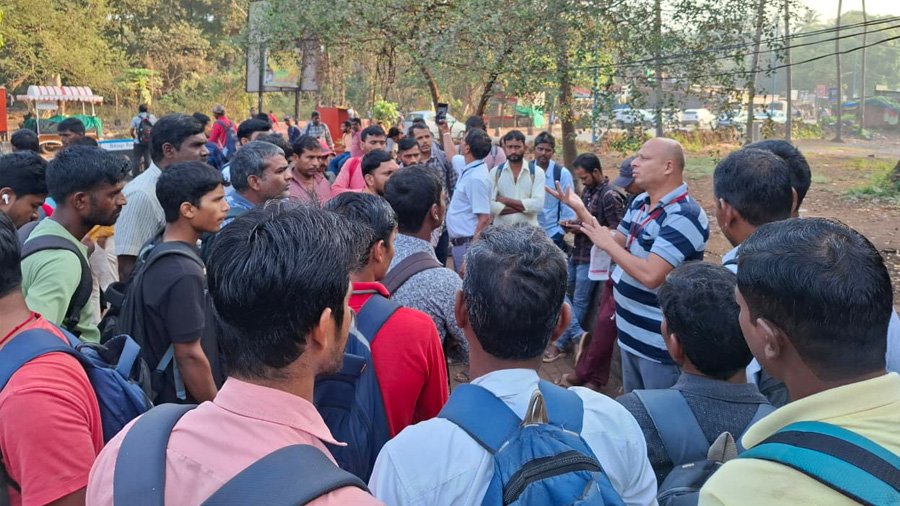
Hundreds of kilometres away, at Gandhi Circle in Old Goa, another set of migrant workers, many of them daily-wage labourers and construction workers, were reached not in a factory, but in the public space where they gather in search of work. Here, Caritas Goa, a partner under the Pravasi Bandhu Program, organised a Vector-Borne Diseases Awareness and Screening Camp that reached about 70–80 migrant workers.
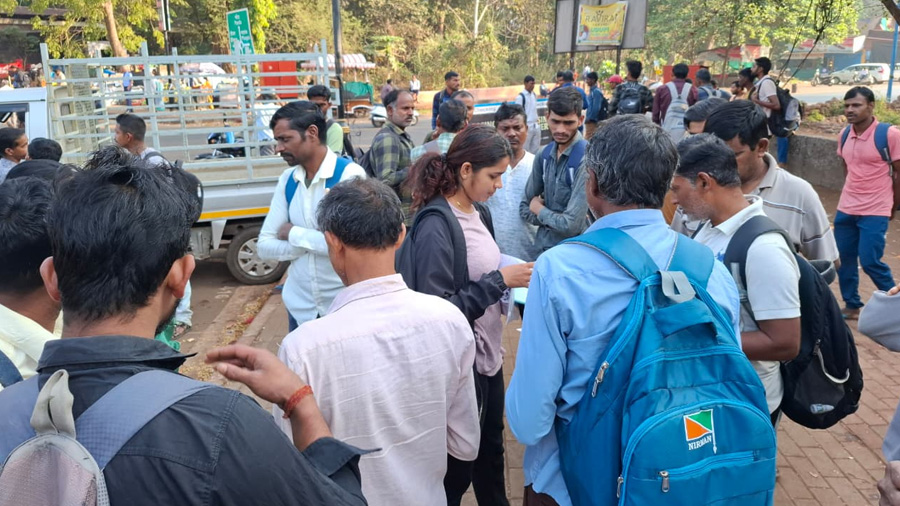
Health professionals explained how dengue and malaria spread, what early symptoms look like, and how simple preventive measures like mosquito control, protective clothing, and timely treatment can save lives. Around 55 workers voluntarily underwent blood screening on the spot, enabling early detection and referral for medical care where needed. For labourers who often ignore symptoms due to fear of wage loss, this camp brought health services to where they actually are, rather than expecting them to visit distant facilities.
The stories from Baddi and Old Goa show how Pravasi Bandhu is building an integrated safety net for migrant workers who are usually invisible in policy and practice. In Baddi, legal empowerment ensured that workers now understand ESI, workplace compensation, and the legal avenues available to them. In Goa, health awareness and on-the-spot screening responded to their heightened risk of vector-borne diseases in crowded and poorly serviced living conditions.
These interventions aim to reduce the vulnerability of the migrant workers through timely information, community participation, and collaboration with legal and health stakeholders. Pravasi Bandhu Program, supported by Misereor, is a holistic model that does not treat migrants as labour, but as rights-holders who deserve protection, justice, and essential services.
For migrant families who often fall through the cracks of both the legal and health systems, Pravasi Bandhu is becoming what its name suggests: a true “friend” on the move—standing beside them at the factory gate and at the labour naka alike.
Upcoming News
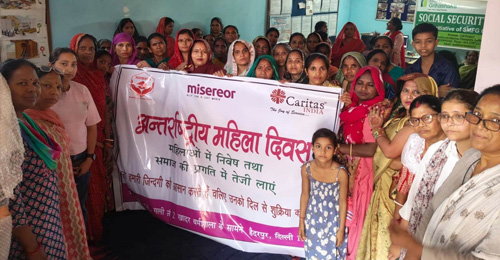
Migrant Women Workers Lead the Charge for Equality
For the 70 women gathered under the banner of the Pravasi Bandhu Program this week,...
LEARN MORE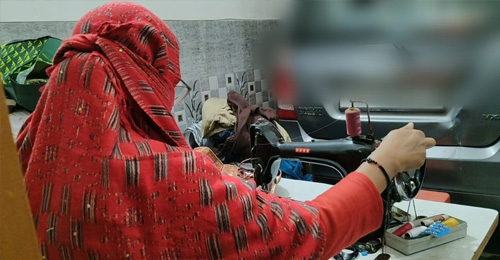
How One Mother Stitched Her Life Back Together
In a small, busy lane in Gokulpuri, there’s a sound that means everything to a...
LEARN MORE
Archbishop Dr. Linus Neli Takes the Helm at Caritas India
A new chapter of compassion has begun. Archbishop Dr. Linus Neli officially took charge as...
LEARN MORE 91 -11 - 2336 3390
  director@caritasindia.org


