
 91 -11 - 2336 3390
  director@caritasindia.org
 Caritas India joins ICIMOD to train communities in flood risk science ahead of Bihar field assessment
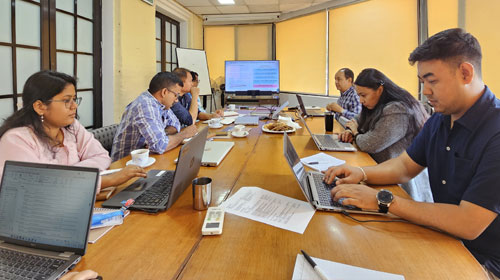
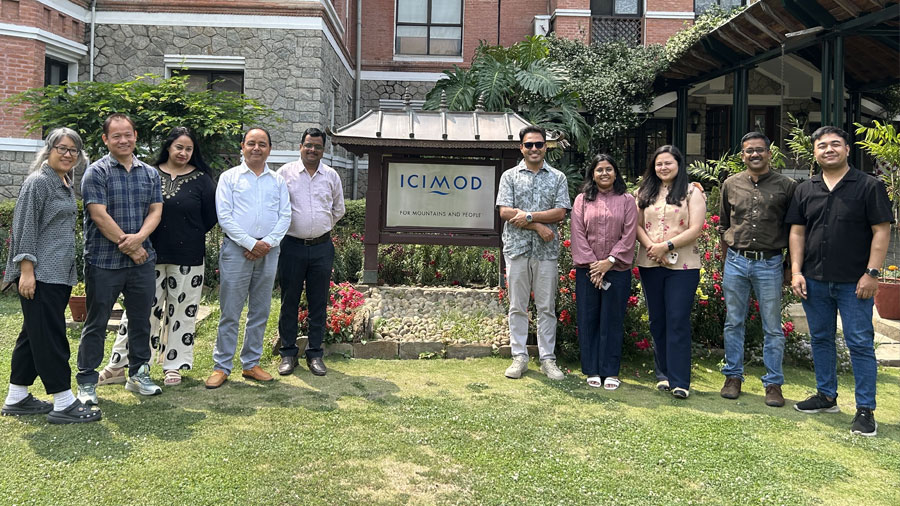
Caritas India has completed a three-day Training of Trainers (ToT) on Community-Based Flood Risk Assessment, organized by the International Centre for Integrated Mountain Development (ICIMOD) in Kathmandu, Nepal, from 27 to 29 April 2026. The training, conducted under the Glaciers-to-Ocean (G2O) Initiative jointly implemented by ICIMOD and the Ocean Policy Research Institute (OPRI) with support from the Sasakawa Peace Foundation, Japan aimed to directly prepare Caritas India’s team to undertake a rigorous, gender-sensitive flood vulnerability assessment in the Balan River basin in Bihar, one of India’s most chronically flood-affected regions.
Multidisciplinary delegation from Caritas India project staff attended the workshop: Ms. Monisha Majumdar (Project Point Person), Mr. Abhishek Kumar (State Project In-Charge), Mr. Dileesh Varghese (MEAL and Technical Data Analyst), and Mr. Shekhar Limbu (Project Finance In-Charge). The Balan River basin was selected as the pilot geography following consultations with the Bihar State Disaster Management Authority (BSDMA).
Bihar’s flood vulnerability is structural and compounding. Communities along the Balan River face not only recurrent inundation and prolonged waterlogging but also erosion-driven livelihood loss, agricultural disruption, damaged housing, migration, indebtedness, and the systematic exclusion of women and marginalised groups from disaster planning and response. The G2O Initiative frames this crisis within a basin-wide lens tracing climate risk from Himalayan glacier melt downstream to communities living at the flood frontier.
Day one established the conceptual and ethical foundations: participants were oriented on ICIMOD’s safeguarding commitments including zero tolerance for harassment and abuse, informed consent, and proactive inclusion of women, youth, and persons with disabilities. A key technical advance introduced at the workshop was the IPCC AR6 risk framework, which expands the traditional Exposure-Sensitivity-Adaptive Capacity model to include Response as a fourth risk dimension. This shift recognises that poorly designed interventions can worsen vulnerability through maladaptation.
Participants were also trained in flood occurrence mapping using Sentinel-1 Synthetic Aperture Radar (SAR) satellite data — a powerful tool for identifying repeatedly inundated zones and supporting evidence-based planning. Field validation methods, combining geotagged observations, community interviews, flood duration estimates, and photographic documentation, were also introduced.
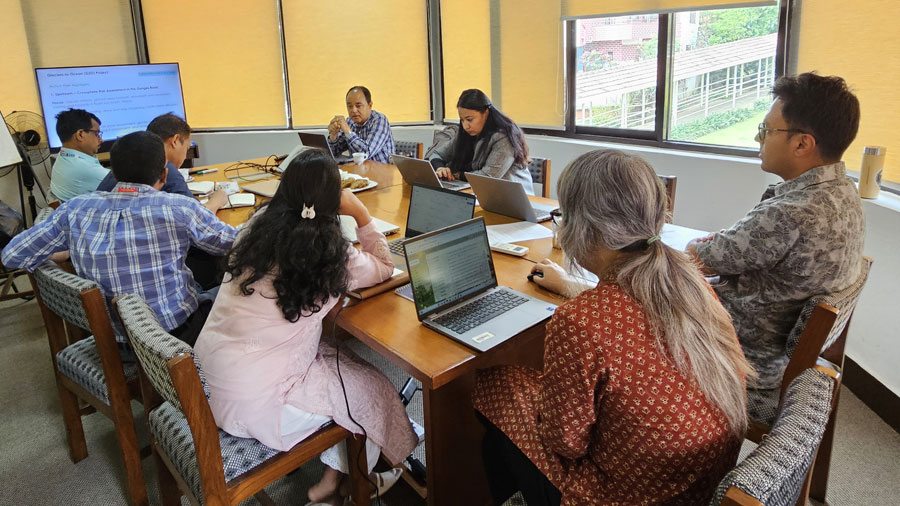
Day two moved into practical assessment methodology: reviewing household survey instruments and Focus Group Discussion (FGD) guides structured around hazard, exposure, vulnerability, adaptive capacity, and response. Participants were trained in bias-aware, participatory survey administration balancing quantitative rigour with qualitative depth and in SPSS-based data coding and analysis for strategic decision-making.
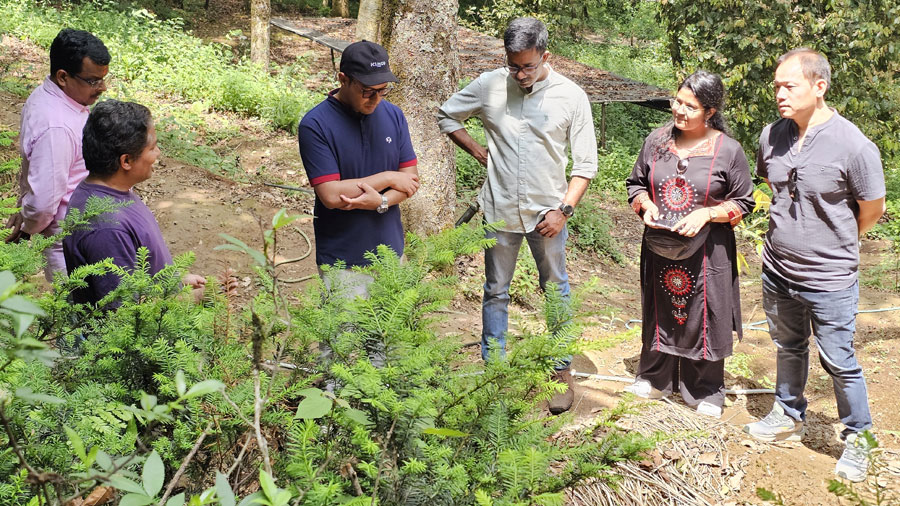
The final day was a field visit to ICIMOD’s Living Mountain Lab in Godawari, where the team was introduced to operational Community-Based Flood Early Warning Systems (CBFEWS), hydro-meteorological stations, and nature-based adaptation solutions — scalable models that could inform Bihar’s own resilience architecture.
Following the ToT, Caritas India will finalise assessment tools with ICIMOD, orient field enumerators on safeguarding and ethical data collection, and undertake community-level validation of flood occurrence maps in the Balan River basin. Household surveys and focus group discussions will follow in selected flood-prone communities. Findings will directly inform a comprehensive flood management strategy for Bihar by integrating community knowledge, scientific risk assessment, local governance, and GESI considerations.
Upcoming News
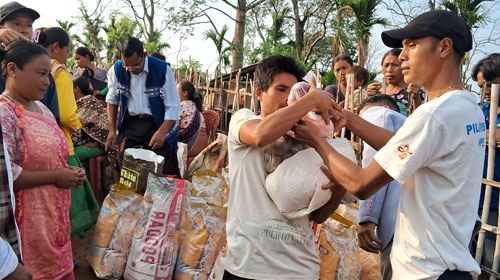
Caritas India reaches Assam’s forgotten flood victims
As relentless rains battered the hills of Karbi Anglong in Assam, entire families watched helplessly...
LEARN MORE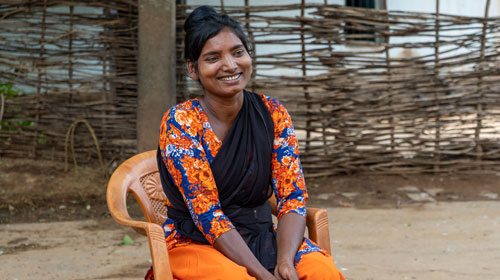
She Has Never Spoken a Word, But She Found Her Voice
There is a woman in the villages of Jharkhand who has never once spoken a...
LEARN MORE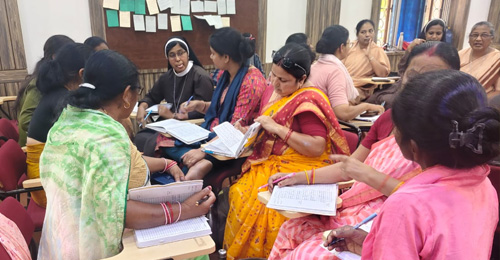
Caritas India Is Building an Army of Safeguarding Champions. Gorakhpur Is Where It Started
There is a question that organizations working with vulnerable communities rarely ask out loud: who...
LEARN MORE 91 -11 - 2336 3390
  director@caritasindia.org


