
 91 -11 - 2336 3390
 director@caritasindia.org
Caritas India Partners to Intensify Efforts for Food and Nutrition Security of Korku Tribe

Caritas India partners implementing food and nutrition security programme for the Korku tribe have decided to intensify policy engagement activities for the conferment of Particularly Vulnerable Tribal Group (PVTG) status to Korkus. Concentrated as cultivators in Khalwa block of Khandwa district of Madhya Pradesh and Melghat region of Maharashtra, the Korku tribal community has historically been battling existential challenges. The impoverished tribal community has been languishing with poor indices related to education, access to health services, life expectancy, infrastructure and household incomes.
For helping the Korku communities extricate themselves from chronic indigence, Caritas India and her three local partners had recently launched ‘SABAL’ an integrated nutrition and food security programme. The food and nutrition security programme is implemented in 60 Korku villages of Khalwa block of Khandwa, Madhya Pradesh and 33 villages of Chikaldhara block of Amravati, Maharashtra.
For hammering out an effective advocacy strategy, Caritas India facilitated a workshop for her local partners KDSSS Khandwa, Spandan Samaj Seva Samiti Khandwa and Jeevan Vikas Sanstha, Amravati at Khandwa on 24-25 January 2017. Ms. Lee Macqueen, Advocacy Manager, Caritas India, while facilitating the workshop stressed the need to understand the fundamentals of advocacy and adapting it to the context of SABAL.
The discussions led to the agreement on employing various legal tools available under PESA Act, Forest Rights Act (FRA) and Right To Food (RTF) Act for achieving the programme objectives. Partners agreed that the approach required empowering and activating local self-governance institutions so that the Korku community continues to enjoy their rights and entitlements of welfare services like PDS and ICDS.
Korku community is a hunting and gathering tribal community, which has recently started settling down with agriculture-based livelihoods. Korkus have been victims of chronic hunger, large-scale malnutrition and backwardness. The non-conferment of Particularly Vulnerable Tribal Groups (PVTGs) status to them despite possessing all eligibility criteria, has kept the community out of the benefits of many centrally-sponsored schemes specially made available for PVTGs. Caritas India and her partners have decided to vigorously work for the PVTG status for Korkus since this status is critical for the targeted central scheme benefits to reach the Korku community.
Since the health issues of women and children are central concerns of the programme, a consensus was arrived at during the workshop on integrating the components of education and menstrual hygiene with the food and nutrition programme. These cross-cutting themes will be implemented with the involvement of mothers’ and adolescent girls’ collectives.
Dr. Saju MK, Manager West Zone, Caritas India reinforced the need for building and sustaining a Korku movement so that the community gets access to the benefits of development and welfare programmes and schemes. Partners decided to convene a platform called, Korku Jagriti Manch to pursue the issue of PVTG status with the Government and other advocacy issues. SABAL intervention has a five-pronged strategy to address the issues through a people centred and led advocacy approach. These strategies include (i) increasing the productivity of food crops, (ii) revival of traditional tribal agricultural systems, (iii) protein support, (iv) functionalising public systems and (v) advocacy and campaigns.
The workshop concluded with the finalisation of advocacy focuses related to strengthening of public systems (PDS/ICDS) and inclusion of Korku community in the PVTG category.
Upcoming News
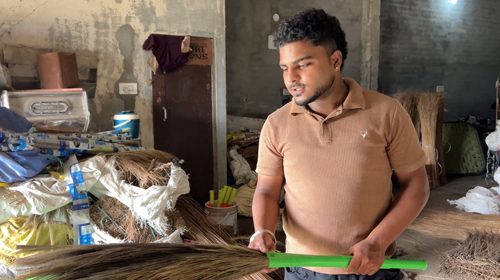
Sumit’s Reintegration Journey Back to Kaithal
When Sumit finished his 12th standard in Kaithal, Haryana, the world beyond his village seemed...
LEARN MORE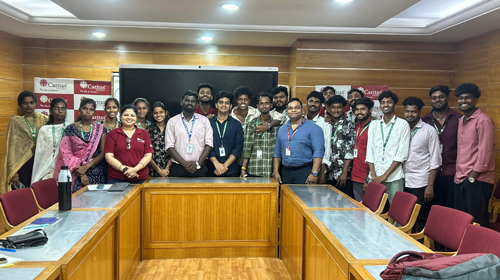
Learning Social Work Beyond the Classroom at Caritas India
It is one thing to read about social work in a textbook and another to...
LEARN MORE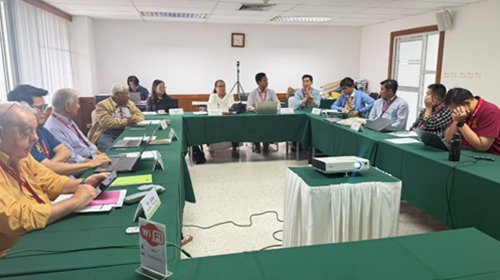
CAMBIT Brings Caritas Together in Bangkok
At a regional meeting in Bangkok from 24 to 25 September 2026, Caritas India reaffirmed...
LEARN MORE 91 -11 - 23362735
 director@caritasindia.org


