
 91 -11 - 2336 3390
  director@caritasindia.org
 CIDAL enhanced learning and knowledge of West Bengal Uttoran Partners in Integrated Natural Farming Technique
Uttoran programme focused primarily on Rights and entitlement, Livelihood and local partners institutional capacity building. This programme emphasised the People Led Development concept where the community intend to strengthen their effort in ensuring adequate and nutritious food, effort will be made for accessing their rights and entitlement and livelihood options through on-farm and off-farm through the strengthened community-based mechanism. Caritas and her local partners are engaged in promoting livelihood and climate-resilient and adaptive agricultural practices. She is promoting local seed varieties which would be used in varying climate scenarios like early sowing varieties, late sowing varieties, short-duration varieties. This cluster programme is implemented in 3 States- West Bengal, Karnataka & Andra Pradesh. The 2nd phase focuses to strengthen the grassroots community organizations for active engagement, ownership and sustainability of the processes. Empowered communities foster climate-resilient and climate adaptive agriculture, livelihoods and secure adequate nutritious food is the goal of the Uttoran programme.
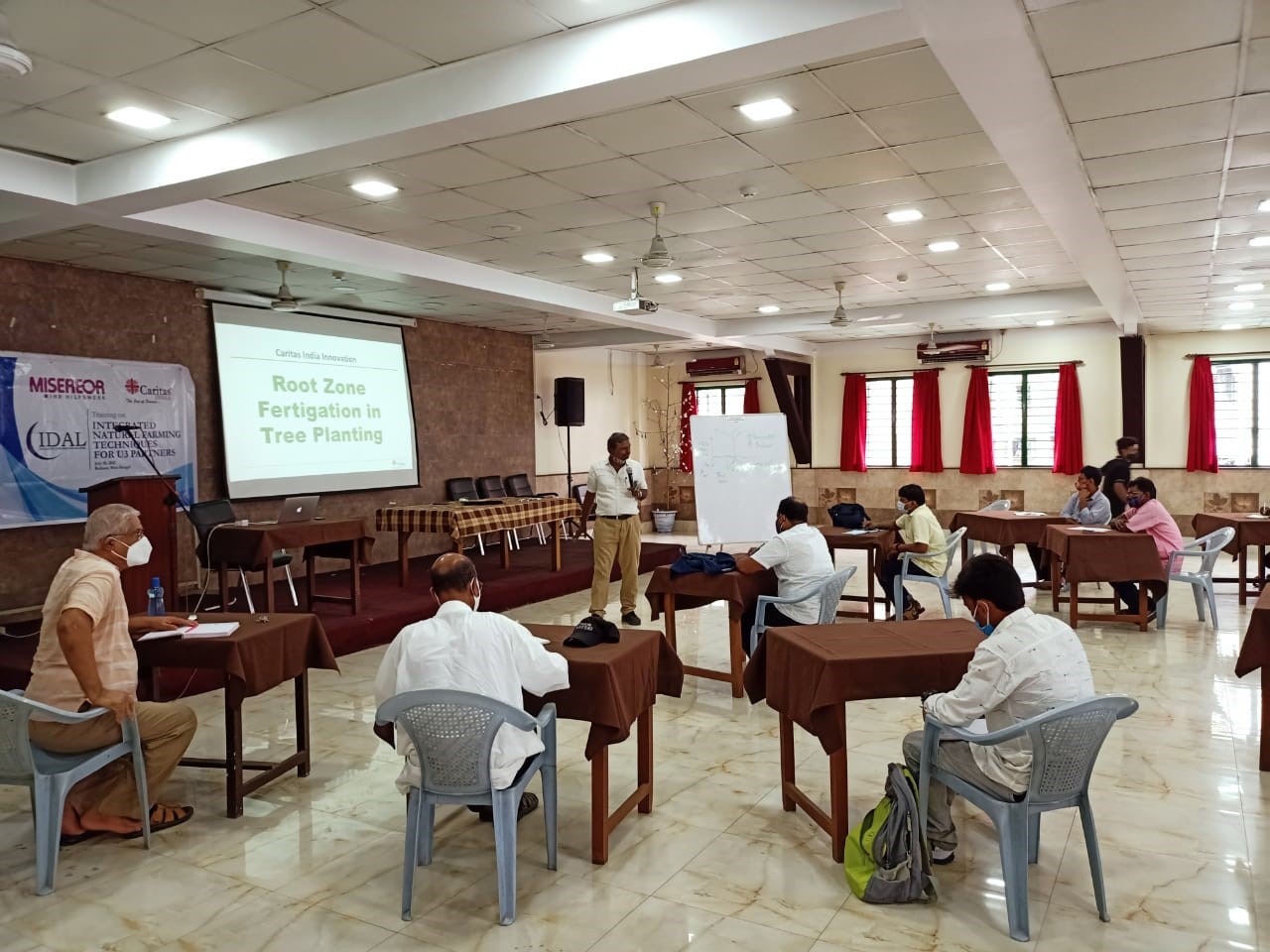
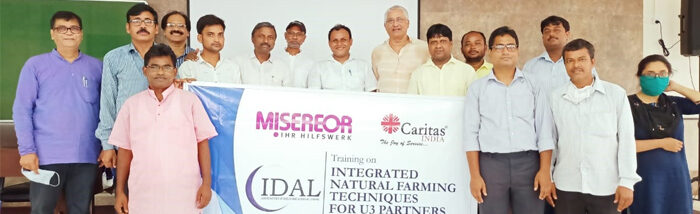
Under the Caritas Institute of Development Action and Learning (CIDAL) banner, a 3 days of training was organised on Integrated Natural Farming Technique for her West Bengal partners- Palli Unnayan Samiti Baruipur, Krishnagar Cathedral Charitable Social Society, Asansol Burdwan Seva Kendra, Seva Kendra Calcutta, Jalpaiguri Seva Sadan, Social Welfare Institute Raiganj and Seva Kendra Siliguri. The training emphasized new method techniques and upscaling the skill and knowledge of the partners based on new farming technology for replication. Intensive training and demonstrations were done on setting up on Integrated Nutrition Gardening, Pollution Free Poultry Farming (PFPF), Root Zone Fertigation in Tree planting and duck rearing. The training was facilitated by Dr. Haridas, a technical expert on Natural Farming. Participants were taught on the process of promoting Pollution Free Poultry Farming (Korean Technology) as a new technology for promoting poultry unit which does not produce smell, for producing healthy meat and eggs, producing organic compost for nutrition garden, occupational therapy for the community and to ensure better livelihoods.
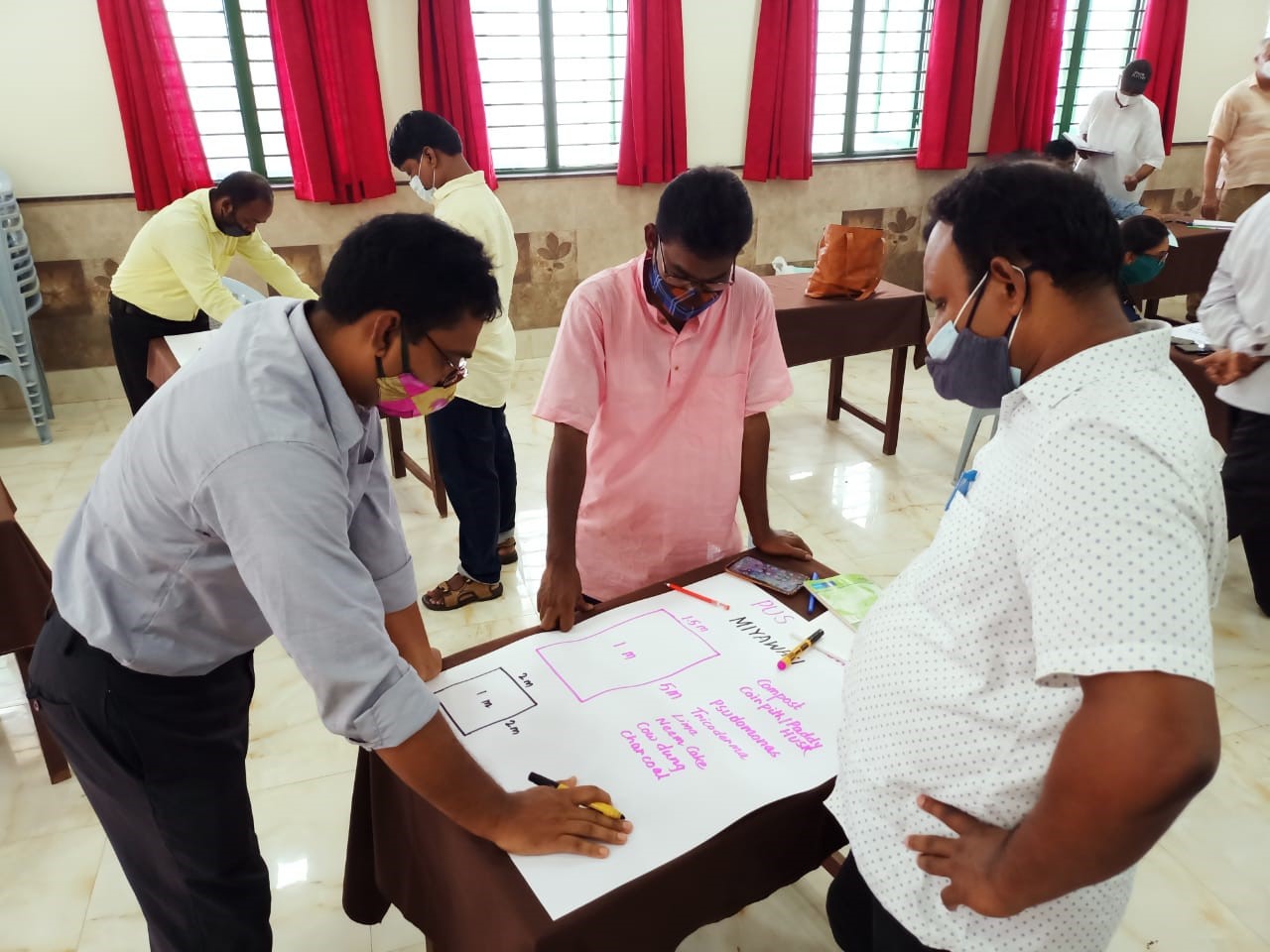
The partners will now be focused on promoting these models of Integrated Nutrition Garden (ING), Root Zone fertigation technique in Tree planting (RZFT) and Pollution Free Poultry Farming (PFPF) as innovative replicable models in the project area to improve the food and livelihood security of the most deserving communities of the project area.
The 3rd phase U3 (Ujjivana in Karnataka and Ujjwala in Telengana and Uttoran in West Bengal ) programme supported by Misereor is all set to roll out soon from September 2021 till December 2026 covering 233 villages, 18 District, 21 Block and 3 States with 16 local partners which will provide more emphasising on Value chain and Marketing components. The training was attended by partner directors, Coordinators and Field Animators.
Upcoming News
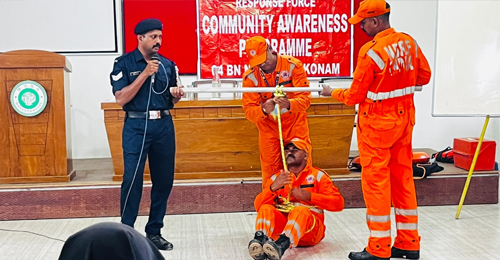
Ropes and Sacks Become Lifesaving Tools as NDRF Trains Wayanad’s First Responders
Long before an ambulance can reach a flooded village or a landslide hit hillside, it...
LEARN MORE
Caritas India Trains Partner Organisations in Evidence Based Project Proposal Writing
Some of the strongest community projects never get built, not for lack of need or...
LEARN MORE
A Grocery Shop, a Mother’s Resolve, and Three Daughters Who Stayed in School
Three young girls in this remote village are attending school regularly today because their mother...
LEARN MORE 91 -11 - 23362735
  director@caritasindia.org


