
 91 -11 - 2336 3390
  director@caritasindia.org
 Disaster Risk Reduction – Need to work on resilience framework to survive and bounce back
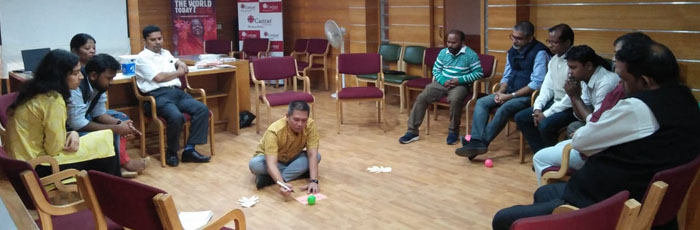
A day-long self-evaluation workshop was conducted at Caritas India Head Office, by Mr. Rustico Binas, Global Advisor on DRR. The workshop was attended by staff from the Regional and Head Office.
The objective of the workshop was to help the staff reflect on the gaps in the community level and identify key points for program development and capacity building trajectory.
The facilitator started the session with an ice-breaker activity- Toss the Ball, which tried to focus on the relationship between the community and the development worker/agency.
Through a series of activities and group works, the participants gained a conceptual understanding on Resilience explored the key terminologies associated with disaster management.
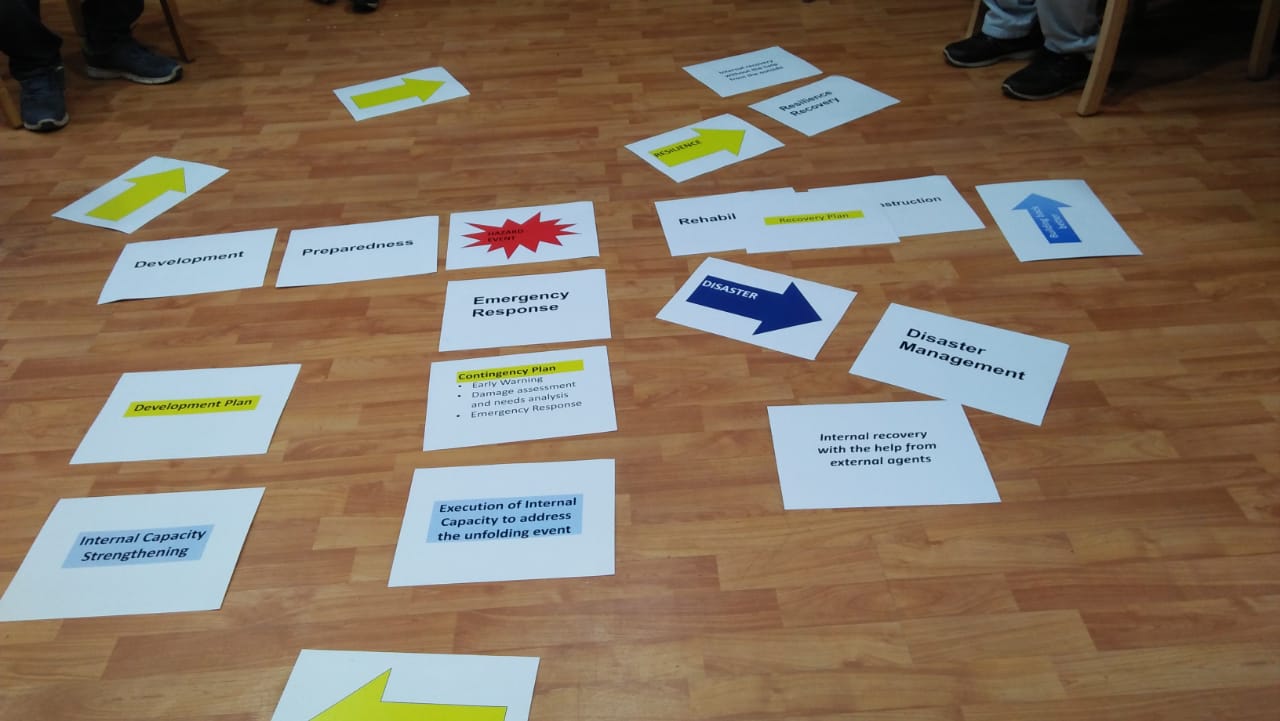
The facilitator highlighted on the Resilience Framework identifying the elements of risk such as personal hygiene, environmental sanitation, proper nutrition etc and the need to build the capacity of these elements to survive and bounce back during/after a hazard event with the help of livelihood and ecosystem services supported by transformative systems and structures such as community readiness, enabling policy environment and international treaty, protocol and agreements. Therefore, resilience is the capacity of the individual and collective strength to survive and bounce back from a hazard event and contribute to improving the condition of living of the community.
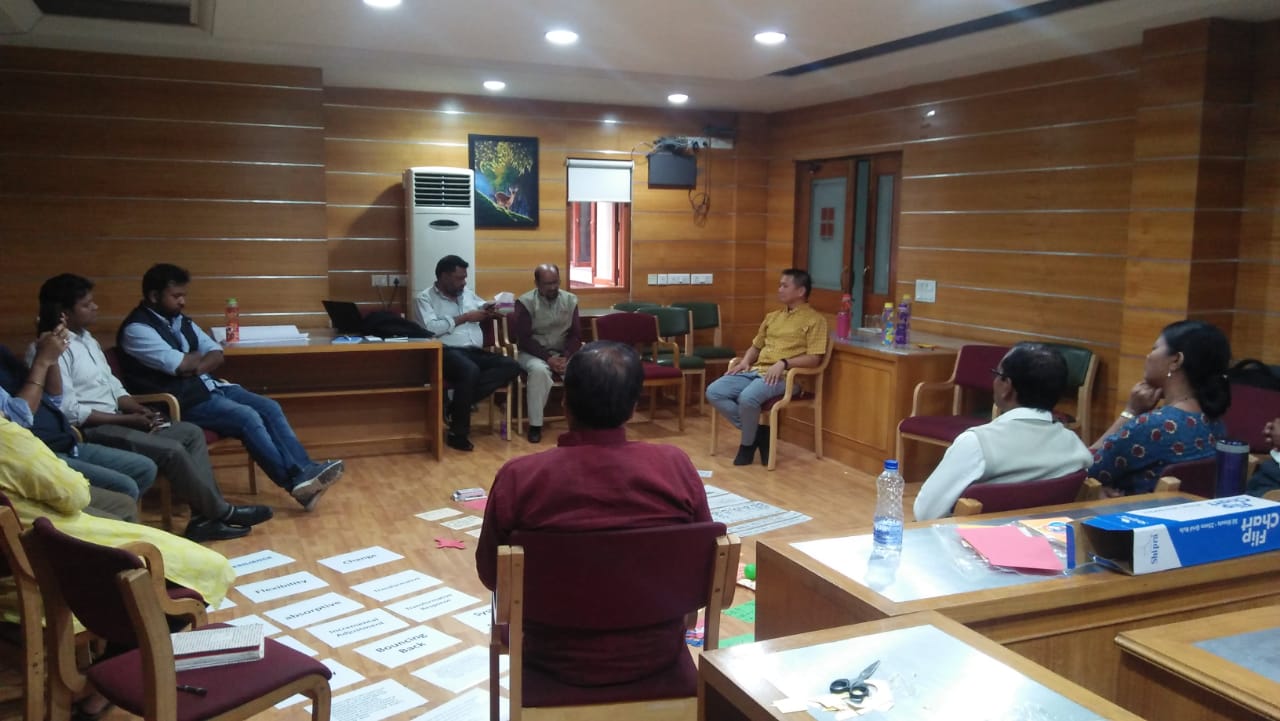
The next session discussed on the transfer of power from the top (HO level) to the bottom (community level) and the institutionalization of roles and responsibilities at the different layers, and the characteristics of a disaster resilient society. The facilitator highlighted the important role played by the animators in the field, which is capacity building and handholding of the community and thereby build up their resilience.
The regional managers of East and North-East presented the reflections from the community, animators, partners and the zonal office level highlighting on the gains, limitations, and recommendations till date.
Post lunch sessions highlighted on the reflections at the Head Office level discussing on the gains and limitations and way forward action plan. The team plans to have integrated ( DRR ) models on Health WaSH Environment, EcoSystems, Education, and Shelter.
The need for standardized HVCA tools, process and baseline format was felt by the team. To escalate the process there is a need to develop a strategic framework on the integration of DRR in other programmes and also facilitate partners to develop DRR policies.
Upcoming News
Migrant Women Workers Lead the Charge for Equality
For the 70 women gathered under the banner of the Pravasi Bandhu Program this week,...
LEARN MORE
How One Mother Stitched Her Life Back Together
In a small, busy lane in Gokulpuri, there’s a sound that means everything to a...
LEARN MORE
Archbishop Dr. Linus Neli Takes the Helm at Caritas India
A new chapter of compassion has begun. Archbishop Dr. Linus Neli officially took charge as...
LEARN MORE 91 -11 - 2336 3390
  director@caritasindia.org


