
 91 -11 - 2336 3390
  director@caritasindia.org
 How a Jharkhand Village Is Rewriting Its Own Story of Change
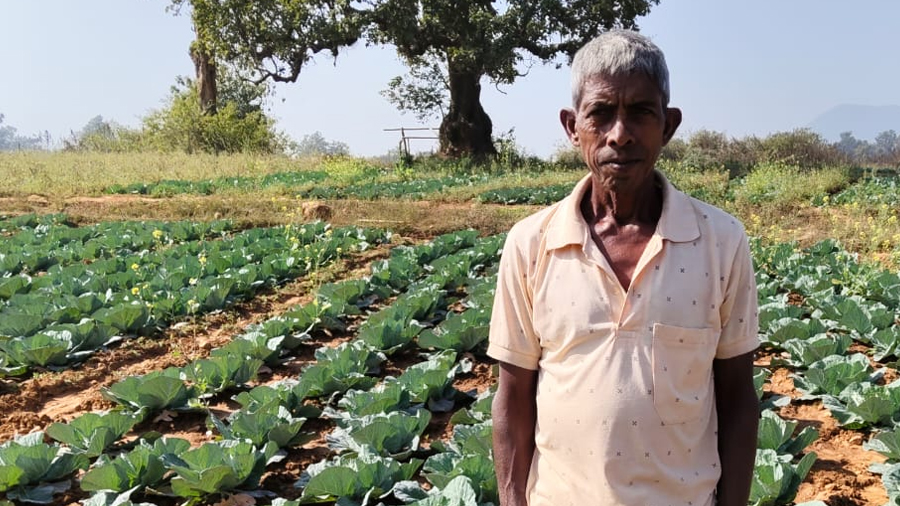
For most of his life, Pudu Munda measured the year by a single harvest. When the rains came, so did paddy. When the rains left, so did any certainty about how his family of six would get by.
Today, the 47 year old farmer from Chamapad village in Kuchai block grows cauliflower, beans, okra and tomatoes alongside his paddy, sells his produce across four weekly markets, and earns nearly double what he once did. His story is one small thread in a much larger movement taking root across rural Jharkhand through the Gram Nirman Project, supported by Caritas India and Caritas Australia, a movement built not on what communities lack, but on what they already have.
A Life Built Around One Harvest
Pudu never had the chance to attend school. What he had instead was land, decades of farming experience, and an unshakeable determination to provide for his wife, Budhni Munda, and their four sons. For years, that determination was not enough. Rain fed paddy alone could not sustain the family, so between seasons Pudu collected firewood to sell and, at times, left home in search of daily wage labour. The family’s monthly income rarely crossed ₹10,000.
“I have faced many challenges in my life,” Pudu says quietly. “Somehow, I managed to raise my children and keep the family going.”
It is a sentence that captures the reality of countless farming families across tribal Jharkhand, families with knowledge, land and labour, but few pathways to turn that potential into a stable livelihood.
Starting With What Communities Already Have
When the Gram Nirman Project arrived in Chamapad in 2021 22, it did not come with a checklist of what villagers were missing. Instead, it followed the Asset Based Community Development approach, a philosophy that begins by asking a different question: what do people already have that can be built upon?
For Pudu, that meant his land, his years of farming experience, his labour, and above all, his willingness to learn. At a village meeting, he heard about the newly formed farmers’ club and decided to join. What followed was not a classroom in the traditional sense, but something Pudu, who had never been to school, could engage with fully: agricultural training sessions, exposure visits to Salboni and Jaldanda, and interface meetings with block level officials, all built around observation, demonstration and shared discussion.
The farmers’ club became more than a training space. It became a community of practice, where neighbours learned from each other, compared notes on government schemes, and slowly began reimagining what their land could do.
Making the Same Land Work Harder
With new knowledge and support in hand, Pudu began to diversify. Alongside his paddy, he started cultivating vegetables on nearly two acres, cauliflower, beans, okra and tomatoes, crops that could bring income across multiple seasons rather than just one. Through linkages to government schemes and entitlements facilitated by Gram Nirman, he gained access to drip irrigation and solar powered irrigation, transforming how efficiently he could use his limited water resources.
The land itself had not changed. What changed was how Pudu saw it, and what he was able to make it do.
Taking the Harvest to the Market Himself
As his fields began producing more than his family needed, Pudu faced a new question familiar to many small farmers: what happens to the surplus? Rather than waiting for buyers to come to him, he took matters into his own hands, quite literally. Using his own motorcycle, he began carrying his vegetables to weekly markets in Kharsawan, Kuchai, Toklo and Siyadih.
That motorcycle, a simple asset he already owned, became a critical link between his farm and a wider income. Farming, for Pudu, was no longer just about what grew in the soil. It became about the entire journey from field to market, and his role in every step of it.
From Survival to Possibility
The numbers tell part of the story. Pudu’s monthly income has grown from under ₹10,000 to somewhere between ₹15,000 and ₹20,000, nearly double what it once was. But ask Pudu what matters most, and the answer is not about the money itself.
He speaks instead about building savings, supporting his sons through higher education, and expanding the land under cultivation. For a father who never had the chance to sit in a classroom, the ability to send his children further than he ever went carries a weight no rupee figure can fully capture.
A Model That Multiplies Beyond One Farm
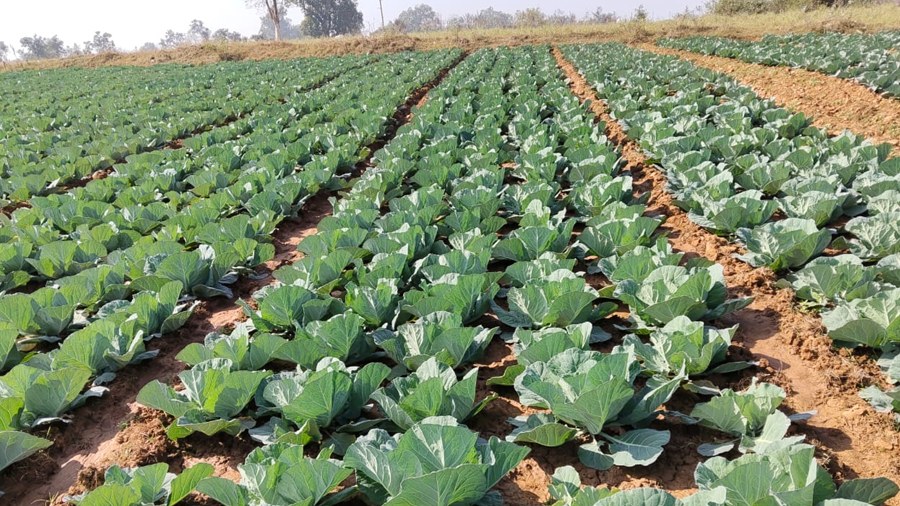
Pudu’s transformation is not an isolated success story. It reflects the wider promise of the Asset Based Community Development approach that guides the Gram Nirman Project across Jharkhand. Rather than replacing what farmers already knew, the project connected their existing assets, land, experience, labour and initiative, with collective learning, government entitlements, irrigation access and market linkages.
That connection is now multiplying. Within the farmers’ club, Pudu’s experience is being shared with other members, who are learning to look at their own land, tools and knowledge with fresh eyes. What started as one farmer’s shift from a single harvest to several crops, multiple markets and steadier income is becoming a template other families in Chamapad are beginning to follow.
More Than an Income Story
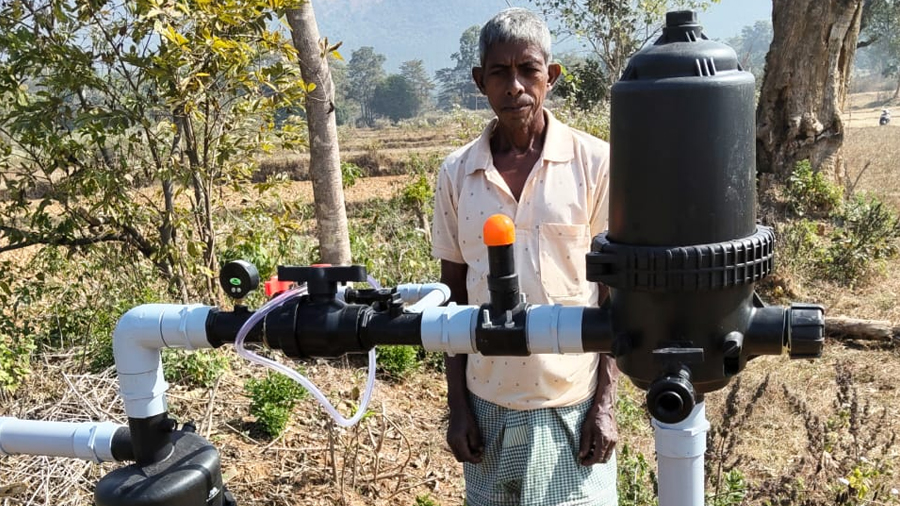
At its heart, this is not simply a story about a farmer earning more money. It is a story about choice, about a man who once had very few options now having many. Where Pudu once farmed to survive one season at a time, he now farms with an eye on the future, his children’s education, his family’s stability, and the slow, steady expansion of what his land and his life can become.
For the communities of Saraikela Kharsawan, and for the Gram Nirman Project supported by Caritas India and Caritas Australia, Pudu’s journey stands as proof of a simple but powerful idea: real and lasting change does not begin with what is missing. It begins with what is already there, waiting to be seen, valued and built upon.
Upcoming News
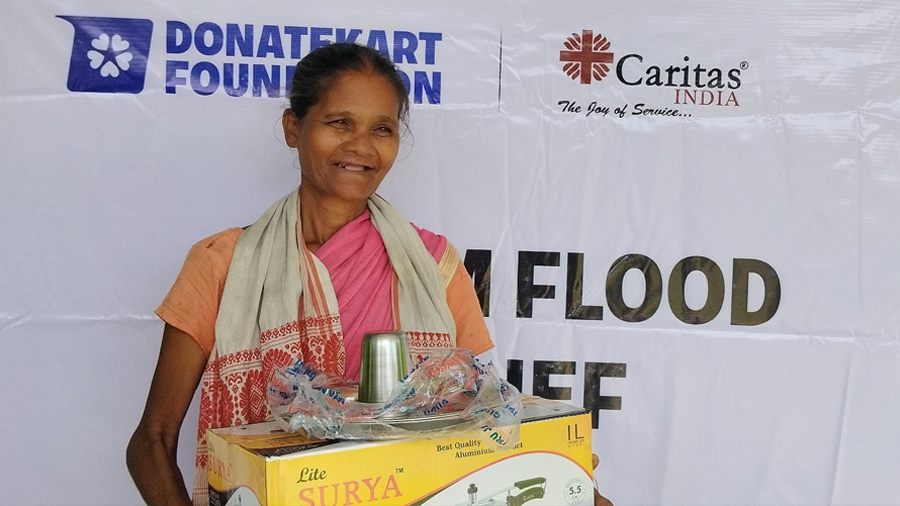
Assam Floods 2026: How 1,100 Families in Charaideo Are Rebuilding After Losing Everything
As floodwaters recede across Assam, leaving behind shattered homes and broken livelihoods, emergency humanitarian relief...
LEARN MORE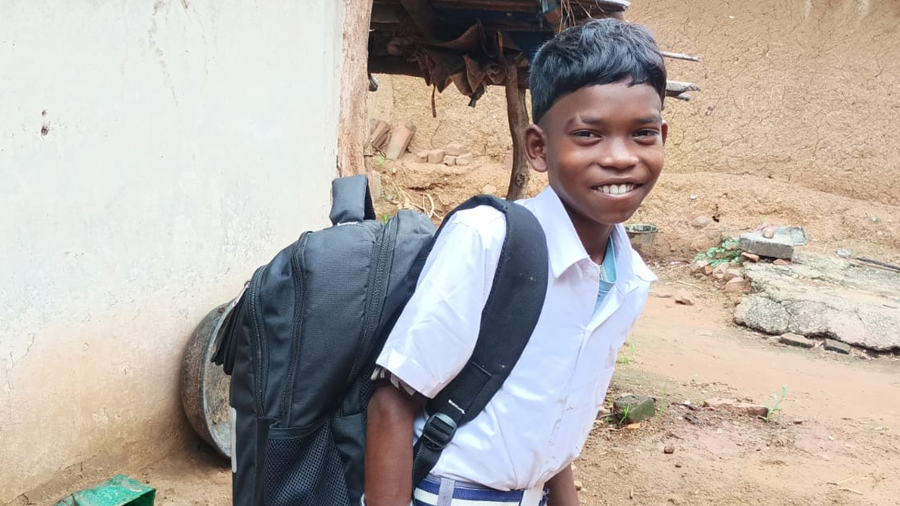
From Grazing Cattle to Classroom Dreams: One Boy’s Journey Back to School
Rajamma Village, Chhattisgarh — In the remote tribal village of Rajamma, where most families survive...
LEARN MORE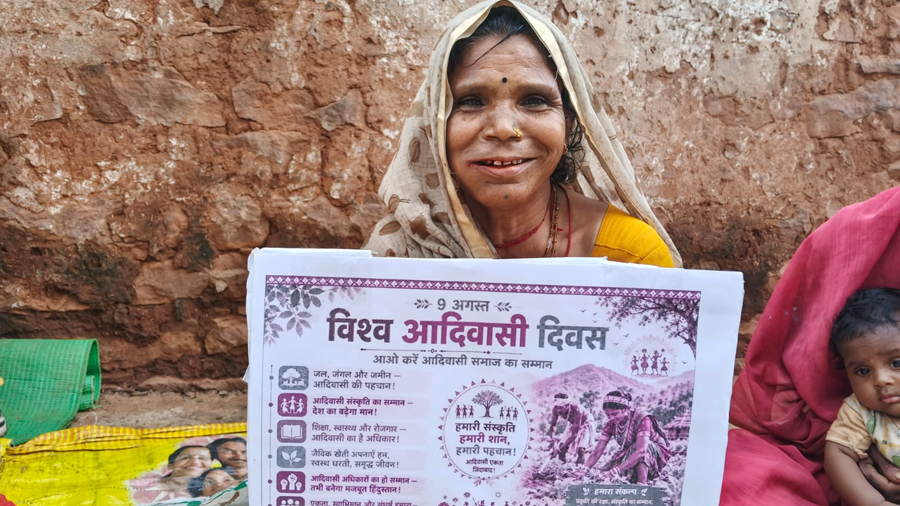
Tribal Pride Takes Centre Stage as Madhya Pradesh Villages Mark World Indigenous Peoples Day 2026
Drums echoed through Gondai and Thoda villages on 9 August as tribal communities came together...
LEARN MORE 91 -11 - 2336 3390
  director@caritasindia.org


