
 91 -11 - 2336 3390
  director@caritasindia.org
 How One Mother Stitched Her Life Back Together
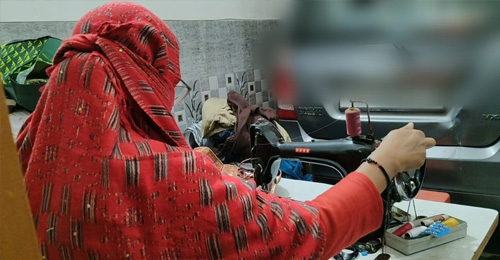
In a small, busy lane in Gokulpuri, there’s a sound that means everything to a family of four. It’s the steady, rhythmic hum of a motorized sewing machine. For the woman sitting at that machine, that sound isn’t just about work, it’s the sound of her freedom.
Not long ago, her life felt like it was coming apart. After losing her husband and receiving an HIV diagnosis, the people she thought she could count on, her own family and neighbors, turned their backs. She was left alone in the dark with three children to raise, labeled by a society that preferred to “ignore” her rather than help her.
The change didn’t happen overnight, and it didn’t happen by magic. It started when a team from Caritas India’s Gram Nirman program literally knocked on her door. They didn’t see a “patient” or a “victim.” They saw a mother who just needed a fair shot.
The first steps were the hardest. Learning to live with her status, getting her health back on track at the ART clinic, and finally getting her government pension papers sorted. It was a lot of paperwork and a lot of emotional heavy lifting, but slowly, the fear started to fade.
Then came the sewing machine. It was a simple tool, but it changed everything. She didn’t want a handout; she wanted to work.
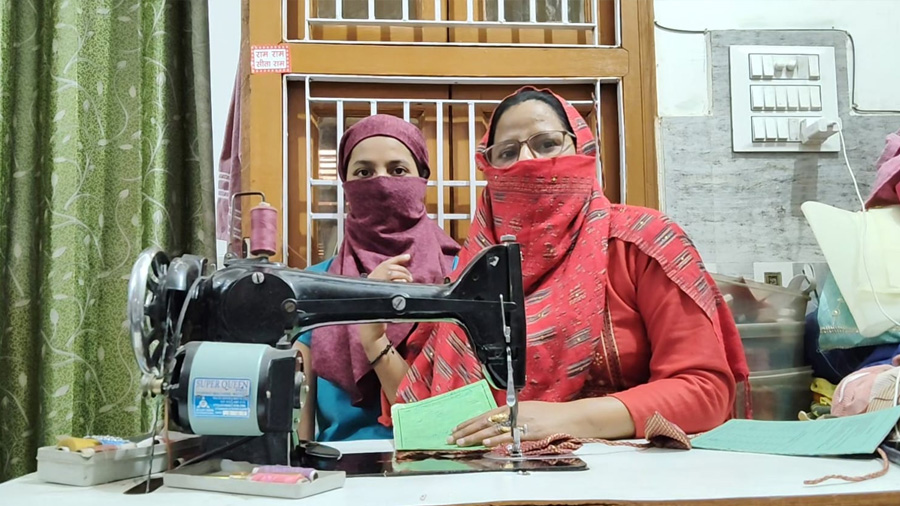
She practiced until her stitches were perfect. She built a business from scratch. Now, she’s bringing in ₹10,000 to ₹13,000 a month and during the busy festival seasons, she’s making as much as ₹18,000. She isn’t just surviving anymore; she’s an entrepreneur leading her own house.
The best part of this story isn’t the money, it’s her kids.
• Her middle daughter, who also lives with HIV, has watched her mother’s strength and decided she won’t be held back either. She’s in the 12th grade now and has her heart set on becoming a journalist to tell stories just like this one.
• Her oldest is studying Psychology, and her son is working hard on his 10th-grade exams.
In their home, the “stigma” is gone. They help each other with chores, they support their mom’s business, and they look at the future with their heads held high.
This isn’t just a “success story,” it’s proof that when you give a woman the right tools and a little bit of solid ground to stand on, she can change the world for her children. She went from being a woman “refused” by her community to being the one everyone looks up to. She didn’t just fix her life; she stitched together a brand new one.
Upcoming News
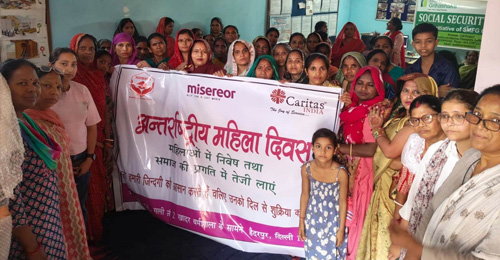
Migrant Women Workers Lead the Charge for Equality
For the 70 women gathered under the banner of the Pravasi Bandhu Program this week,...
LEARN MORE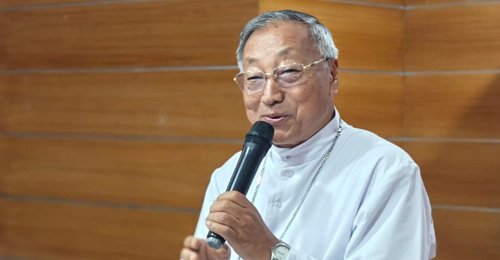
Archbishop Dr. Linus Neli Takes the Helm at Caritas India
A new chapter of compassion has begun. Archbishop Dr. Linus Neli officially took charge as...
LEARN MORE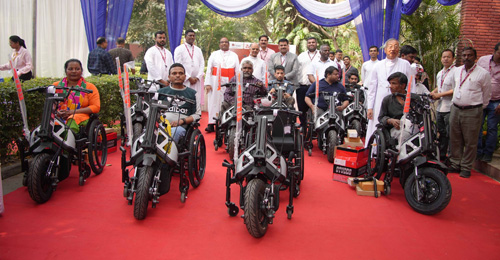
Wheels of Freedom: Caritas Transforms Lives through Chetana Campaign
For Govinda, a 21-year-old student living in a small slum near Delhi’s Mansarovar Park, the...
LEARN MORE 91 -11 - 2336 3390
  director@caritasindia.org


