
 91 -11 - 2336 3390
  director@caritasindia.org
 In a changing climate, Ghanshyam found resilience growing in the dark
In Kolua, a small village tucked away in the heart of Madhya Pradesh, mushrooms were once whispered about like forbidden fruit. No one had ever grown them, tasted them, or even imagined them as food. They were strange, suspicious things. Then one farmer decided to take a chance and changed everything.
Ghanshyam Ahirwar had lived all his life cultivating traditional crops. His income was modest, his options limited. But when the SAFBIN program, supported by Caritas India, introduced mushroom cultivation to the region, something clicked in him. “I realized mushrooms could bring both food and income for my family,” he said. Still, he hesitated. “No one had ever tried it here. I hadn’t even tasted a mushroom before.”
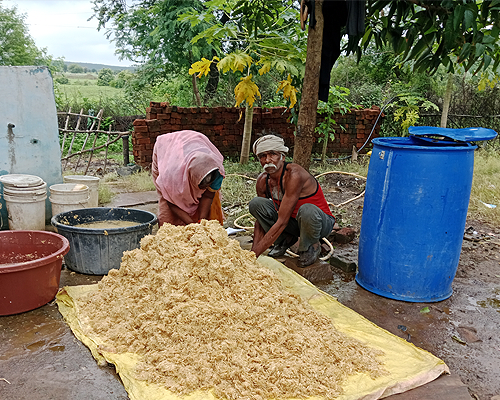
The SAFBIN team believed that smallholder farmers like Ghanshyam could build resilience against climate risks through low-input, high-yield options like mushrooms. He was trained along with other lead farmers on every step of preparation of the substrate, managing humidity, and creating the right light and temperature. The sessions weren’t just technical; they were confidence-building.
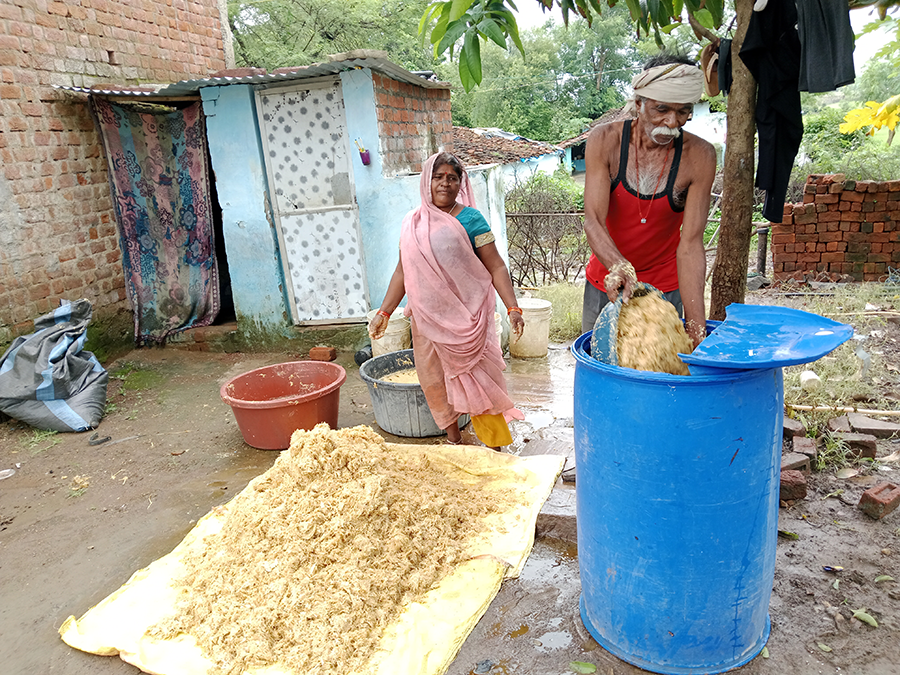
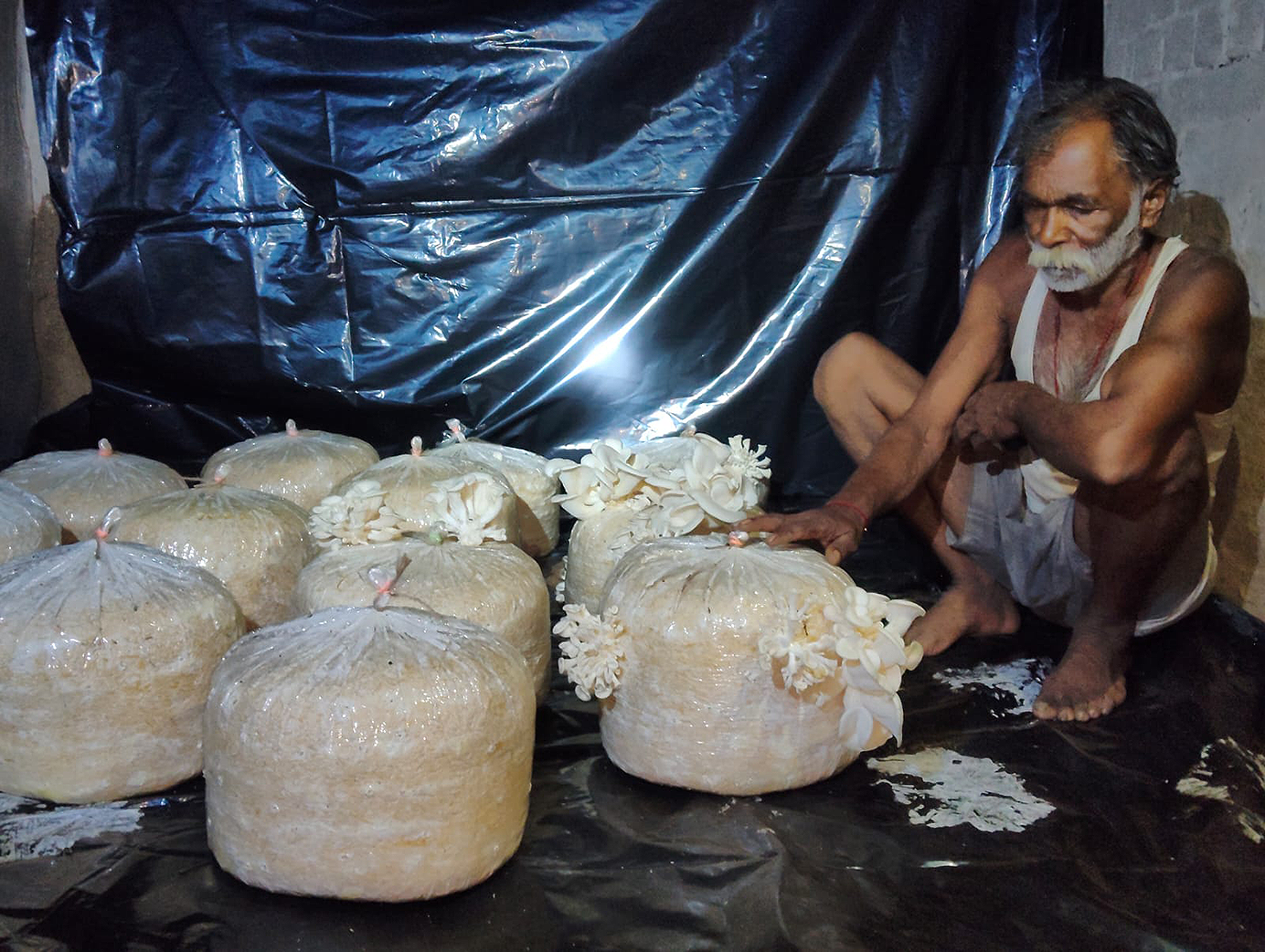
With guidance from the team, Ghanshyam invested ₹6,900 in spawn, straw, and polybags, transforming a small 12×10-foot room of his home into a cultivation unit. The first few days were filled with doubt. Then, on 13 August 2025, he harvested his first 3.5 kilograms of gleaming white mushrooms. The moment was quiet but transformative.
His family cooked a small batch that evening. The taste surprised them with its softness, freshness, and earthy flavor. Ghanshyam sold the rest in the village at ₹250 per kilogram, earning ₹850 from his first harvest. The numbers were small, but the story wasn’t. Word spread fast. Villagers who once turned away in doubt now gathered around his home to see the strange new crop. Some tasted it for the first time and asked for more.
“I never thought something like this could grow in our village,” said Panna Lal, one of the first to follow Ghanshyam’s lead. “When I saw his results, I built my own unit.” Soon, eight other farmers joined in. Munna Sahu, another early adopter, smiled as he explained, “Now mushrooms are part of both our meals and our income.”
Today, five mushroom units in the SAFBIN program area together produce around 50 kilograms weekly. At ₹200 per kilogram, each member earns roughly ₹8,000 a month. The profits are growing, but what’s more valuable is the confidence.
Challenges remain. Markets are still forming, and Ghanshyam often travels to nearby towns to find regular buyers in restaurants and malls. But he’s undeterred. “We’ve learned mushrooms can grow with what we already have without chemicals and no dependence on outsiders,” he said. “It’s clean, it’s ours.”
Kolua, once a village of skeptics, now proudly nurtures a new tradition. Mushroom farming has become more than a livelihood; it’s a quiet revolution rooted in courage and curiosity.
One farmer’s experiment has turned into a community’s transformation. In Kolua, mushrooms are no longer strange. They’re a symbol of what happens when doubt gives way to delight.
Upcoming News
Migrant Women Workers Lead the Charge for Equality
For the 70 women gathered under the banner of the Pravasi Bandhu Program this week,...
LEARN MORE
How One Mother Stitched Her Life Back Together
In a small, busy lane in Gokulpuri, there’s a sound that means everything to a...
LEARN MORE
Archbishop Dr. Linus Neli Takes the Helm at Caritas India
A new chapter of compassion has begun. Archbishop Dr. Linus Neli officially took charge as...
LEARN MORE 91 -11 - 2336 3390
  director@caritasindia.org


