
 91 -11 - 2336 3390
  director@caritasindia.org
 National Conclave Redefines the Migrant Journey in India
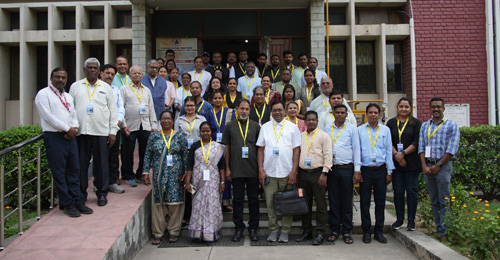
“Migrants are not numbers, they are persons. Each one has a name, each one has a face, and each one has a story,” said Fr. Jesudass R., Executive Director of Caritas India. Quoting Pope Francis, he set a deeply reflective tone for the National Conclave on Safe and Dignified Migration, held on 17-18 March 2026 at the Integrated Social Initiatives Centre in New Delhi.
Organized by Caritas India with the support of Misereor, the conclave brought together 70 representatives from government, civil society, UN organizations, and academia. The mission was clear: move beyond policy jargon and place human dignity at the center of a new, rights-based ecosystem for India’s 450 million internal migrants.
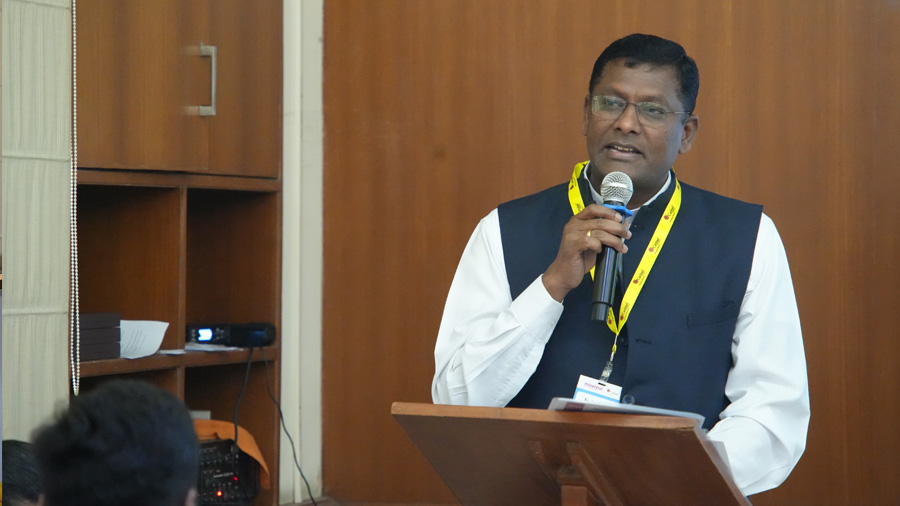
Fr. Jesudass argued that migrants must never be reduced to statistics. This shift from a “charity-based” approach to a more inclusive, people-centered framework was a consistent theme, urging institutions to treat migration as a shared social responsibility rather than a burden.
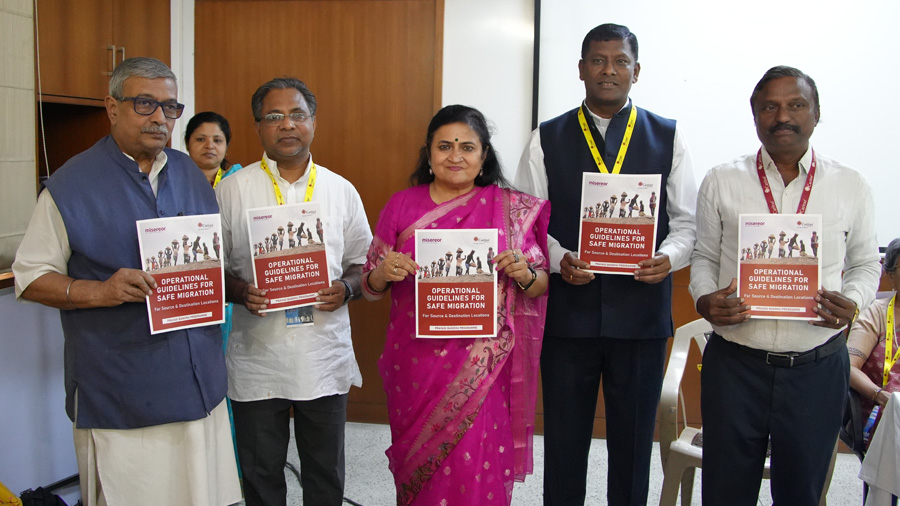
The event was graced by Dr. Rashmi Singh, IAS, Secretary of Delhi Women and Child Development, who served as the Chief Guest. In a landmark step toward institutionalizing protection, she released the Operational Guidelines for Safe Migration, developed under the Pravasi Bandhu program. Dr. Singh emphasized that robust data systems and clear departmental coordination are essential to ensure migrants are meaningfully included in national development.
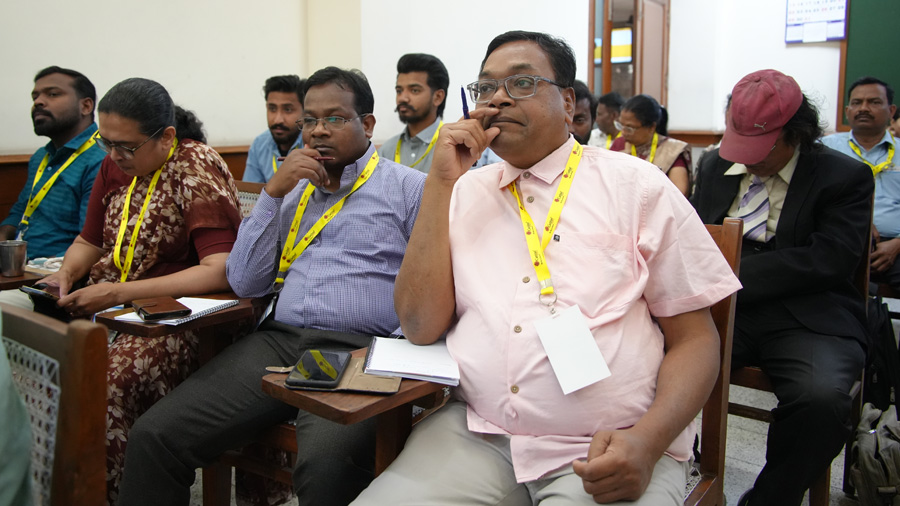
A critical focus of the discussions was the systemic exclusion faced by those moving from rural regions to urban centers. Dr. Haridas V.R., National Program Coordinator, introduced the Pravasi Bandhu initiative as a solution to the “disconnect” between source and destination areas. By establishing a “continuum of care,” the program ensures migrants have access to information and legal aid at every stage of their journey.
However, experts like Dr. Meera Sethi and Dr. Rashmi Singh highlighted that even with existing laws like the e-Shram portal, implementation gaps remain. The lack of “portability” in social security means many migrants lose access to healthcare and food rations the moment they cross state lines.
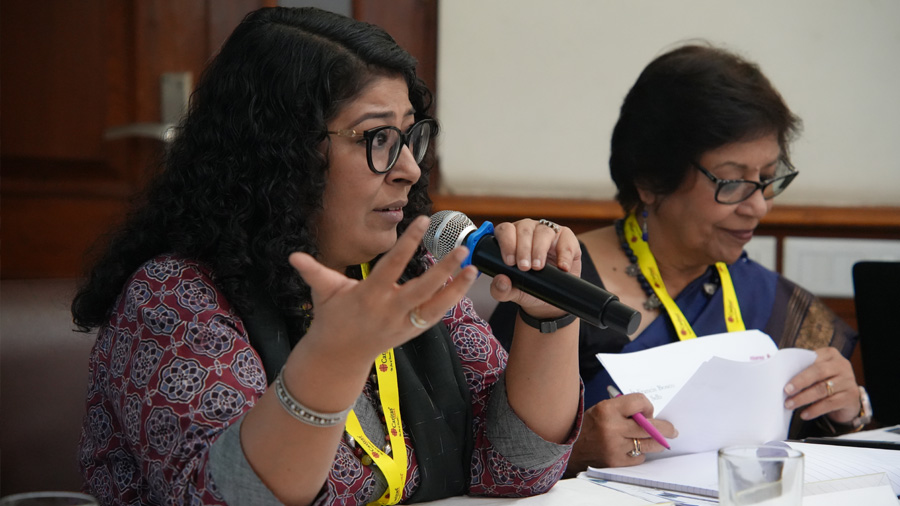
Adding a critical perspective on labor conditions, Dr. Neha Wadhwan, National Project Coordinator for the ILO, brought attention to the everyday lived vulnerabilities of migrants. She highlighted how informality governs their lives and work, noting that many operate within unregulated labor markets characterized by a lack of protection, an absence of written contracts, and a high dependency on middlemen. Dr. Neha further emphasized the intersectional nature of migration, where factors like gender, class, and social identity deepen existing vulnerabilities. This is particularly true for women, who frequently face invisible labor, unsafe work environments, and limited mobility.
The dialogue also explored modern drivers of displacement. Dr. Haridas V.R. detailed how climate-induced factors—such as irregular rainfall and soil degradation—are forcing distress migration. Simultaneously, the rise of the gig economy was identified as a challenge that often strips workers of job security and collective bargaining power.
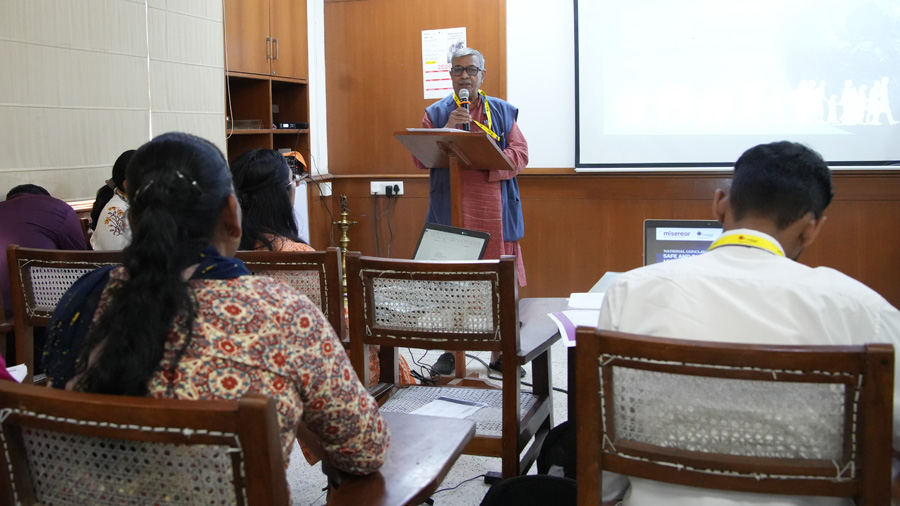
“Migration today is a commercial activity for the agents who bring people to work for their own benefit,” said Mr. Subhash Bhatnagar, Director – Nirmana NGO, working for the unorganised sector workers to achieve social security and dignified livelihoods. He suggested to make co-operative society in which the partners of the source and the destination act as an instrument to help people in migration.
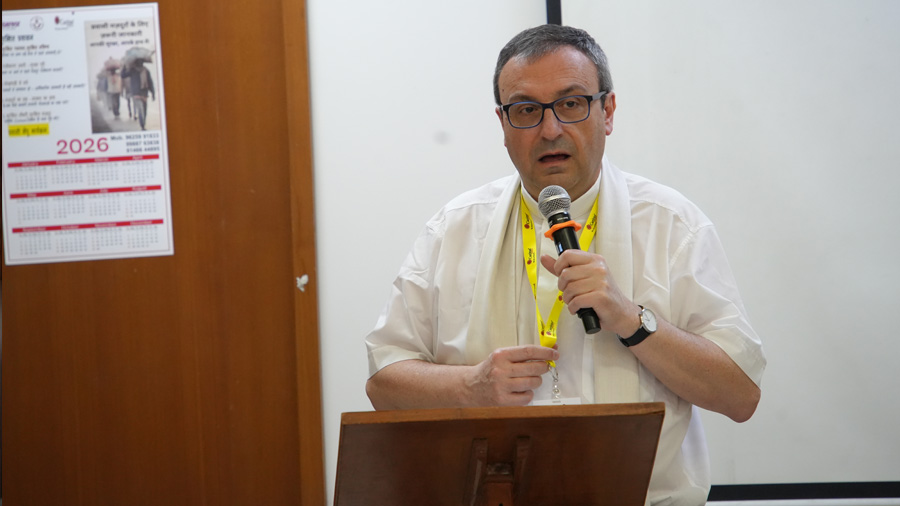
Adding a global perspective, Fr. Andrea Ciucci from Italy discussed the role of Artificial Intelligence in migration governance. He shared insights from the European Union’s NADINE project, which uses AI-driven chatbots and career guidance systems to facilitate the integration of migrants into new societies.
The conclave concluded with a call for a National Convergence Framework. This roadmap seeks to strengthen inter-state coordination and data tracking to make migrants “visible” in policymaking. As the delegates adopted a joint resolution, the message was clear: when policies are guided by compassion and justice, migration becomes a choice of aspiration rather than a move of compulsion.
Upcoming News
New Disaster Response Task Force Launched in Wayanad
In the human body, the heart is the first responder, pumping life and energy to...
LEARN MORE
Children’s Panchayat Secures Dignity and Sanitation in Chhadia Village
Sometimes, the biggest barrier to a girl’s education isn't a lack of books or teachers,...
LEARN MORE
Caritas Japan Commends Community-Led Progress in Odisha
A delegation from Caritas Japan conducted an extensive field visit to witness the transformative impact...
LEARN MORE 91 -11 - 2336 3390
  director@caritasindia.org


