
 91 -11 - 2336 3390
 director@caritasindia.org
Rescuing Childhood from Clutches of Chronic Malnutrition
Gauri Kumari (18 months), Aman Kumar (24 months); Karina Kumari (18 months) and Reshma Kumari (05 months) stand chances of recovering from Severe Acute Malnutrition (SAM) after the diagnosis by officials of Nutritional Rehabilitation Centres (NRC).
On February 27, 2019, the NRC official visited SUPOSHAN villages of Kala Balua Panchayat in Araria district of Bihar, to identify malnourished children. These under-5 children represent a substantial section among the Rishidev, Saday and Manjhi communities that battle hunger and malnutrition day in and day out. The efforts of SUPOSHAN met with realisation when the parents made the decision to admit their SAM children to the NRC for immediate treatment! The parents of these four children are members of Community Collectives in Raniganj block of Kala Balua Panchayat.
The nastiest part of the problem is that the communities fail to ‘recognise’ malnutrition, leave alone its lifetime detrimental effects! Physical thinness is seen as normal weakness. Under the normal circumstances, mothers resist putting their children into the NRC for reasons not limited to the cost of travel, post NRC follow up, and dietary requirements. Moreover, the Rishi, Saday, and Manjhi communities are predominantly landless wage labourers. This has prevented them from growing essential vegetables and fruits for self-consumption. The social security schemes have typically failed them, and ignorance on various Government schemes pervades. In their situation, filling up empty stomach assumes greater priority than nutrition.
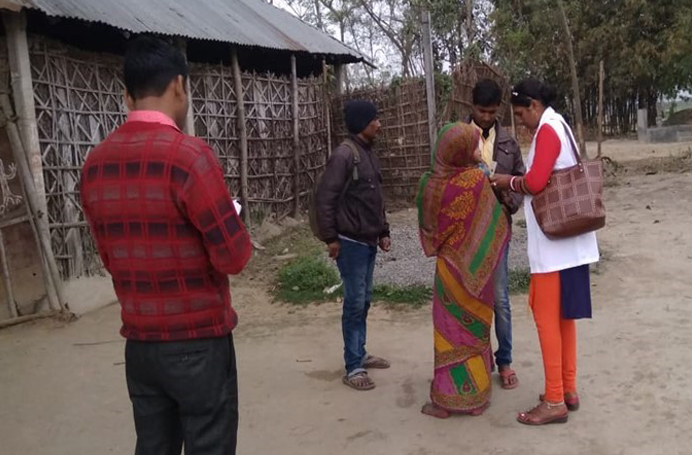
NRC In charge checking on the SAM child
With consistent community organisation and dialogue, and cooperation from Panchayat, the Purnea Social Service Society-SUPOSHAN team succeeded in getting the NRC officials to visit these villages. The NRCs established under the National Health Mission provide facility-based care for children with SAM and medical complications, once referred by village frontline health workers. These healthcare services and care providers are either unreachable or irresponsive to Rishi, Saday and Manjhi communities owing to the lack of required number of anganwadis and mini-anagnawadis. The lack of assertion to realise a range of public entitlements adds to their woes.
SUPSOHAN works to improve service delivery by sensitizing and strengthening the deficient public systems.
SUPOSHAN-an Integrated Health, Nutrition, and Empowerment of Mahadalit Community programme is being implemented across 45 villages in Saharsa, Madhepura and Araria districts of Bihar, supported by Caritas Germany. It aims to address the root causes and manifestations of chronic hunger and malnutrition, particularly among women and children.
The NRC officials gave assurance to visit other SUPOSHAN villages too, having realized that the programme complemented Government efforts on the ground, and they didn’t need to be wary of it anymore.
Upcoming News
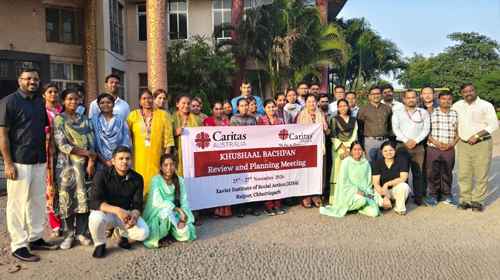
Khushaal Bachpan Sets Sights on Becoming a “Model Programme”
The Khushaal Bachpan (KB) programme will aim to become a model for child-centred development in...
LEARN MORE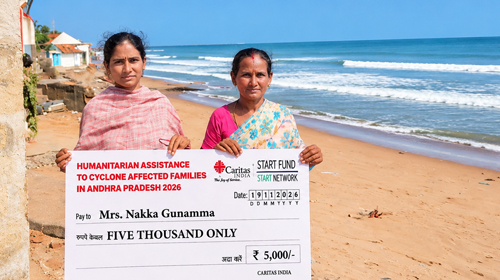
Caritas India extends humanitarian assistance to cyclone affected families in Andhra Pradesh
Caritas India, in collaboration with Diocesan Social Services, has initiated humanitarian assistance for cyclone affected...
LEARN MORE
Madhya Pradesh dioceses learn from Kerala’s Biowin model to build farmer-owned agro-enterprises
Social service societies from across Madhya Pradesh were oriented on building sustainable, farmer-centred agro-enterprises at...
LEARN MORE 91 -11 - 23362735
 director@caritasindia.org


