
 91 -11 - 2336 3390
  director@caritasindia.org
 SAFBIN partners chart sustainability-focused 2026 roadmap
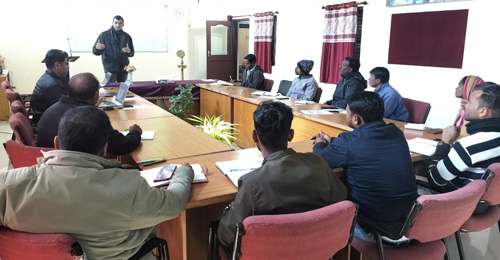
aritas India convened a two-day Orientation and Planning Meeting under the Smallholder Adaptive Farming and Biodiversity Network (SAFBIN) BIP 2026 project at the MVSS Centre in Sagar, Madhya Pradesh, with teams from Manav Vikas Seva Sangh (MVSS), Sagar, and Madhya Pradesh Samaj Seva Sanstha (MPSSS), Bhopal. The meeting aimed to strengthen clarity on strategies to enhance food security, climate resilience and long-term sustainability among smallholder farmers during the one-year extension phase of SAFBIN. The SAFBIN III programme, launched in February 2024 with these partners, is being implemented in 20 villages across Mandla and Sagar districts to build adaptive capacities through biodiversity-based, sustainable agricultural practices.
Over two days, partner staff were oriented on the extension phase proposal, approved 2026 budget, results framework and detailed implementation strategies. Special emphasis was placed on sustainability planning for newly introduced initiatives, integration of thematic interventions, innovative methodologies and standard budget utilization practices, helping establish a common understanding and consensus on the programme’s strategic direction. The structured platform for joint reflection and planning ensured that all teams are aligned on consolidating outcomes and avoiding “project dependency” as SAFBIN moves towards its next phase.
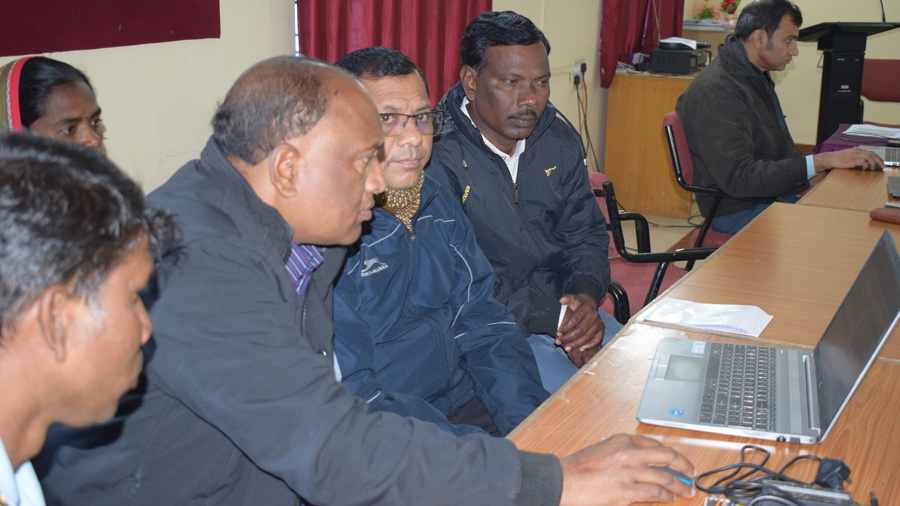
Partners shared key achievements from the last two years, showing how SAFBIN has already begun to shift farming systems at household level. A large number of families have adopted sustainable agricultural practices, initiated vegetable cultivation, established systematic nutrition gardens and adopted mixed farming systems. Communities have also started moving from cash crops to traditional food crops, contributing to improved household food security, better dietary diversity and stronger climate resilience. These changes reflect SAFBIN’s core approach of combining biodiversity, local knowledge and adaptive practices to buffer smallholders against climate stress.
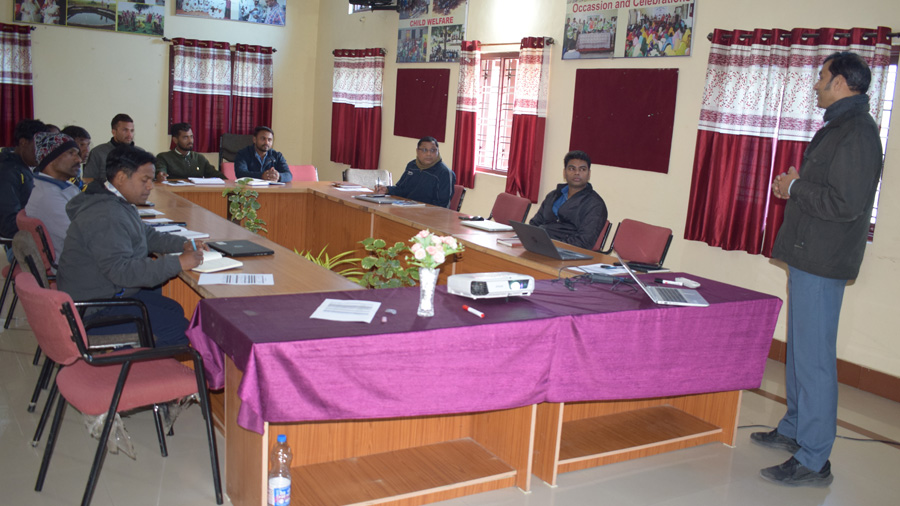
Dr Saju MK, Program Lead for SAFBIN, highlighted thematic priorities for the BIP 2025–26 project and underlined the critical responsibility to respond to climate change impacts on agriculture through an integrated development approach. He stressed addressing livelihoods, food and nutrition security, environmental conservation, efficient resource management and sustainable agricultural practices as non-negotiable pillars of the extension phase, while appreciating partner commitment and progress so far and calling for consolidation beyond the project period.
Looking ahead, Dr Saju presented the Results Framework for 2026, the sustainability strategy for the post-project period and a vision for developing community-led models. He highlighted innovative and scalable interventions such as weekly market initiatives, fisheries units, community-managed regreening, On-Farm Adaptive Research (OFAR) and Integrated Farming Systems (IFS) as levers for long-term impact. He also emphasized the need for systematic documentation and dissemination of best practices to strengthen learning and knowledge exchange among smallholder farmers and stakeholders, ensuring that successful models can be replicated across and beyond SAFBIN villages.
Dr Mukund Deshmukh, Assistant Program Lead, facilitated a dedicated session on strategies for new initiatives introduced in 2026, focusing on enhancing community ownership and sustainability through convergence with government schemes and entitlements, strengthening SHFC linkages, developing model farms, promoting integrated farming systems and encouraging the use of local farm inputs. He outlined thematic priorities, monitoring mechanisms and reporting processes to ensure quality implementation and accountability, grounding the sustainability vision in concrete operational steps.
On the second day, Dr Saju presented kharif season planning for upcoming monsoon crops and conducted a technical session on OFAR trial planning, detailing steps for selecting, developing and monitoring trial plots to generate locally relevant evidence and promote farmer-led learning. In parallel, Finance Associate Mr Soju Mathew oriented finance staff from both partner organizations on the 2026 programme budget, financial management practices, compliance requirements and formats, reinforcing transparent and effective resource use.
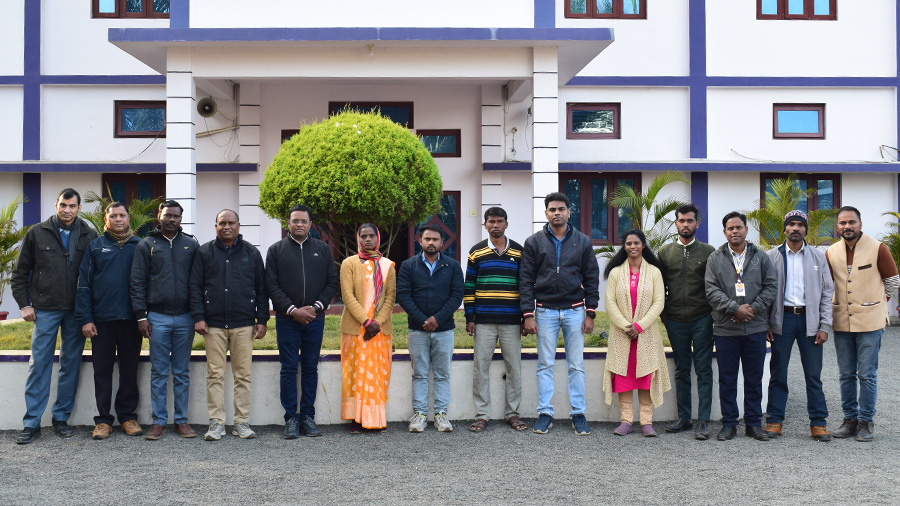
Throughout the meeting, partner teams worked collaboratively to develop detailed implementation plans for the 2026 extension phase, integrating sustainability strategies across all activities and presenting these plans in plenary for collective review and refinement. The orientation and planning process significantly strengthened shared understanding of SAFBIN’s goals, results framework, thematic interventions and management practices, and reinforced a collective commitment to ensure that the gains of smallholder farmers in Mandla and Sagar are not only maintained but scaled and sustained beyond the life of the project
Upcoming News
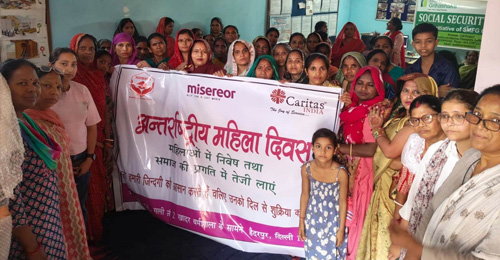
Migrant Women Workers Lead the Charge for Equality
For the 70 women gathered under the banner of the Pravasi Bandhu Program this week,...
LEARN MORE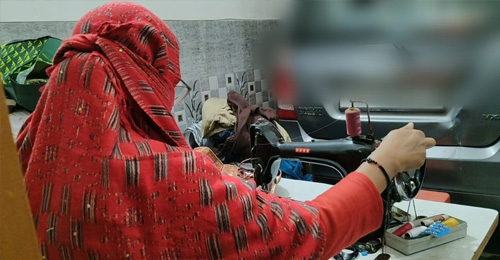
How One Mother Stitched Her Life Back Together
In a small, busy lane in Gokulpuri, there’s a sound that means everything to a...
LEARN MORE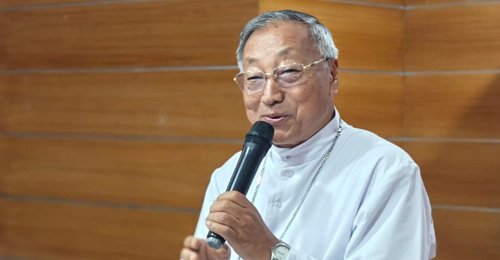
Archbishop Dr. Linus Neli Takes the Helm at Caritas India
A new chapter of compassion has begun. Archbishop Dr. Linus Neli officially took charge as...
LEARN MORE 91 -11 - 2336 3390
  director@caritasindia.org


