
 91 -11 - 2336 3390
  director@caritasindia.org
 Sundarbans’ Children Raise Demands for Disaster Resilient Measures
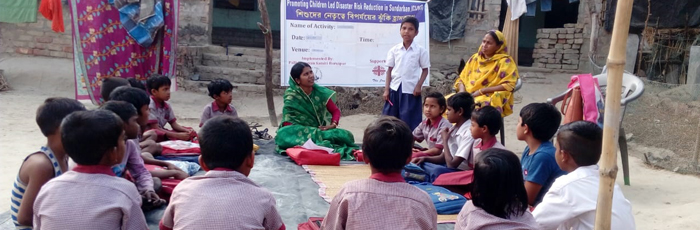
Caritas India in 2016, initiated a programme called CLDRR (Child Led Disaster Risk Reduction) in Sundarbans region to understand hazard, risks, and vulnerabilities from children’s point of view. Implemented by Palli Unnayan Samiti, on 8th March, members of children’s collectives from eight gram sansads, interacted with Ms. Suchitra Bhuiya, Gram Pradhan of Pathankhali Panchayat in South 24 Parganas. The CLDRR Plans developed for their villages by them after identifying the hazards and risks, under team’s accompaniment, were submitted to the Pradhan with the request to integrate the same in the village development plans. These demands included,
- Flood shelters to reduce loss of school days
- A strong embankment
- Raised plinth of tube wells
- Power backup as electricity snaps during disasters for days causing much fear and anxiety
- Concrete road to avoid accidents during disaster events
- Raised playground in their school and community
- Construction of School boundary walls
- Safe drinking water for community as well as ICDS.
- More toilets for girls in schools
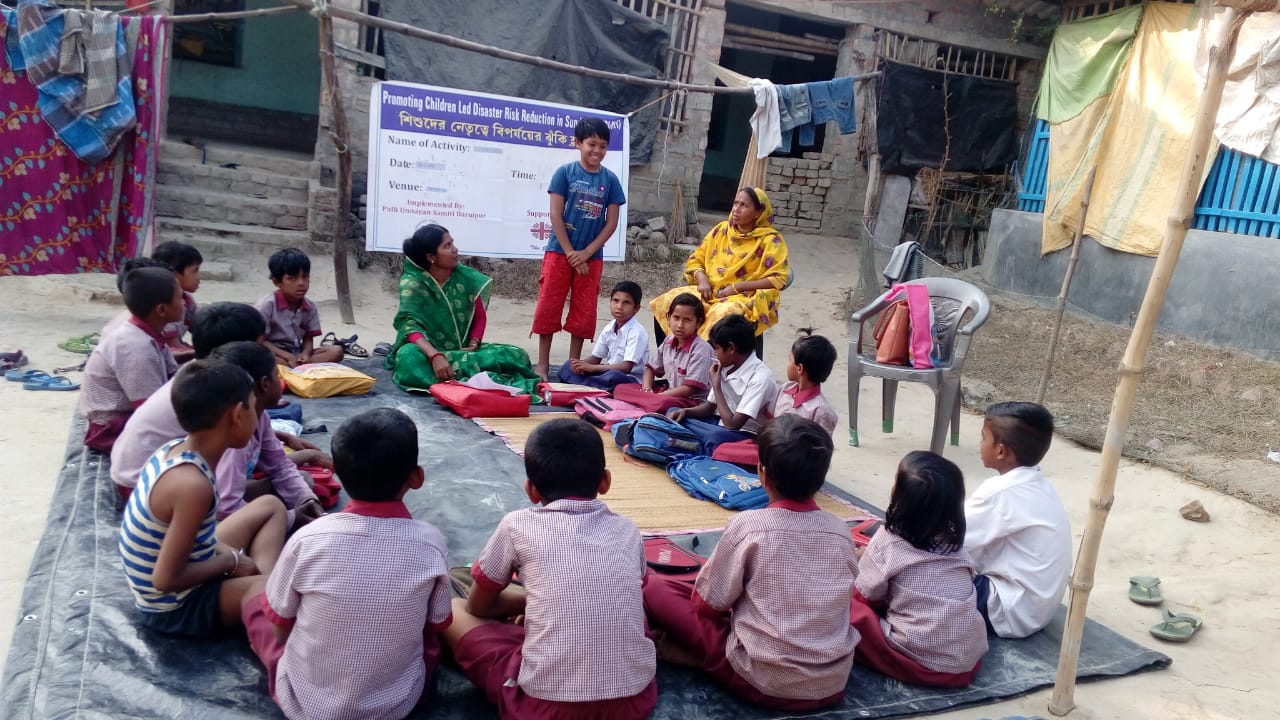
The Pradhan, amazed at the efforts of children, assured them speedy actions on some of their demands. She also appreciated the passion and effort of children and opened the doors for continued dialogue with them in future, inviting their inputs to planning and sharing related to DRR issues.
Sundarbans region in South Bengal, is highly vulnerable to floods, embankment erosion and cyclones due to its unique geo-climatic situation and other human-related events. The situation has continued to threaten the safety of children of Sundarbans in a big way, as witnessed after the overwhelming Aila cyclone in 2009. The overall wellbeing of communities living in the region, are mostly dependent on the biodiversity for daily survival. The occurrence of such calamities restrain livelihood and strain the essential supplies, leaving in its wake long term loses and damages. Little does the standard humanitarian and disaster risk reduction (DRR) process recognise the need to have children participate in matters of their protection and resilience building. The programme places children in the centre of local planning to secure measures for their overall physical safety and resilience by enabling children’s participation at all levels.
Read related news: https://www.caritasindia.org/students-as-drr-change-agent/
Upcoming News
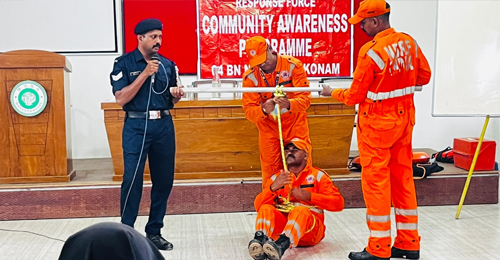
Ropes and Sacks Become Lifesaving Tools as NDRF Trains Wayanad’s First Responders
Long before an ambulance can reach a flooded village or a landslide hit hillside, it...
LEARN MORE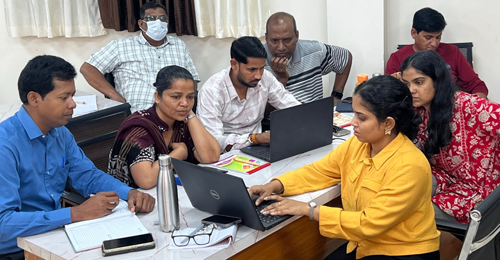
Caritas India Trains Partner Organisations in Evidence Based Project Proposal Writing
Some of the strongest community projects never get built, not for lack of need or...
LEARN MORE
A Grocery Shop, a Mother’s Resolve, and Three Daughters Who Stayed in School
Three young girls in this remote village are attending school regularly today because their mother...
LEARN MORE 91 -11 - 23362735
  director@caritasindia.org


