
 91 -11 - 2336 3390
  director@caritasindia.org
 Sustenance of food systems and systemic changes: SAFBIN Planning Workshop

SAFBIN has grown to be a way of life for the smallholder farmers of Madhya Pradesh. With farmers working towards ensuring food security, strengthening local food systems, securing land tenures and creating marketing mechanisms to create a window for accelerating agricultural products. Though the pandemic had created a vacuum it has also paved various opportunities for our farmers to stretch beyond their traditional thinking and move beyond to create new convergences to make these adversities an opportunity for small farm future who actually suffered the most.
With the changing scenario in the realm of sustainable agriculture, a planning meeting was organised by Caritas Austria and facilitated by South Asia Regional Enablers (SARE) for the next phase of the Smallholder Adaptive Farming and Biodiversity Network (SAFBIN) program. A representative from Caritas India, Caritas Bangladesh, Caritas Nepal, Caritas Pakistan, Caritas Austria along with Caritas Sri Lanka for the first time to be part of such consultations.
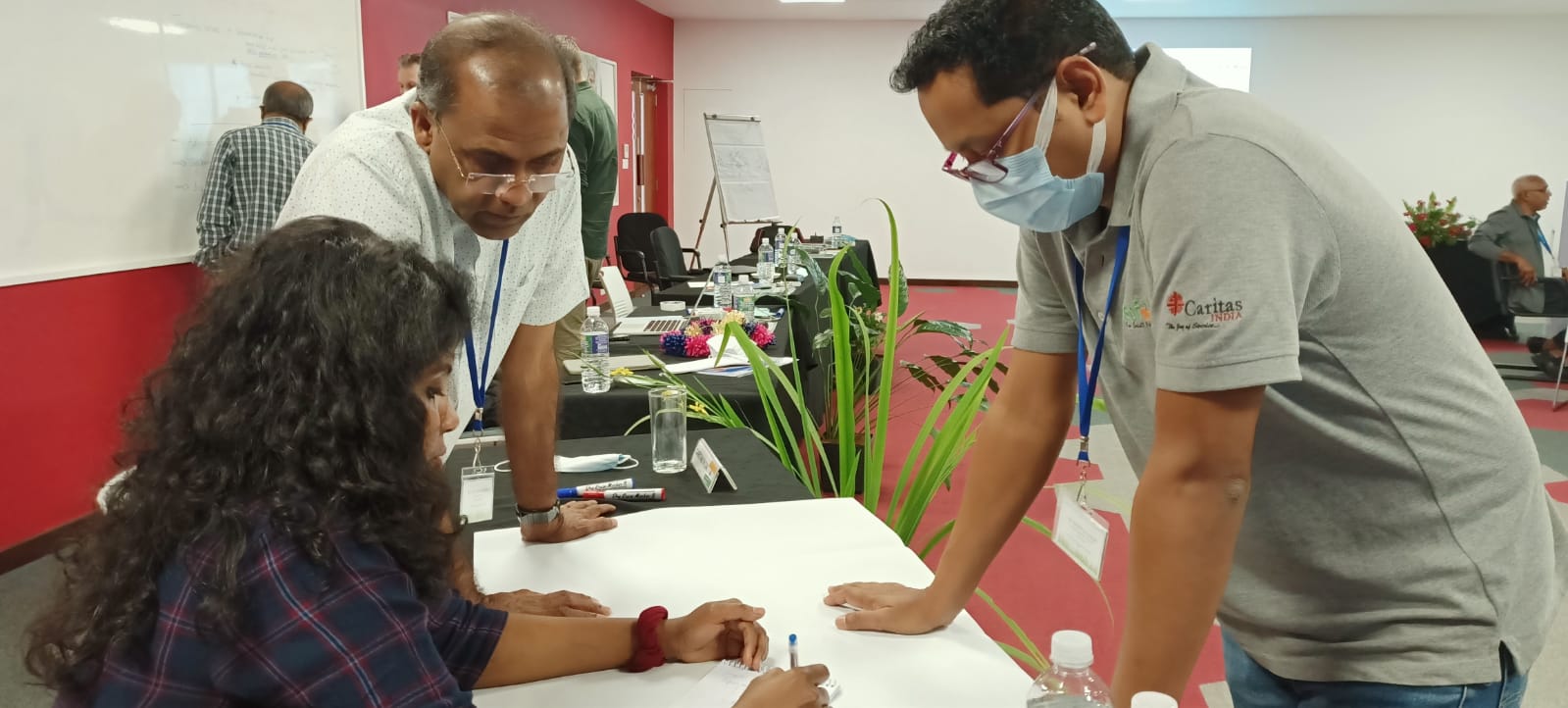
This was the first physical interaction since 2020 due to the Covid-19 pandemic situation and subsequent lockdowns and restrictions, where respective program team members along with the Executive Directors of all five countries had joined in the planning meeting organised in Kurunegala district of Sri Lanka from February 28 to March 4, 2022
The key objective of the planning meeting was not only to develop the next phase of the SAFBIN but also to compile the major learning, communication materials to showcase the impact brought in the lives of smallholders through the SAFBIN phase II to all potential donors and investors. The program highlights were shared by each country’s representatives and overall achievement was presented by the SARE team. The strategic role of Caritas Austria, the SARE team and Caritas Asia were also among the major point of discussion for the upcoming phase of SAFBIN.
While sharing during the session, the Executive Director of Caritas India Fr Dr Paul Moonjely gave emphasis towards taking forward the smallholder led value chain of small-farm-agri-food for the next phase along with the on-farm action research which has been the core of SAFBIN to make the smallholders more adaptive to the local challenges.
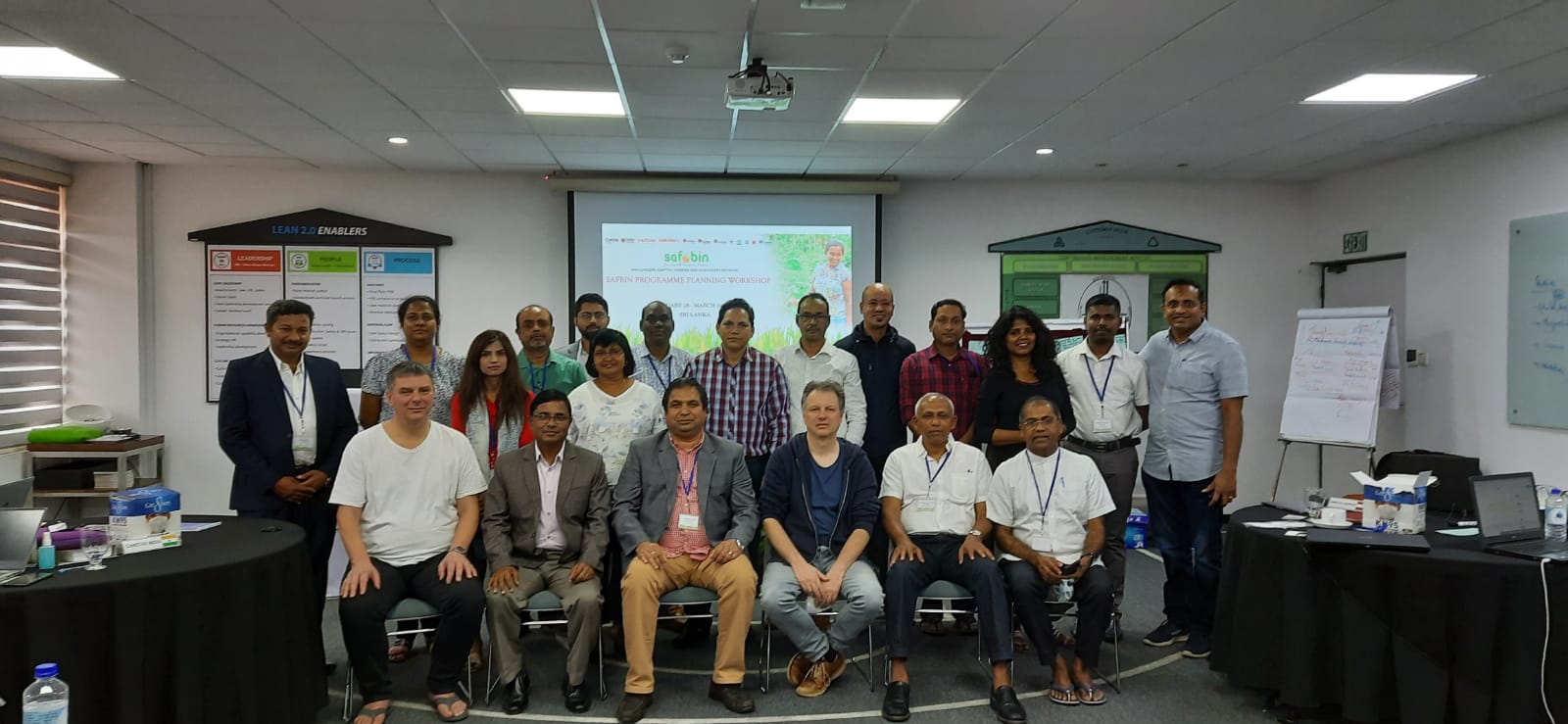
On the technical aspect, the overall consensus was made to continue the same strategies for Food Security, Climate Adaptive Agriculture and smallholder led value chain initiative of SAFBIN along with a few new initiatives like the net-zero concept. However, data and information management systems are to be developed for the compilation of country-specific program achievements.
Upcoming News
How Family Livelihood Built a Khushaal Bachpan in Bastipara
In Bastipara, a small hamlet of Kevradih village under Sirri Panchayat, Chhattisgarh most families depend...
LEARN MORE
Caritas India Brings IAGs and Community Organizations Together in Assam
As climate change reshapes weather patterns and intensifies disaster risks across Assam, strengthening community preparedness,...
LEARN MORE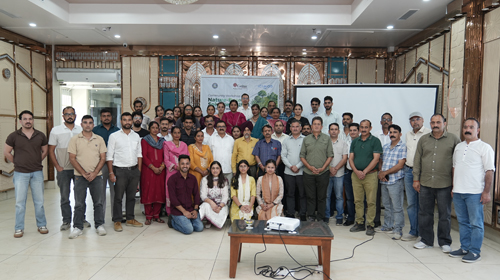
Dharampur Workshop Hands Flood Protection Works to the Community
Sixty three people gathered in Jahu with one question to settle. Who will look after...
LEARN MORE 91 -11 - 23362735
  director@caritasindia.org


