
 91 -11 - 2336 3390
  director@caritasindia.org
 This Is What Earth Day Looks Like at Grassroot
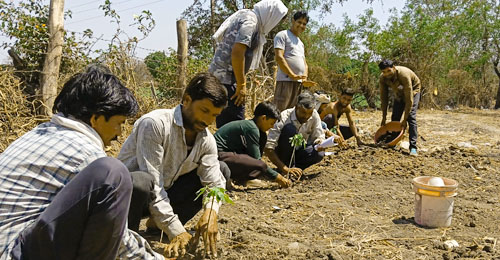
Somewhere between a children’s aspirations drawing of a tree and a farmer digging a pit for the monsoon season, Earth Day found its truest expression this year. It was not on paper or in screen but in five villages where the relationship between people and land is not a talking point but a daily reality.
On 22 April 2026, communities across Khiriya Nikhar, Barkheda, Salhedanda, Bhaisadah, and Malimohagvhan came together under the Smallholder Adaptive Farming and Biodiversity Network (SAFBIN) project to mark World Earth Day with something increasingly rare in environmental protection and promotion through direct, physical, and joyful action. One hundred and fifty-one people out of which 46 were children spent the day in awareness sessions, community rallies, plantation drives, and pit-digging work that will make the coming monsoon season count for the earth beneath their feet.
Earth Day, first observed in 1970, now engages over a billion people across more than 190 countries. Yet for many, the observance remains abstract, a social media moment, an institutional pledge, a conference declaration. For the farming communities of central India, environmental degradation is not an abstraction. It is the soil that grows thinner each season, the water table that drops further each year, the harvest that becomes harder to predict. When SAFBIN project workers arrived in these villages to mark the day, they were not bringing environmental awareness to people who did not understand the problem. They were helping communities name what they already live.
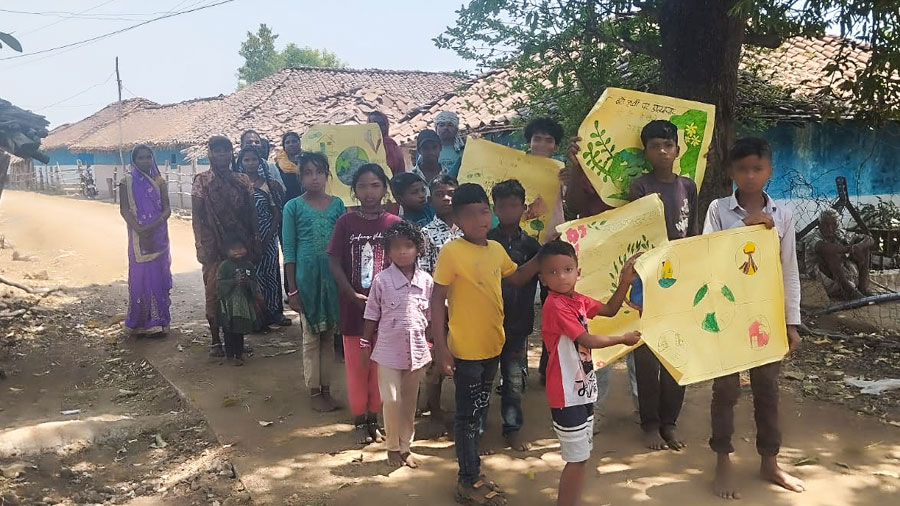
Among the most striking moments of the celebration was the role played by the Nature Club, a group of children who had come not just to observe but to contribute. Armed with crayons and paper, they rendered their understanding of environmental protection in drawings that depicted trees, clean surroundings, and fertile soil. These were not decorative additions to an adult programme. They were the programme’s conscience, a reminder of who bears the longest consequences of today’s agricultural and ecological choices.
The children’s drawings were followed by something louder, a community rally through the villages, with slogans on greenery, soil conservation, and collective responsibility echoing through streets that rarely hear that kind of organised public expression. The rally reached beyond the gathering itself, carrying the day’s message to households and bystanders who had not attended the formal sessions.
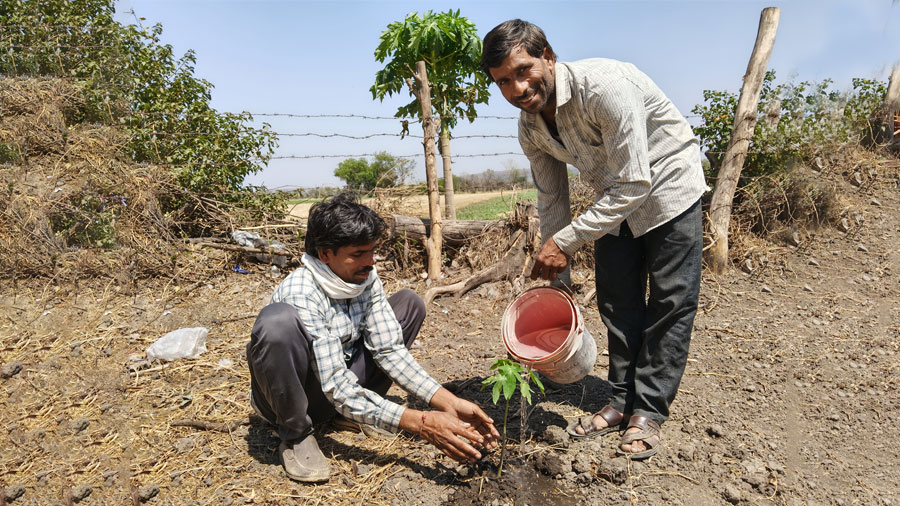
The afternoon moved from words to work. In a plantation drive, farmers and children together pressed saplings into the earth, each one accompanied by a collective pledge to water, protect, and nurture them to maturity. It is a pledge communities in development programmes make often. What gave it weight here was the preparation for the monsoon, community members began digging pits across their fields as a preparatory work for a large-scale plantation drive timed to the rains. This was not celebration as performance. It was celebration as preparation.
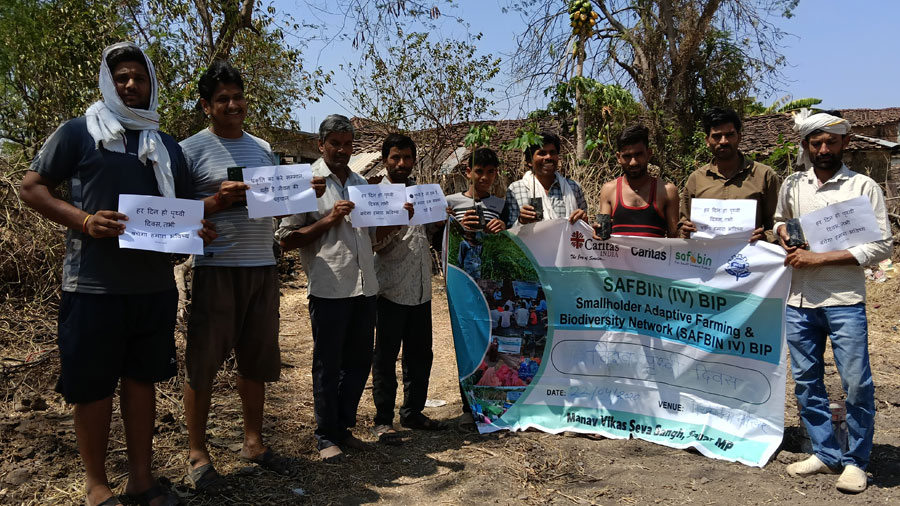
The awareness sessions held across the five villages focused specifically on soil health, a crisis that is often overshadowed by conversations about air and water, but one that strikes directly at the food security of farming families. Participants were told what many already suspected: that excessive chemical fertilisers and pesticides, while boosting short-term yields, are steadily destroying the soil’s long-term fertility. The sessions encouraged a shift toward organic and sustainable farming practices, and farmers responded with something programme teams do not always receive a public, collective commitment to change.
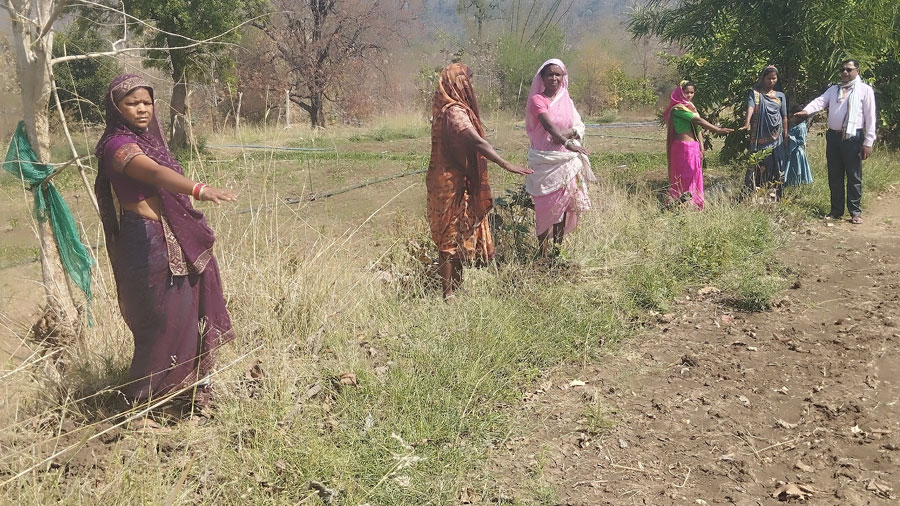
One hundred and fifty-one people in five villages in Madhya Pradesh marked Earth Day 2026 by digging, planting, drawing, marching, and pledging on soil that is theirs to protect and theirs to lose. In the gap between those two kinds of observance lies the work that organisations like SAFBIN exist to close.
The saplings are in the ground. The pits are dug. The children’s drawings have been seen. The real measure of this Earth Day will come with the monsoon and the season after that, and the one after that. But something shifted in those five villages on 22 April 2026. And shifts, when they are rooted deep enough, have a way of lasting.
Upcoming News
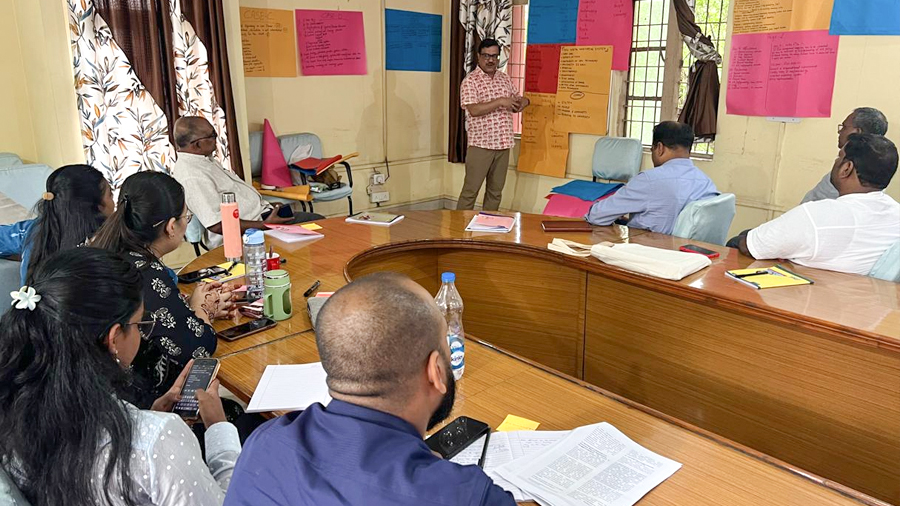
When NGOs Grow, What Breaks First? Caritas India Tackles the Answer in Raipur
Three-day workshop arms executive leaders with governance tools, a 20-policy framework and practical fixes for...
LEARN MORE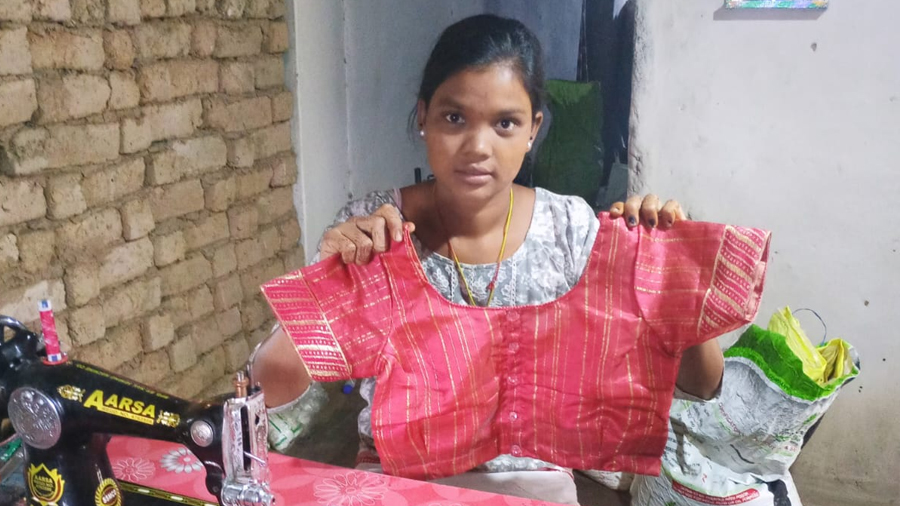
Nine Kilometres Through the Jungle: How Poornima Stitched Her Own Future
For 19 year old Poornima Rawat of Rajamma village in Lailunga block of Chhattisgarh's Raigarh...
LEARN MORE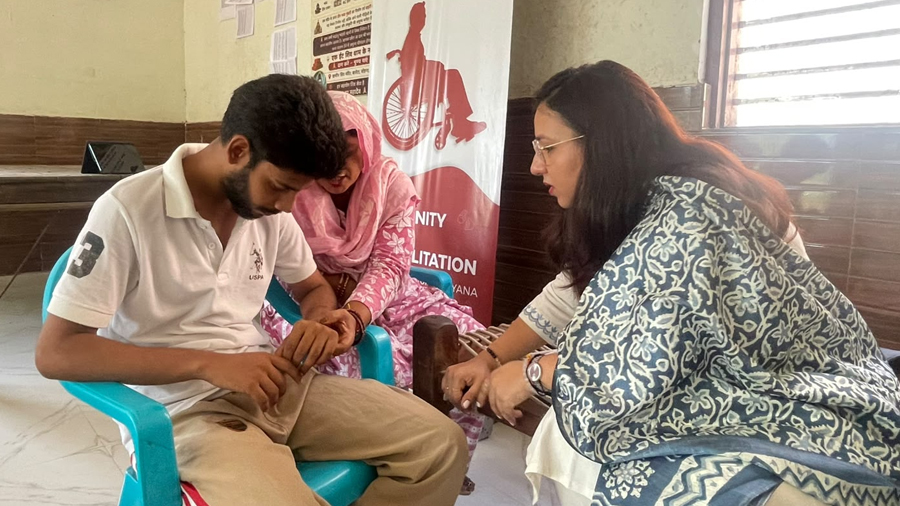
In a Nuh Village, People Living With Mental Illness Finally Got to Speak, and Be Heard
Nine people sat in that room in Barota village, Nuh district, Haryana, each carrying a...
LEARN MORE 91 -11 - 23362735
  director@caritasindia.org


