
 91 -11 - 2336 3390
  director@caritasindia.org
 Why Diwakar Biruli Chose the Village over the City
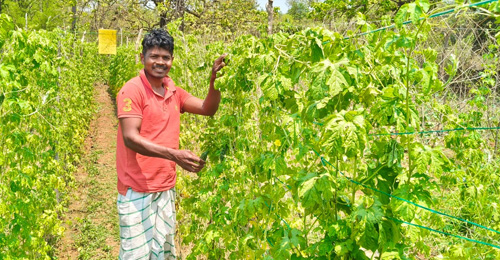
Between 2009 and 2019, Diwakar Biruli lived a life divided by distance and a quiet, persistent desperation. Thousands of kilometers away from the familiar, iron-rich red soil of Haldibani village in Jharkhand, he was an anonymous face amid the humid, concrete expanses of Andhra Pradesh and other metropolitan hubs. In the city, he was just another unit of labor, a pair of hands hired to build someone else’s dream, a cog in an urban machine that never stopped turning. To Diwakar, the city was a world where he simply did not belong. He was a man of the earth, a tribal soul forced into an urban existence that offered a meager survival but systematically stripped away his dignity.
“Even after working day and night in another state,” Diwakar recalls, his voice carrying the weight of a decade of exhaustion, “I could not dream of improving my family’s future.”
Diwakar was a victim of distress migration, a silent, pervasive crisis that tears at the social and cultural fabric of tribal India. In remote regions like the Dumaria block, migration is rarely a choice of ambition or a quest for adventure. Instead, it is a desperate survival tactic born of structural vulnerability. Dumaria is a land of beautiful, undulating forested landscapes, but it is also a land where nearly 72 percent of the population belongs to Scheduled Tribes, reflecting deep-seated historical marginalization. With a literacy rate of just 57 percent and a wide gender gap, opportunities for a young man like Diwakar, who was forced to drop out after Class 8 due to financial hardship, were virtually nonexistent.
In Haldibani, agriculture is largely rain-fed, and for Diwakar, the struggle was rooted in 18 decimals of land inherited from his parents. To the uninitiated, 18 decimals is a fragment (barely enough for a small mud house and a few livestock) far too small to feed a family of four through traditional farming. With no irrigation and a lack of modern knowledge, this tiny plot lay dormant for most of the year. This lack of local opportunity pushed Diwakar into a decade of seasonal exile.
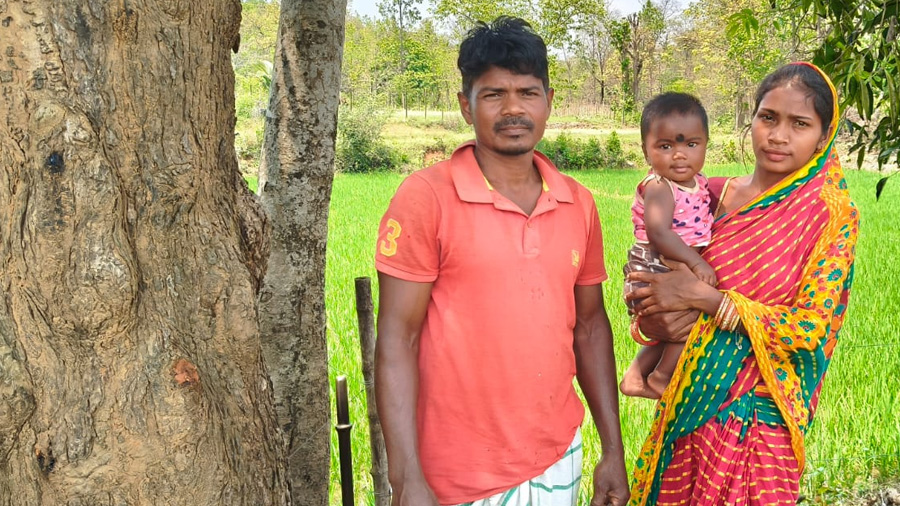
Distress migration meant more than just hard work; it meant a life of fragmented memories. After marrying Mecho Biruli in 2017 and starting a separate household, the pressure to provide became a heavy burden. Migration meant missing the first steps and first words of his two children. It meant his wife managing the hardships of a remote household alone, constantly looking toward the horizon and worrying if the next meager remittance would arrive. Diwakar lived as a “fish out of water” in crowded urban colonies, performing backbreaking physical labor in poor conditions, only to return home at the end of the season nearly as poor as he had left.
The turning point arrived in 2021, not as a simple handout, but as a profound shift in perspective. The Gram Nirman Programme, supported by Caritas Australia, was launched across 11 districts of Jharkhand and Chhattisgarh, with East Singhbhum being a key focus. Unlike traditional aid models that focus on what a community lacks, this program introduced the Asset-Based Community Development (ABCD) approach.
This methodology completely flipped the narrative. It sensitized and empowered villagers like Diwakar to stop looking at their village as a place of scarcity and start seeing it as a reservoir of potential. The ABCD approach helped Diwakar recognize that he already possessed the most important foundations for resilience: his land, his traditional knowledge of the environment, and the collective strength of his community’s Gram Sabha.
Rather than looking toward the steel and glass of the city for salvation, the program capacitated the community to explore diverse livelihood opportunities right at their feet. Diwakar attended intensive training sessions organized by the Gram Nirman team that opened a new world to him. He was trained in mixed cropping, crop diversification, soil and water conservation, and the preparation of organic pesticides. He learned about vegetable cultivation, nursery raising, and improved livestock management. He was not just learning to farm; he was learning to be an entrepreneur of the soil.
Armed with a new vision and the confidence that comes with mastery, Diwakar realized that the problem was not just the size of his 18 decimals, but the lack of empowerment to make it thrive. He stopped just attending trainings and began “learning by doing.” He introduced different crops for different seasons, ensuring his land was never idle. He replaced expensive chemical inputs with organic pesticides he made himself, watching as the productivity of his soil slowly increased.
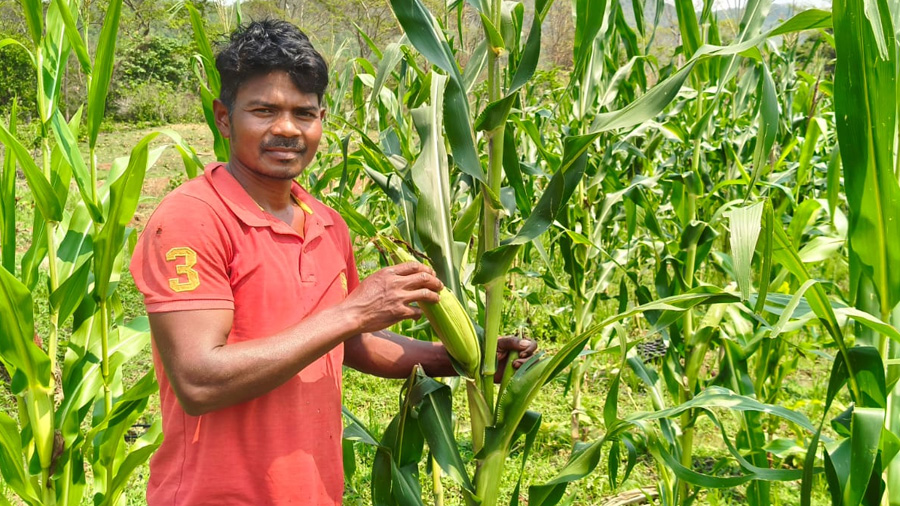
Seeing the positive results, his confidence grew stronger. In a move that required immense courage for someone who had known only poverty and labor work, Diwakar took 1.5 acres of land on lease. This was a bold gamble on his own resilience. He applied the alternative farming and nursery techniques he had mastered, transforming the leased land into a reliable source of year-round income.
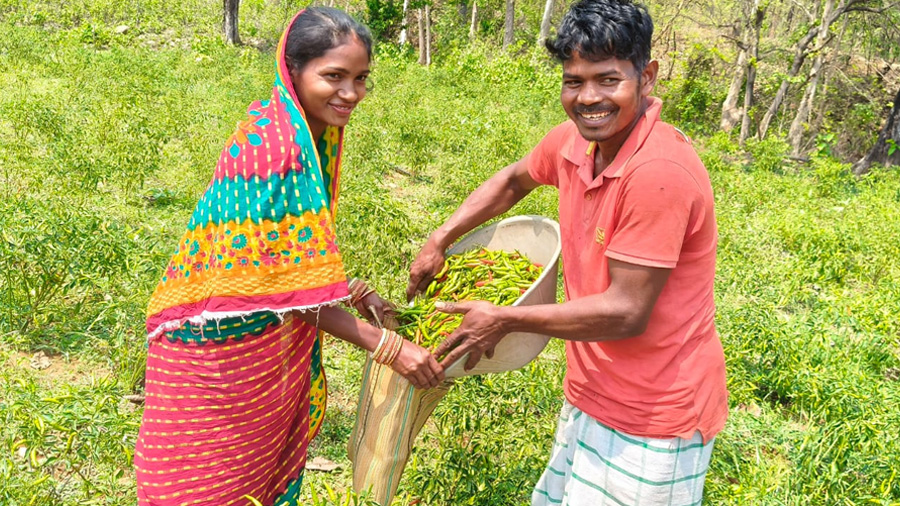
Today, the man who once wandered the lonely streets of distant cities is a pillar of Haldibani. Diwakar no longer spends his months in drafty labor camps or crowded urban slums. Instead, he stays in his village year-round, working his own land and earning nearly ₹15,000 every month (a stable, dignified income that provides security for his family).
The most profound change, however, is not found in his bank account, but in the stability of his home. Because he is present, he has been able to enroll both of his children in private schools. He is providing them with the educational opportunities that were cut short for him years ago. He is ensuring that they grow up with roots, not as “units of labor” for a distant city, but as the future leaders of their own community.
Diwakar Biruli has broken the cycle. Through the ABCD approach and the support of Gram Nirman, he is no longer a migrant navigating a world that does not know his name. He is a father who is there to put his children to bed, a husband who shares the daily load with his wife, and a successful, progressive farmer who stands firmly on the ground where he belongs. His journey from a migrant laborer to a self-reliant farmer is a story of hope for every small farmer who dreams of building a better future from the soil beneath their feet.
Upcoming News
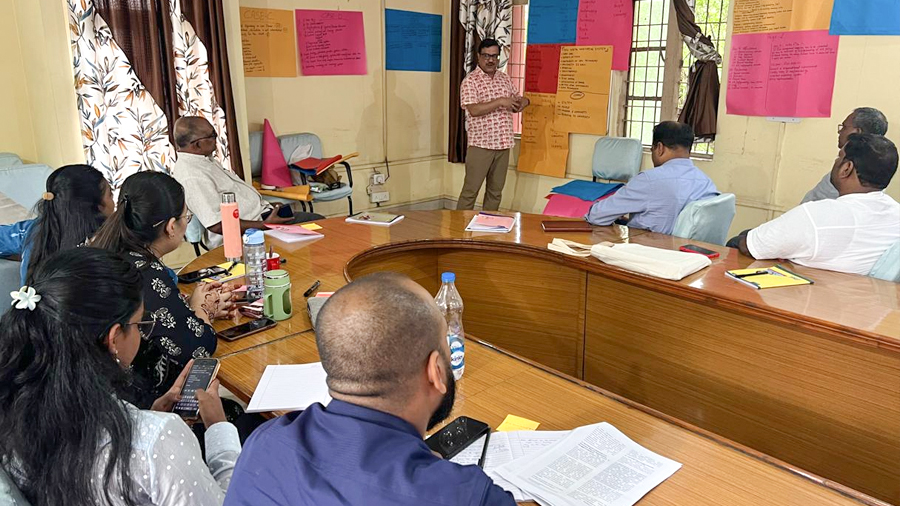
When NGOs Grow, What Breaks First? Caritas India Tackles the Answer in Raipur
Three-day workshop arms executive leaders with governance tools, a 20-policy framework and practical fixes for...
LEARN MORE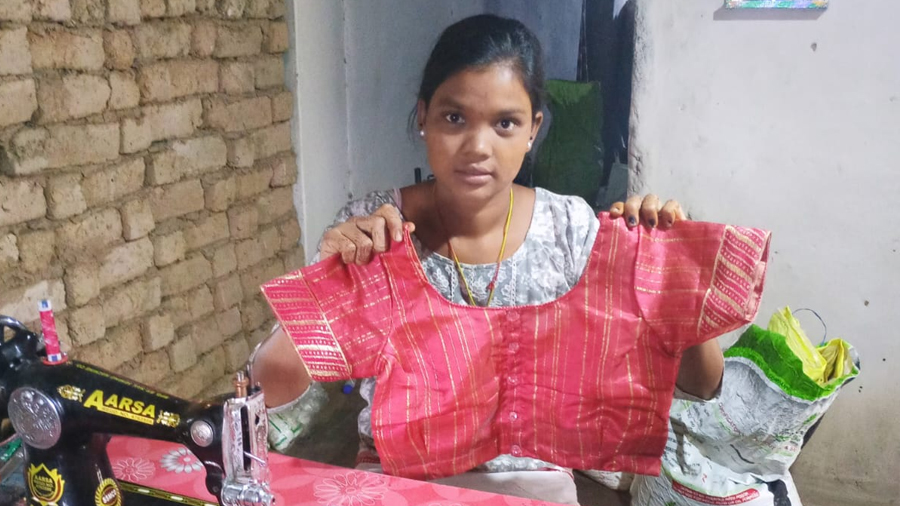
Nine Kilometres Through the Jungle: How Poornima Stitched Her Own Future
For 19 year old Poornima Rawat of Rajamma village in Lailunga block of Chhattisgarh's Raigarh...
LEARN MORE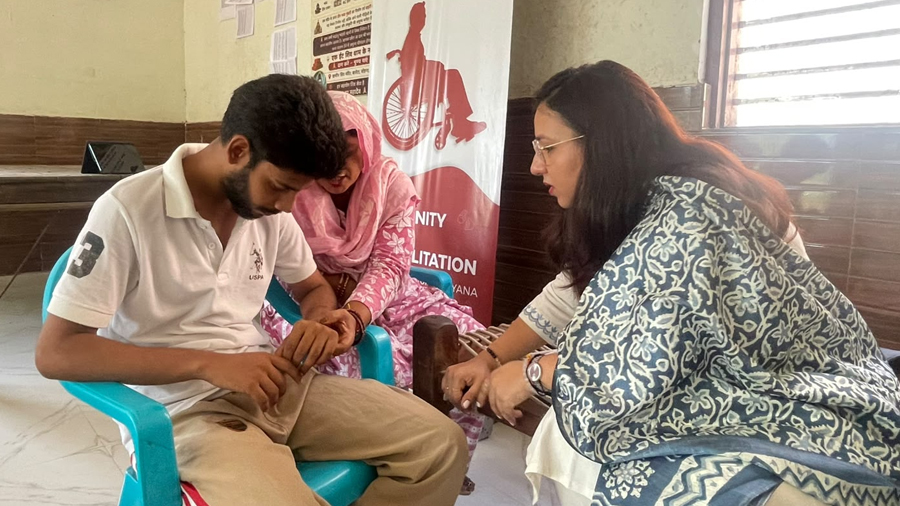
In a Nuh Village, People Living With Mental Illness Finally Got to Speak, and Be Heard
Nine people sat in that room in Barota village, Nuh district, Haryana, each carrying a...
LEARN MORE 91 -11 - 23362735
  director@caritasindia.org


